

Chicago serial killer exhibit showcases rare artifacts from infamous cases
Chicago serial killer exhibit showcases rare artifacts from infamous cases
A new exhibit opening this weekend is putting some of the most infamous serial killer cases in history on display, with thousands of artifacts offering a closer look at the people, investigations and victims behind the headlines.
CHICAGO - A new exhibit opening this weekend is putting some of the most infamous serial killer cases in history on display, with thousands of artifacts offering a closer look at the people, investigations and victims behind the headlines.
New serial killer exhibit
The backstory:
The exhibit brings together more than 2,000 items, including original documents, personal belongings, artwork and other pieces connected to notorious cases.
John Borowski, an independent filmmaker and author who has spent years documenting serial killers, says the collection offers visitors something they rarely get to see in one place.
"These are all original. Nowhere in the world are you going to see an exhibit like this with artifacts from so many serial killers under one roof," Borowski said.
Among the most recognizable names featured is John Wayne Gacy, who was convicted of killing 33 young men and boys in the Chicago area during the 1970s.
Gacy’s former attorney, Karen Conti, who represented Gacy near the end of his life, says getting to know him personally was part of her job as his attorney.
"The Gacy everyone knows is a monster and he was evil, but I had to get to know him on a one-on-one basis to get the job done," Conti said.
Conti says that relationship gave her an unusual perspective on the man behind one of Chicago’s most notorious murder cases.
Several pieces of artwork Gacy gave Conti are now on display, including paintings of clowns, a landscape he made for her birthday and a Christmas card.
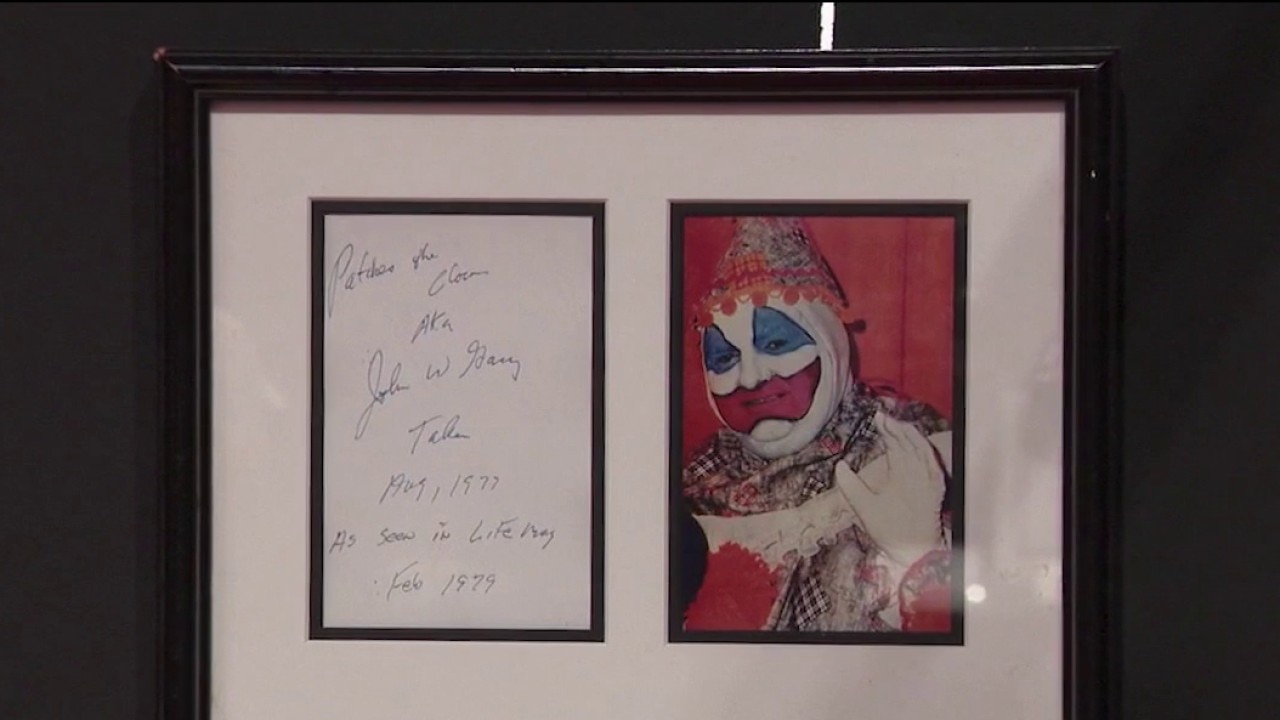
The exhibit also includes a signed photograph of Patches the Clown that Gacy gave Conti while he was on death row.
Another major case represented is that of Jeffrey Dahmer.
Visitors can see a pair of glasses associated with Dahmer, along with a letter he wrote to his grandmother and items offering a glimpse into his Milwaukee apartment.
The collection also explores other notorious cases, including the Grant Park Killer, who targeted women in Chicago’s Grant Park, and the woman known as the Black Widow of Chicago, who was convicted of one killing but suspected in additional deaths.
Artifacts connected to Issei Sagawa, who killed and cannibalized a woman in Paris, are also part of the collection.
But organizers say the exhibit isn’t intended to glorify the people responsible for these crimes.
Conti says the focus should instead be on understanding what happened and remembering the victims.
That history also includes victims whose identities remain unknown.
Conti says five of Gacy’s victims have never been identified. She hopes putting information about the cases in front of the public could lead someone to recognize a detail that helps bring closure to a family.
"I’m hoping someone comes here and recognizes someone and maybe we can get identification and closure for families," Conti said.
What's next:
The exhibit opens Saturday in Chicago and will remain on display through January.
The Source: The information in this report came from interviews with independent filmmaker and author John Borowski and attorney Karen Conti, along with observations from the exhibit, historical case records and background information about the featured serial killer investigations.