

How presidential vetoes work
Democrats are set to take control of both chambers of Congress following Tuesday’s midterm elections, creating a divided government for the final two years of President Donald Trump’s term.
While capturing both chambers of Congress gives Democrats control over federal funding and expanded oversight powers, Trump will retain significant executive authority over areas including foreign policy, trade enforcement and executive-branch operations. He also has the authority to veto legislation that Congress passes.
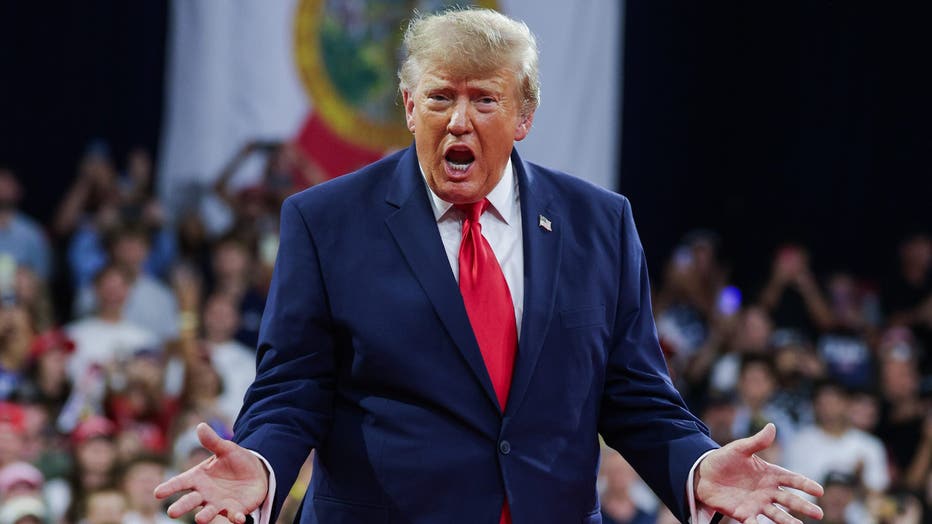
U.S. President Donald Trump gestures to the crowd as he arrives to an election rally at Alico Arena on the Florida Gulf Coast University campus on October 23, 2026 in Fort Myers, Florida. (Photo by Alex Wong/Getty Images)
Trump calls himself ‘Mr. Veto’
What they're saying:
Trump said Sunday he expects to issue vetoes for "a month or two" before negotiating agreements with opposition leaders.
RELATED: Democrats win House and Senate - what this means for Trump's final two years
"I guess I'll become Mr. Veto," Trump told the New York Post's Pod Force One podcast. "And then at some point, we'll probably make deals."
Tuesday night, after Republicans lost control of the House and Senate, Trump shared a photo of a red cap with the word "VETO" on it.
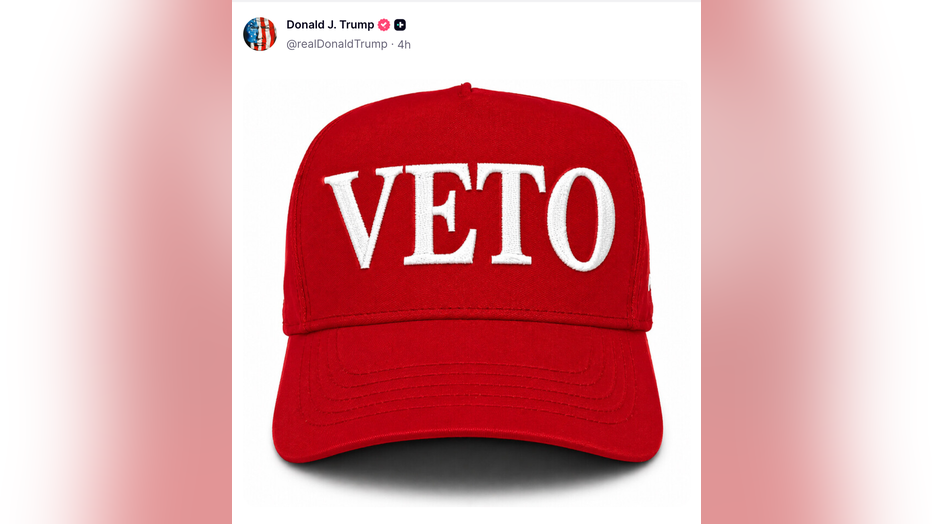
(Truth Social)
What is a presidential veto?
The backstory:
According to the U.S. House of Representatives, Article I, section 7 of the Constitution grants the president the authority to veto legislation passed by Congress. This authority is one of the most significant tools the president can employ to prevent the passage of legislation.
The Constitution provides the president 10 days, excluding Sundays, to act on legislation, or the legislation automatically becomes law.
RELATED: Trump claims GOP would have won ‘IN A LANDSLIDE’ as Democrats make election-night gains
Since the founding of the federal government in 1789, 38 of 45 presidents have exercised their veto authority a total of 2,576 times. Congress has overridden these vetoes on 111 occasions (4.3%), according to Congress.
Types of vetoes
Dig deeper:
There are two types of vetoes: the regular veto and the pocket veto.
The regular veto is considered a qualified negative veto. The president returns the unsigned legislation to the originating house of Congress within a 10-day period, usually with a memorandum of disapproval or a "veto message."
Congress can then override the president’s decision if it musters the necessary two–thirds vote of each house. President George Washington issued the first regular veto on April 5, 1792. The first successful congressional override occurred on March 3, 1845, when Congress overrode President John Tyler’s veto of S. 66.
The pocket veto is an absolute veto that cannot be overridden.
Congress said pocket vetoes occur when the president receives a bill but is unable to reject and return the bill to an adjourned Congress within the 10-day period. The bill, though lacking a signature and formal objections, does not become law. Pocket vetoes are not subject to the congressional veto override process.
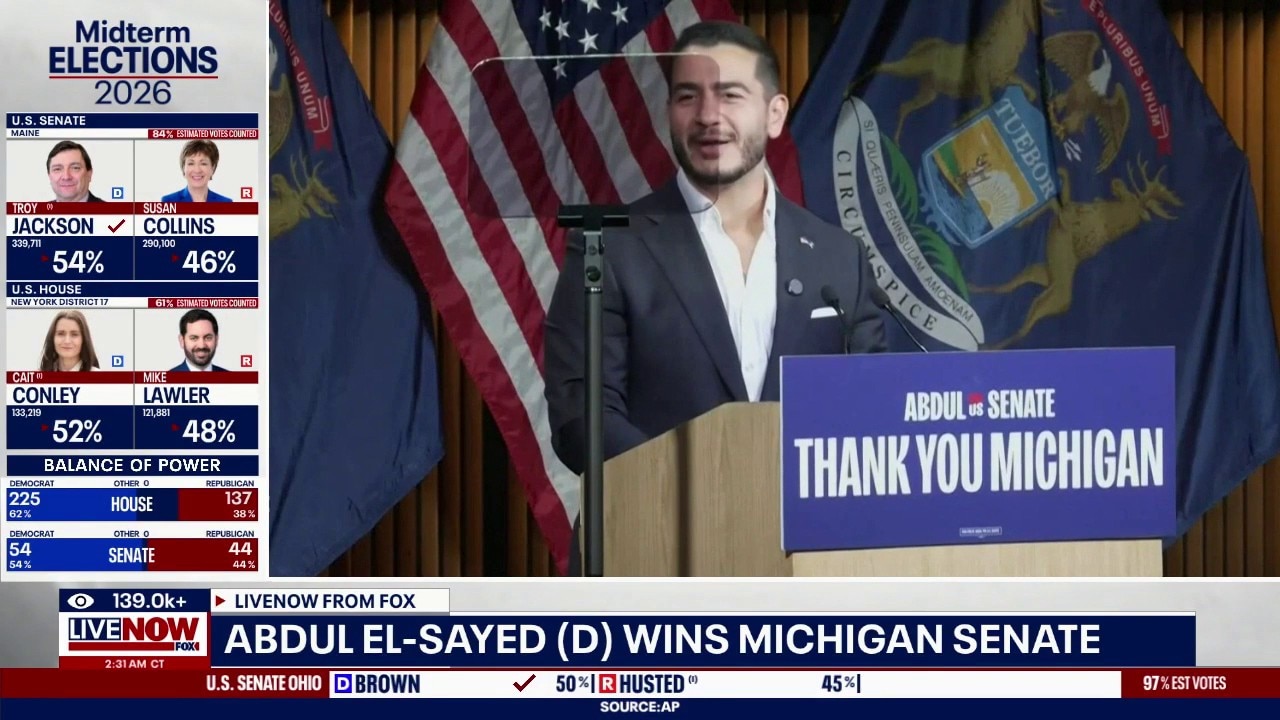
Abdul El-Sayed wins Michigan senate race
Democrat Abdul El-Sayed won Michigan’s open U.S. Senate seat Tuesday, according to media projections, making history as the first Muslim elected to the Senate. His victory also keeps a key Democratic seat in the party’s fight for control of the chamber. The closely contested race marked a major win for the party’s progressive wing and prevented Republicans from flipping the seat held by retiring Democratic Sen. Gary Peters.
How many vetoes has Trump issued?
By the numbers:
Trump has vetoed 12 measures as president — 10 during his first term and two during his second term. Only one has been overridden, according to The American Presidency Project.
The Source: Information for this article was provided by the House of Representatives archive, Congress.gov. Previous FOX Local reporting contributed.