

US to take partial control of Venezuela's oil reserves, Trump says: Will it lower gas prices?
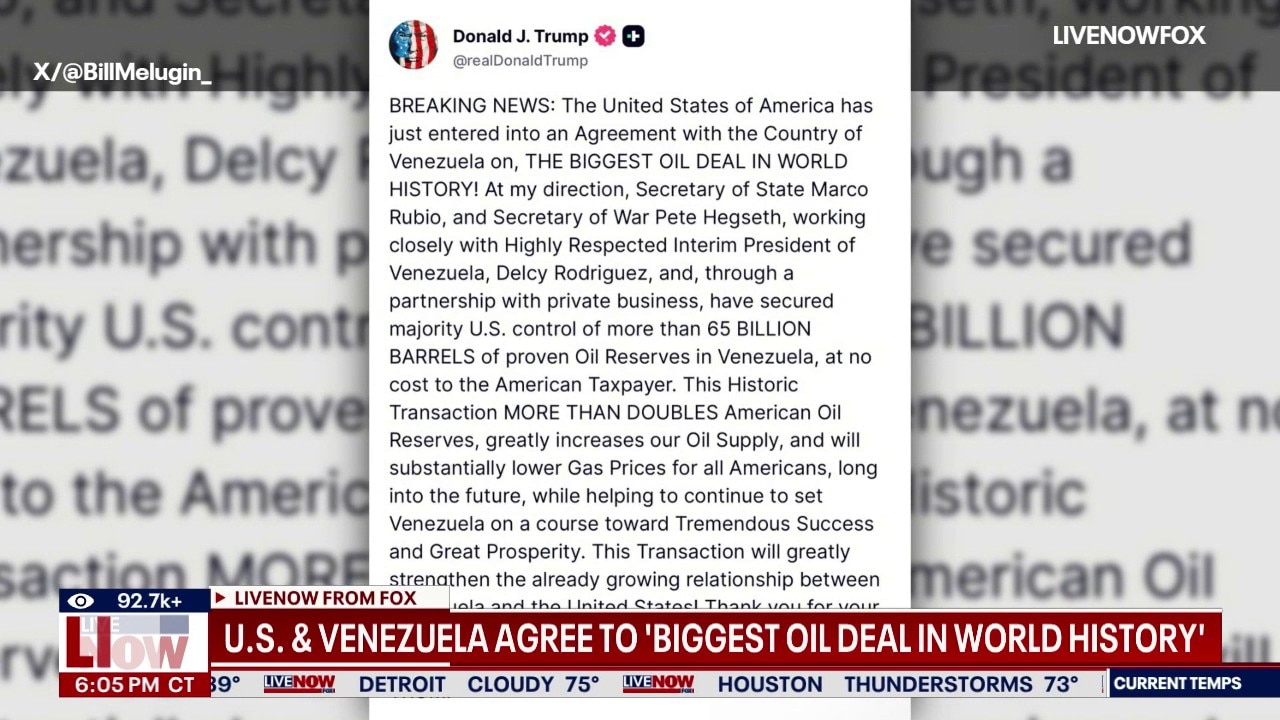
Trump: US, Venezuela agree to 'biggest oil deal' in history
President Trump announces that the United States and Venezuela have agreed to what he calls the "biggest oil deal in world history." The agreement would give the U.S. majority control of more than 65 billion barrels of Venezuela’s known oil reserves, at no cost to American taxpayers. Trump says the deal will more than double U.S. oil reserves and lead to lower gas prices. Trump posted the statement on Truth Social. First reported by FOX News’ Bill Melugin.
President Donald Trump said his administration has reached an agreement with Venezuela that could give the U.S. control of a portion of the country’s vast oil reserves.
The move comes as Trump faces mounting pressure to address high gas prices, but experts say don’t expect an immediate drop in prices here at home as a result of the deal.
Trump’s Venezuela oil deal
What they're saying:
In a social media post Friday, Trump said the deal was negotiated by Secretary of State Marco Rubio, Defense Secretary Pete Hegseth and Venezuela’s acting President Delcy Rodríguez.
"The United States of America has just entered into an Agreement with the Country of Venezuela on, THE BIGGEST OIL DEAL IN WORLD HISTORY!" Trump wrote.
Rodríguez said she expects the deal "will have a significant impact on our nation’s revival."
By the numbers:
According to the Venezuelan government, the deal involves the development of 17 fields with a proven potential of 65 billion barrels. The agreement could draw $100 billion in investment into Venezuela’s oil industry and yield over $209 billion in taxes for Caracas.
The agreement allows for the United States to partner with an unnamed private operator in Venezuela to create a new private company to take hold of the reserves, a source told The Associated Press. Rodríguez reportedly granted the company 100-year rights to develop the oil fields.
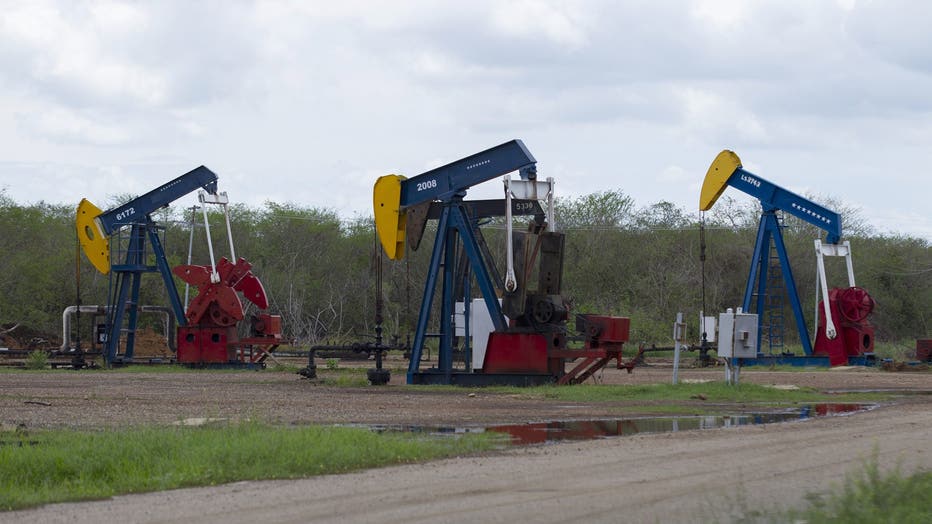
Oil pumping hammers are seen in a Venezuelan oil field in 2026 (Photo by: Jose Bula Urrutia/UCG/Universal Images Group via Getty Images)
The deal gives the United States 55% effective output of the new private company -- including an ownership stake and rights to buy oil at cost. The company would be the second largest corporate holder of proven reserves after Saudi Aramco, according to the official.
The backstory:
The announcement comes nearly nine months after the U.S. military at Trump’s direction carried out an operation to capture Venezuela’s then-President Nicolás Maduro and bring him to the U.S. to face federal narcoterrorism and drug trafficking charges.
Will the deal lower gas prices?
Dig deeper:
Experts say the deal won’t have an immediate impact on gas prices, which stood at about $4.09 a gallon on Friday, according to AAA. The average price was $3.21 at the same time last year. The U.S.-Israel war against Iran has led to a dramatic slowdown of Gulf oil moving through the Strait of Hormuz, where about 20% of the world’s petroleum passed through prior to the conflict.
The U.S. has tapped its strategic petroleum reserves, which in early August fell below 300 million barrels, down by more than 100 million barrels since the start of 2026.
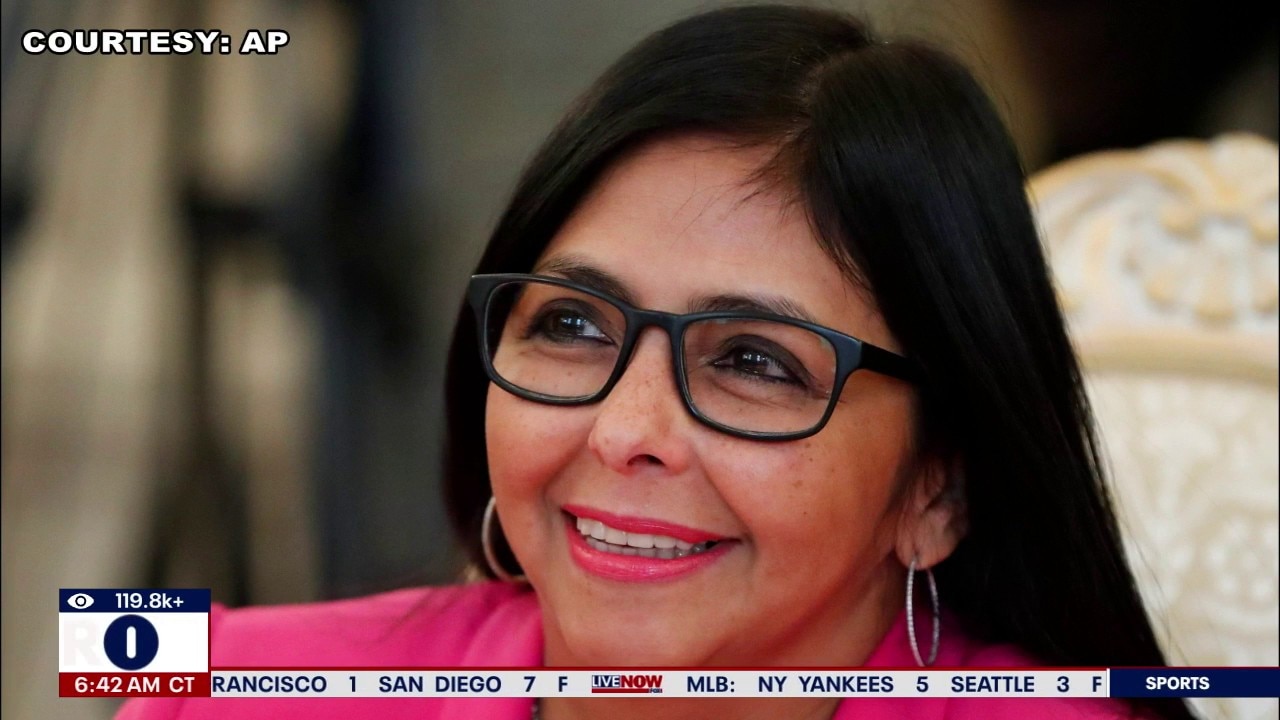
U.S. lifts sanctions on Venezuela's Delcy Rodriguez
The U.S. on Wednesday lifted sanctions on Venezuela’s acting President Delcy Rodríguez, according to an Office of Foreign Assets Control entry on the Treasury Department website. American University Professor of Government specializing in Latin American politics and U.S. foreign policy toward Latin America, William LeoGrande, joined LiveNOW from FOX"s Carel Lajara to discuss the implications.
Experts have repeatedly warned that a substantial boost in Venezuelan oil production will not happen quickly as repairing and expanding infrastructure takes years and requires billions of dollars.
Persuading big American oil companies to return the region could face headwinds given the political uncertainty and decades of badly damaged infrastructure.
Days after the ouster of Maduro, Trump gathered oil executives at the White House and called on them to rush back into Venezuela. Executives expressed interest in the opportunity but there was also a measure of caution given their past experience in the country.
Darren Woods, CEO of ExxonMobil, the largest U.S. oil company, said at that moment he saw the country as "un-investable," but Trump has insisted that his administration has brought a measure of stability to Venezuela.
He has argued that Venezuela stole U.S. oil when former Venezuelan President Hugo Chávez moved decades ago to nationalize hundreds of foreign-owned assets, including those owned by American oil companies.
The Source: This report includes information from The Associated Press.