

Behind the walls of Old Joliet Prison: A rare look at restricted areas
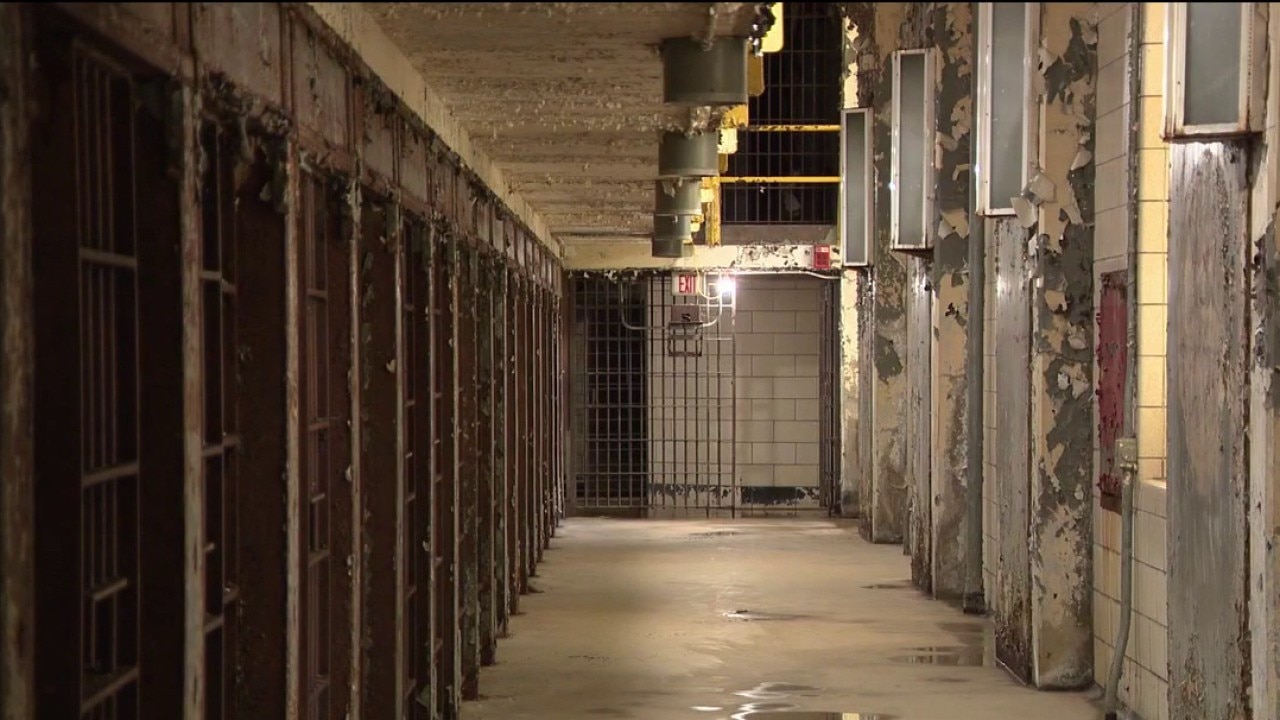
Rare access behind the walls of Old Joliet Prison reveals hidden history
FOX Chicago's Kasey Chronis gets rare access to restricted areas of Old Joliet Prison, exploring its notorious inmates, haunting history and the mysterious death of a warden's wife ahead of Halloween.
JOLIET, Ill. - Long considered among Illinois' spookiest sites, the Old Joliet Prison holds a dark past — from notorious inmates to haunting stories.
While parts of the historic landmark are open to the public, others remain off-limits.
Just in time for Halloween, FOX Chicago's Kasey Chronis was granted rare access to restricted areas of the now-shuttered penitentiary.
Notorious inmates and harsh conditions
What we know:
For nearly 150 years, the imposing limestone landmark located at 1125 Collins Street in Joliet confined some of the state's most dangerous criminals — helping define the city around it.
"The Old Joliet Prison and the City of Joliet really kind of grew up with each other," said Greg Peerbolte, CEO of the Joliet Area Historical Museum.
Originally named the Illinois State Penitentiary, it was later referred to as the Joliet Correctional Center and is now called the Old Joliet Prison.
"For better or worse, Joliet has certainly had this reputation as being not only a prison city, but perhaps ‘the’ prison city," Peerbolte said.
Construction of the sprawling complex was underway by 1858. Once completed, the prison replaced the state's first penitentiary in Alton, which closed two years later.
"It's defined by its iconic architecture. If that architecture looks and feels familiar to you. W. W. Boyington was the prison's architect. He also did the Chicago Water Tower," Peerbolte said.
But the men who built the fortress in Joliet were the very prisoners it would contain.
"As we say here, the walls were not only designed to keep people inside, they were designed to keep people's eyes outside from looking in," Peerbolte said.
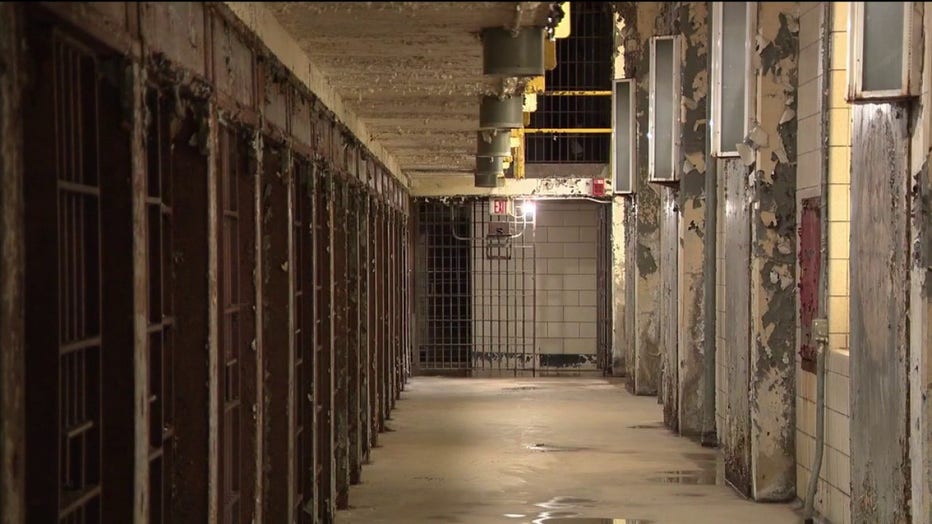
The jail locked its doors to inmates in 2002. On Feb. 16 of that year, the penitentiary's final permanent inmates were transferred to Stateville Correctional Center in Crest Hill.
Today, the state-owned prison is operated as a historic site by the Joliet Area Historical Museum, welcoming visitors seasonally.
"History really starts to speak to you here," Peerbolte said.
Peerbolte oversees the site's preservation efforts. The cell block is among the areas that remain open to the public.
"We are standing in the East Cell House of the Old Joliet Prison," Peerbolte said. "In the row behind me, there's 40 cells, and in the gallery on top, there are 80."
Across the entire prison, Peerbolte says there were more than 600 cells — typically housing between 1,000 and 1,500 inmates.
Those who passed through its gates include Nathan Leopold and Richard Loeb, Baby Face Nelson, James Earl Ray, and just briefly, John Wayne Gacy.
The cells visible on public tours measure 5 by 8 by 10 feet and, at times, housed as many as four prisoners. They were considered an upgrade — made in the 1950s during the only remodel in the prison's history.
"But the original cells were entirely stone. There was no running water until the mid-1900s and those cells were 4 by 7 by 7, and they regularly contained two people," Peerbolte said.
The prison's dark past
Dig deeper:
During the tenure of Edmund M. Allen, who followed in his father’s footsteps as warden, some prisoners earned special privileges as "trusties."
"They accessed the warden's quarters frequently," Peerbolte said. "They served as kind of personal valets."
These privileges gave trustees access to spaces typically reserved for prison officials, including the Administration Building, where wardens and their families lived for more than a century.
"As you can see, it was designed to impress people. As one former warden actually told me, the prison was a castle and the warden was the king," Peerbolte said.
Currently off-limits to the public, the Administration Building also holds one of the prison's most haunting stories.
"Warden Allen's honor system came to a sad and screeching halt in June of 1915 when his wife, Odette, was found dead in this room," Peerbolte said.
While the warden was out of town on business, a fire broke out in the couple's bedroom.
Suspicion fell on one of the prison's trusties: Joseph Campbell. He was convicted of Odette’s murder but maintained his innocence.
Civil rights activist Ida B. Wells was among those who advocated on Campbell's behalf, and his death sentence was eventually commuted.
"What Campbell claimed happened was a bizarre accident in which Odette — kind of this New Orleans mystic — would apply grain alcohol to her arms to help with her rheumatism and kind of quickly light it on fire after she applied it," Peerbolte explained.
One theory is that Odette accidentally ignited a large jug of alcohol, sparking the fire that claimed her life. According to reports, the penitentiary physician also discovered a fracture on the right side of her head.
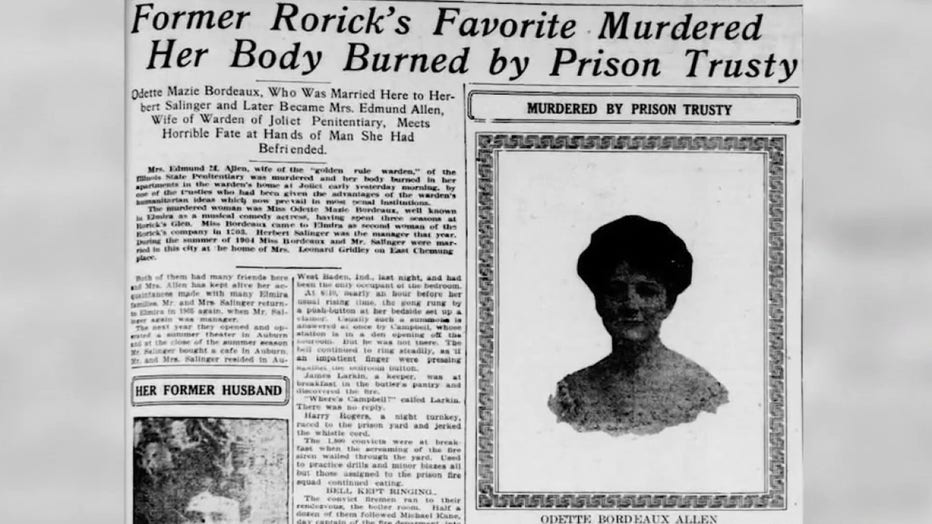
What really happened remains a mystery, but Odette’s loss was felt throughout the prison.
"It was said that she would walk through the stone cell houses, and she would sing to the prisoners and her voice would reverberate off of the stone," Peerbolte shared. "She was actually known as the 'Angel of Joliet' by the prisoners, all of whom universally loved her."
The tragedy cast a shadow over Allen's honor system. The warden, too distraught by the ordeal, ultimately resigned.
The privileges he introduced were revoked, and conditions deteriorated.
"By 1918, there was a full-scale riot here at the penitentiary by the prisoners who were protesting the conditions that they had returned to," Peerbolte said.
National Guard troops preparing to deploy overseas during World War I were instead sent to the Old Joliet Prison to quell tensions.
For some inmates, the prison would become their final stop. Beginning in 1927, at least 13 executions were carried out at the Old Joliet Prison before the electric chair was moved to Stateville Correctional Center.
There were, however, lighter moments in the prison's history, too — from baseball to a starring role in "The Blues Brothers."
"Not only were prisoners not removed during the filming of ‘The Blues Brothers,’ the prisoners participated as not only extras, but paid extras," Peerbolte said.
Beyond its Hollywood fame, the Old Joliet Prison continues to draw visitors from around the globe. Some come for the history — others, for the mystery. And while the work to restore the landmark is far from over, its place in Joliet is secure.
"The jury is no longer out with the amount of people that are visiting from around the world that find this fascinating," Peerbolte said. "It is something that is worthy of preservation, and we will continue to fight for this place."
How to visit and explore the grounds
What's next:
There is still limited availability through Halloween for flashlight tours of the Old Joliet Prison, which take place after sunset.
Self-guided, daytime tours will continue Thursday through Monday until the end of November — weather permitting.
To learn more about the Old Joliet Prison, including tour options and ticketing information, click here.
The Joliet Area Historical Museum also offers a variety of other experiences, including exhibits highlighting the historic Route 66 corridor.
The Source: FOX Chicago's Kasey Chronis explored the Old Joliet Prison and spoke with Joliet Area Historical Museum CEO Greg Peerbolte about the landmark's history and preservation efforts.