

Unlikely forensic tool helped crack Burr Oak Cemetery grave desecration case
Moss evidence helped crack Burr Oak Cemetery grave desecration case
A newly published scientific paper is shedding light on how investigators used moss to help solve a grave desecration case at Burr Oak Cemetery that shocked the Chicago area in 2009.
ALSIP, Ill. - There is a new twist to the horrific story of grave robbing and desecration at Burr Oak Cemetery.
A scientific paper is revealing new details about how that crime, which was uncovered in 2009, was solved, and it's elevating some local law enforcement agencies into some pretty impressive scientific company.
The backstory:
It's been 17 years since Matt Von Konrat got a call from the FBI.
"I guess if the FBI wants to find you, they'll find you," he said.
Von Konrat is the Field Museum's head of botany collections — literally millions of dried plant specimens curated over hundreds of years.
"We've got specimens from all over the world," he said.
And he's also one of the foremost experts on moss, which is why law enforcement wanted his help solving a macabre cemetery mystery.
"[Moss is] like fingerprints. And also like a time stamp," Von Konrat said.
Cook County Sheriff Tom Dart remembers the shock of what they found while investigating a tip that graves were being desecrated at Burr Oak — a historic African American cemetery in south suburban Alsip.
"For years people had been digging up graves, removing the remains and then reselling it to a new person and then taking the cash themselves," Dart said.
A sort of modern-day grave robbing.
"I didn't believe it at first because it seemed so outrageous. You just couldn't imagine people doing something like this," Dart said.
Investigators found more than 1500 bone fragments from at least 200 graves that had been dug up and dumped into a mass unmarked grave, so that the plots could be re-sold.
"Once it became clear there was criminal activity here, when were these crimes committed was imperative to find out," Dart said.
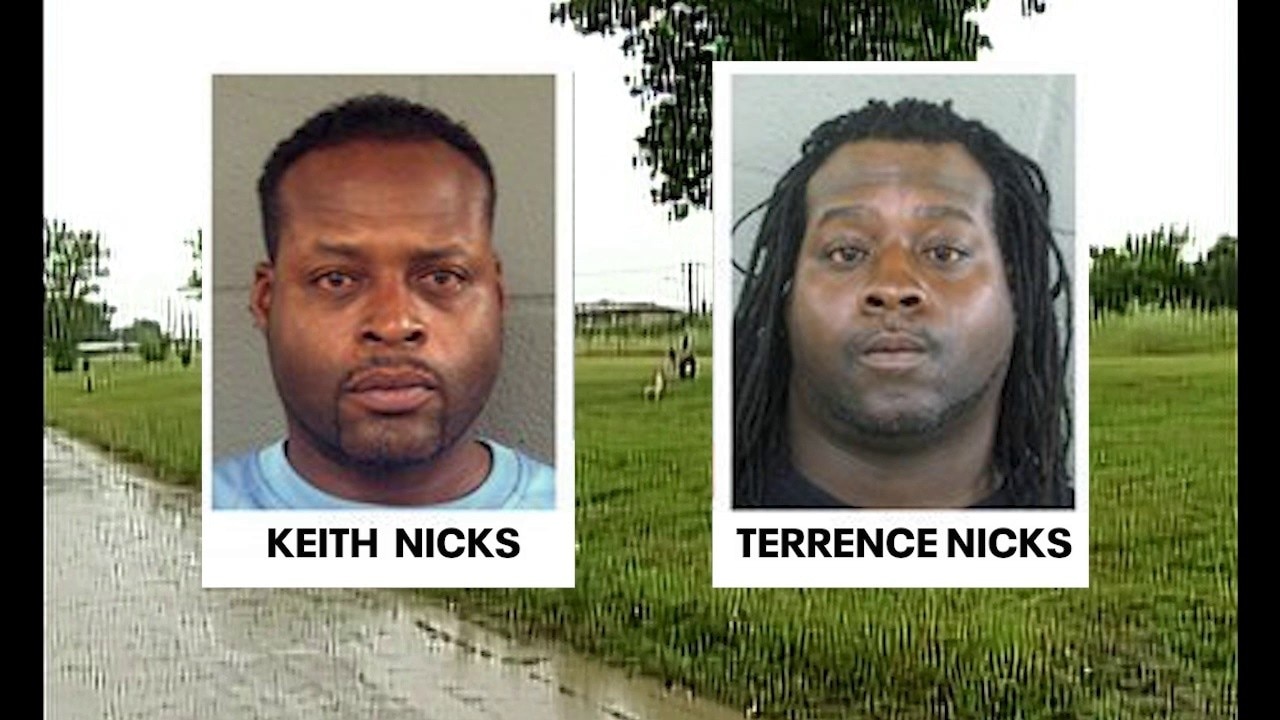
Investigators quickly identified several suspects, including cemetery foreman Keith Nicks and his brother Terrence. But they claimed the grave robbing happened long before they started working there, which is why Von Konrat got that call from the FBI for help.
"Never in my wildest dreams would I have thought we're applying our research, our skills, our collections to such a heinous crime," Von Konrat said.
Along with all the reburied bones, investigators had found a potential clue — a tiny piece of moss in that mass unmarked grave.
"And this is the moss that was found buried with the human remains," Von Konrat said.
After retrieving the moss at the crime scene, he put it under a microscope.
"Here's your soil. And here's this tiny green fragment," Von Konrat said.
Then found the same moss in the Field's massive plant collection, Fissidens taxifolius, also known as common pocket moss.
"In essence, parts of the plant were still alive, which meant it was very, very fresh," Von Konrat said.
They also found that the moss wasn't growing where the bones were reburied, but it was growing in a different part of the cemetery where the graves had been dug up and the plots re-sold.
"And it was crazy. It was literally little parts of plants that by having that at a location, it was clear that, A) something had been moved. But it also gave us the range of time. How long it had been moved," Dart said.
Von Konrat added, "So that gave us a high degree of probability of how that moss ended up at the scene of the crime."
Von Konrat was among the scientists who testified at the trial of the cemetery workers who were both convicted of desecration and other crimes and served several years in prison.
Big picture view:
Now the moss mystery is the subject of a scientific paper published in the journal "Forensic Sciences Research" — written by Von Konrat along with the investigators from the sheriff's office, FBI and other law enforcement agencies.
"It was very important to have them as co-authors, because at the time we were a team," Von Konrat said. "So the main goal of the paper, apart from outlining the scientific approach, is to share and showcase and highlight the potential of mosses and these microscopic plants that could potentially be overlooked by law enforcement as a form of forensic evidence."
Since the Burr Oak grave robbing case, Von Konrat has put his moss expertise to use in other criminal investigations.
As the poster in his office says, "People lie, but moss does not."
"And in a world where some of the most popular television shows… are CSI-related things, this is it. On steroids. This is it," Dart said.
The Source: The information in this story was obtained and reported by FOX Chicago's Dane Placko.