

US to fund new research into potential PTSD treatment for veterans
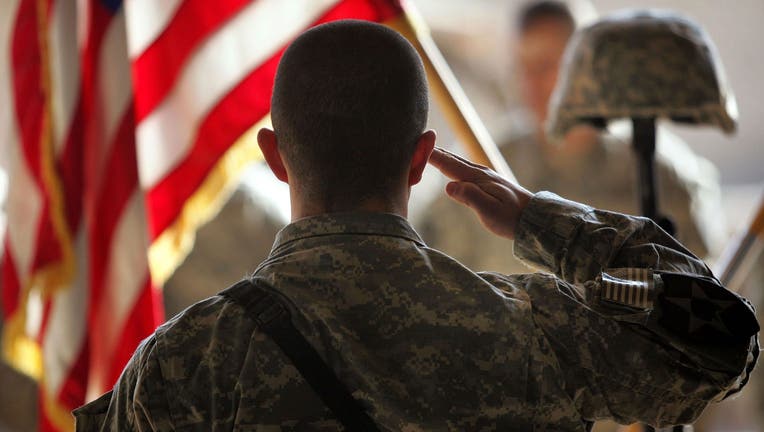
In this file image, a soldier honors a slain U.S. Army soldier killed in Iraq. The U.S. government plans to spend nearly $5 million to prepare clinical testing of a psychedelic drug designed to treat PTSD in veterans, Health Secretary Robert F. Kenne
The U.S. government plans to spend up to $4.9 million to help prepare for clinical trials for a psychedelic drug that could serve as a treatment for veterans suffering from post-traumatic stress disorder, Health Secretary Robert F. Kennedy Jr. announced Thursday.
Big picture view:
The trials will test the drug ibogaine as a possible treatment for PTSD.
The Advanced Research Projects Agency for Health, an agency within the U.S. Department of Health and Human Services, will establish the key clinical trial framework to investigate the drug and its effectiveness.
Evidence from international clinics suggests that the botanical compound may provide rapid psychiatric symptom relief in some patients.
"We wanted to show our commitment to getting this done as quickly as possible on behalf of not just the veterans, but every American," Chief Medical Officer Dr. Rafid Fadul said.
For the trials, the agency will partner with the Mark Cuban’s Cost Plus Drug Company, which will develop ways to make ibogaine in the US, Kennedy said. If the drug wins approval, Kennedy said the cost would be similar to that of generic drugs.
What they're saying:
"Our U.S. Veterans and the millions of other Americans suffering from serious mental illness deserve the best possible care," Dr. Al Bugazia, the senior advisor for special projects at ARPA-H, said. "Reports of successful ibogaine treatments are too promising to ignore. We owe it to our heroes and every person struggling to ask the bold questions and deliver results in years, not decades. As long as people continue to struggle, doing anything less is not an option."
Dig deeper:
The Mayo Clinic says extremely stressful or terrifying events can cause PTSD. Symptoms include flashbacks, nightmares, severe anxiety and uncontrollable thoughts about the event. It can also cause negative self-thoughts, emotions including fear, blame, guilt, anger or shame; memory problems and feeling emotionally numb.
The U.S. Veterans Administration estimates that approximately 7% of veterans will have PTSD at some point in their life. But a previous analysis of medical research by the RAND Corp think tank estimated that rates of PTSD in veterans could range as high as 20%.
An estimated 14 million or more Americans have a serious mental illness, including PTSD, ARPA-H researchers said.
Kennedy has long been a supporter of exploring psychedelics — drugs that can cause hallucinations and visual distortions and heighten emotions — in a clinical setting as a treatment for PTSD.
The Source: Information for this story came from Reuters, the U.S. Veterans Administration, The Advanced Research Projects Agency for Health, the Mayo Clinic and previous FOX News reporting. This story was reported from Orlando.