

12 Native nations have ties to Chicago. This museum tells their histories.
12 Native nations have ties to Chicago. This museum tells their histories.
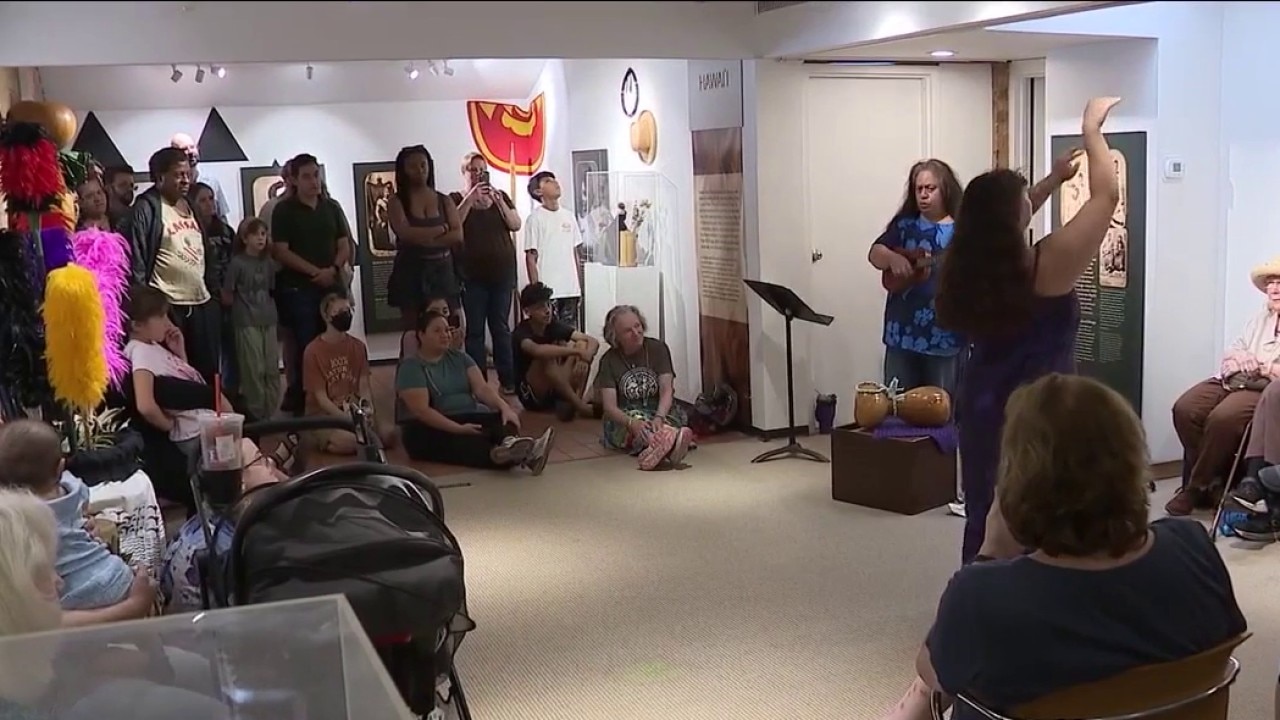
The Gichigamiin Indigenous Nations Museum offered free admission Monday for Indigenous Peoples Day, giving visitors new exhibits on the Native peoples of Chicago, a children's gallery and hula.
EVANSTON - The Gichigamiin Indigenous Nations Museum offered free admission Monday for Indigenous Peoples Day, giving visitors new exhibits on the Native peoples of Chicago, a children's gallery and hula.
Gichigamiin Indigenous Nations Museum offers free admission
The backstory:
Collaborators told the project's organizers that Chicago is often not thought of as an enduring Indigenous place, said Madison Bastress, director of the D'Arcy McNickle Center for American Indian and Indigenous Studies at the Newberry Library. The center led development of "Indigenous Chicago."
"So Chicago has always been an Indigenous place," Bastress said.
The museum, formerly the Mitchell Museum of the American Indian, reopened Oct. 1 after renovations. It says it is Native-led and one of the only museums in the Chicago area devoted exclusively to the Indigenous peoples of the Great Lakes region.
"Indigenous Chicago" covers the histories of the Potawatomi, Odawa, Ojibwe, Peoria, Kaskaskia, Myaamia, Wea, Sauk, Meskwaki, Ho-Chunk, Kickapoo and Mascouten peoples, whose homelands include Chicago, the museum says. It also covers the Native community that lives in the city today.
Sections cover land and environment, activism and education, Bastress said. Activism is often taught as a 20th-century topic, she said, but the exhibit shows Native people resisting and organizing throughout history.
Dig deeper:
The exhibit first showed at the Newberry Library in 2024 and will stay at the museum for three years. Commissioned pieces include regalia by Camille Billie (Oneida and Diné), a graphic novel by Jim Terry (Ho-Chunk) and teaching blankets by Jason Wesaw (Pokagon Band of Potawatomi).
"The Gifts of Our World," a children's exhibit for ages 3 to 10, has 14 interactive stations, the museum says. Visitors activate the sun, moon, wind and rain on a weather wall. A puzzle can be completed only by trading pieces with others. One station introduces the Seven Grandfather teachings of the Anishinaabe people.
Carole Lanialoha Lee, executive director of the Aloha Center Chicago, said the hula exhibit, first shown at the Field Museum in May 2023, marks 1893 as hula's arrival in Chicago, when a royal chorus came to the World's Fair.
"Hula was a sacred thing," Lee said. "It was not always something open for public viewing."
Teagan Harris, the museum's collections and repatriation manager, said a separate installation explains how items are assessed, discussed with tribes and sent home. She also tests belongings for arsenic. Many were treated with it between 1870 and 1970, she said.
What's next:
The museum is at 3001 Central St. Hours and admission are posted at gichigamiin-museum.org. Free digital maps, walking tours and oral histories from "Indigenous Chicago" are at indigenous-chicago.org.
The Source: The information in this report came from the Gichigamiin Indigenous Nations Museum, Madison Bastress of the Newberry Library, Carole Lanialoha Lee of the Aloha Center Chicago and museum collections and repatriation manager Teagan Harris.