

Election 2026: What to know about the November midterm key races
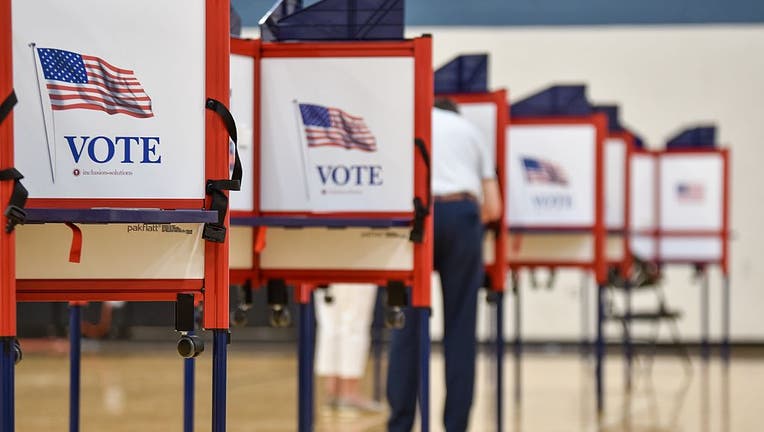
(Photo by Adam J. Dewey/Anadolu via Getty Images)
President Donald Trump is determined to maintain Republicans’ threadbare House majority and avoid a repeat of his first presidency, when Democrats won control of the chamber in midterm elections and went on to impeach him twice.
The battle for control of Congress will take center stage next month as voters decide every House seat and 35 Senate races, with a handful of closely contested states likely to determine which party holds power in Washington.
RELATED: Rep. Chuck Edwards ends campaign after ethics committee cites inappropriate conduct
Here's what you need to know about the November elections:
Why Election 2026 matters?
Why you should care:
Republicans currently hold narrow majorities in both chambers of Congress, controlling the House with a razor-thin 218-212 edge, with one independent and four vacancies, and the Senate with a 53-47 advantage, including two independents who caucus with Democrats.
With every House seat and 35 Senate seats on the ballot, Democrats need a net gain of just six House seats to reclaim the speaker's gavel and four Senate seats to win back the upper chamber, making even a handful of competitive races capable of reshaping the balance of power in Washington.
Voter turnout surges ahead of midterm elections
Millions of Americans have voted in the 2026 midterm election and early voter turnout is higher than in 2018 and 2022 at the same point. This as President Trump is making his final stops in several states in a push to gain more support ahead of election day. Cayce Myers from Virginia Tech talks with LiveNOW's Josh Breslow.
Top races on the November ballot
Big picture view:
North Carolina
Former Democratic Gov. Roy Cooper and ex-Republican National Committee Chairman Michael Whatley each won their party’s U.S. Senate nominations in North Carolina, setting them up for a fall campaign that could determine control of Congress’ upper chamber. Whatley and Cooper are seeking the seat being vacated by Republican Sen. Thom Tillis, who chose last June not to seek a third term. North Carolina’s election this year could be crucial for determining which party controls the U.S. Senate, where Republicans currently have the majority.
Georgia
First-term Democratic Senator Jon Ossoff is heading into a challenging reelection campaign. He is the only Democratic incumbent running for reelection in a state that Donald Trump carried in the 2024 presidential election. His Republican challenger, U.S. Rep. Mike Collins, has Trump's endorsement and is expected to argue that Ossoff's positions on issues such as immigration are too liberal for Georgia voters.
RELATED: Michigan primary results: How the progressive candidates did
Maine
Former state lawmaker and logger Troy Jackson secured the Democratic nomination for U.S. Senate in Maine and will face longtime GOP Sen. Susan Collins in November in a race that could decide which party controls the chamber. Democrats view Maine as the party’s best opportunity to flip a Senate seat this year because it’s a competitive race in a state President Donald Trump lost in 2024. But defeating Collins won’t be easy. The five-term incumbent holds a fundraising advantage, while Jackson will have less than four months to sell himself to voters.
Ohio voters head to the polls for midterm elections
Ohio residents are voting early ahead of Midterm Election Day on November 3, just 13 days from now. FOX's Pete Cuddihy joined LiveNOW's Josh Breslow with what the Senate candidates have to say.
Michigan
Abdul El-Sayed will face former Republican Rep. Mike Rogers. The seat is open because Democratic Sen. Gary Peters is retiring, and Democrats are under pressure to defend it to preserve their chance of winning control of the chamber.
Texas
Democrats are hopeful that their nominee, state Rep. James Talarico, has a rare opportunity to win a statewide race in Texas — and help the party retake control of the Senate — with Texas Attorney General Ken Paxton as his opponent.
RELATED: Trump administration petitions Supreme Court to enforce mail-in voting order
Ohio
Former Democratic Sen. Sherrod Brown is seeking to return to the Senate by challenging Republican Sen. Jon Husted in a closely watched special election. Husted was appointed to the seat after JD Vance became vice president and later won the Republican nomination. Brown won the Democratic nomination. Recent polling shows Brown with a narrow advantage in the race, which could help determine control of the Senate.
Iowa
Iowa state Rep. Josh Turek won the state’s Democratic primary for U.S. Senate, setting up a competitive general election against Republican U.S. Rep. Ashley Hinson for a seat Democrats are hoping to flip in November.
Alaska
Alaska remains a Republican-leaning state, but the Senate race has become unexpectedly competitive. Republican Sen. Dan Sullivan is facing Democrat Mary Peltola, a former congresswoman, while another Republican candidate with the same name has complicated the ballot. The unusual contest has prompted a federal lawsuit over how the state would certify the result if Peltola wins.
13 days remain until Midterm Election Day
With 13 days remaining until Midterm Election Day, there are at least six Senate races that appear to be "toss ups." Syracuse University's Grant Reeher joined LiveNOW's Josh Breslow to discuss those races.
What issues will dominate the campaigns?
Dig deeper:
Pocketbook issues promise to be at the forefront of this fall’s campaigns.
In a December AP-NORC poll that asked adults an open-ended question about what issues they want the government to focus on this year, 4 in 10 people mentioned health care costs. That put the issue about even with immigration. About one-third cited cost-of-living in general. About 2 in 10 U.S. adults wanted the federal government to focus on housing costs.
Democrats are hammering affordability on everything from groceries to health care. They argue that Trump won in 2024 because of inflation but that he has not fixed the problem. Trump has referred to the affordability "hoax" but also nodded to political and economic realities: He has urged Republicans to reach a deal on health insurance premium subsidies and he is promising populist action on housing costs.
RELATED: Dallas to host Republican midterm convention, Trump says
Trump wants Republicans to sell the sweeping domestic policy law passed last summer as a tax cut for working-class voters. Democrats note that tax advantages in the law, which passed with only GOP support, are tilted to wealthier Americans while the law cuts health care and other programs.
Do I need voter ID?
What you can do:
Thirty-six states have voter ID laws that require or request voters to present identification at the polls. The type of ID you'll need depends on your state's specific voting requirements.
Your state may ask you to provide a valid photo ID, such as:
- Driver's license
- State-issued ID card
- Passport
Some states may also accept or request other forms of identification, such as a birth certificate or Social Security card.
If you're a registered voter, you are not required to bring your voter registration card to vote. However, if you have one, you may use it as a form of identification where permitted.
To find out what your state requires, click here.
The Source: The Associated Press contributed to this report. This story was reported from Los Angeles.