

Indiana storms linked to at least 7 deaths
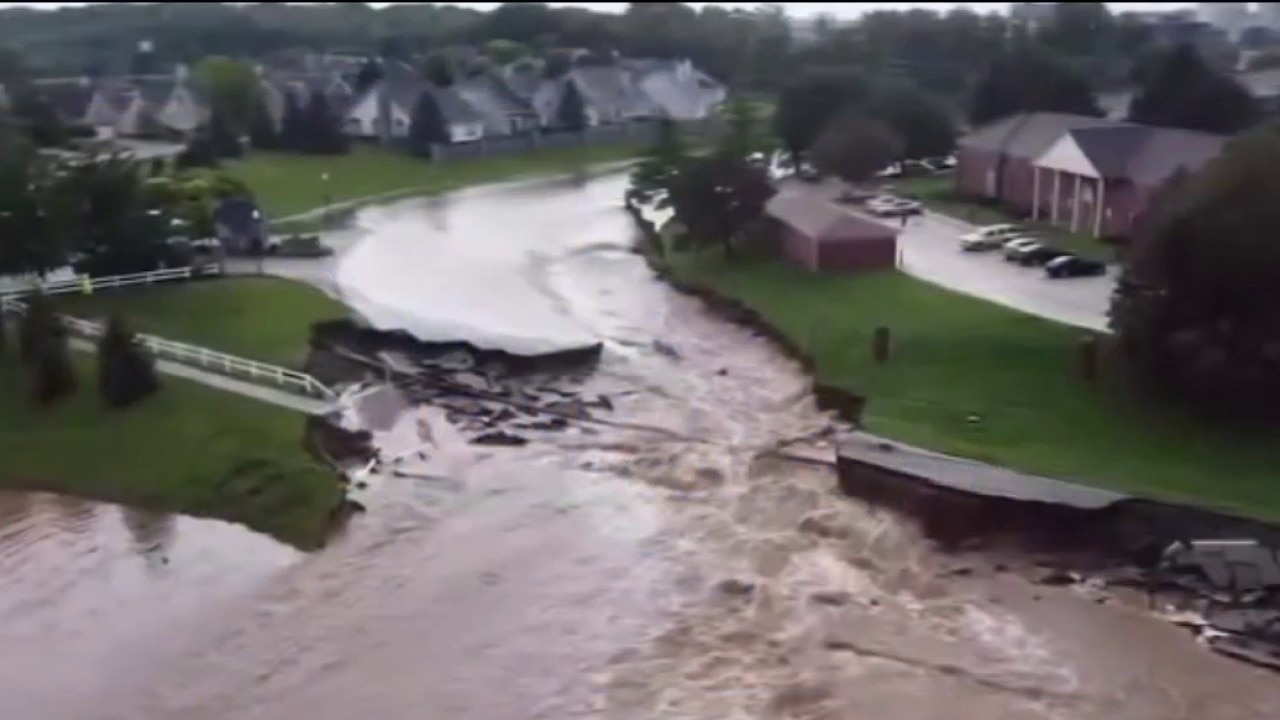
Indiana flooding leaves at least 7 dead
Severe storms across Indiana since Aug. 11 have left at least seven people dead and devastated infrastructure across the state.
Severe storms across Indiana since Aug. 11 have left at least seven people dead and devastated infrastructure across the state.
At least 7 people dead
The Victims:
Since storms lashed the state starting on Aug. 11, at least seven people have died due to storm-related incidents, the Indiana State Emergency Operations Center (SEOC) confirmed.
The storm's casualties include a 4-year-old boy in Jennings County, two women in Porter and Lake Counties, a 19-year-old man and 58-year-old woman in Delaware County, a man in LaPorte County, and a 31-year-old man in Henry County, according to the Indiana Department of Homeland Security.
Jennings County officials, in the southern portion of Indiana, said that the 4-year-old boy was killed when a tree crashed through his bedroom window amid strong winds, according to the Associated Press.
The 19-year-old man's body was recovered Saturday. Officials in Delaware County, east of Indianapolis, said Matthew Morey had jumped off a bridge into the Mississinewa River with friends three days prior. He was a recent high school graduate who was headed to Purdue University.
Delaware County officials also stated the body of 58-year-old Stephanie Sallee and her dog were recovered in a cornfield on Saturday, not far from her car. Officials believe that she had been driving on a flooded road when her vehicle was taken away by the floodwaters. She is remembered by loved ones as a compassionate and loving person.
A 31-year-old cyclist was found dead early Sunday in a hole that opened up on a washed-out road in Henry County, east of Indianapolis.
Henry County Coroner Brian Clark said the man, James Briar, appears to have gone around a barricade and fallen into the collapsed road.
State of Emergency declared
Big picture view:
Indiana Gov. Mike Braun declared a State of Emergency on Wednesday, requesting FEMA to bring additional federal resources to Indiana.
President Donald Trump approved the funding request on Saturday, with FEMA announcing that "federal disaster assistance is available to the state of Indiana to supplement state, tribal and local response efforts due to the emergency conditions resulting from severe storms, straight-line winds, tornadoes and flooding beginning on August 11, 2026, and continuing."
Widespread destruction throughout Indiana
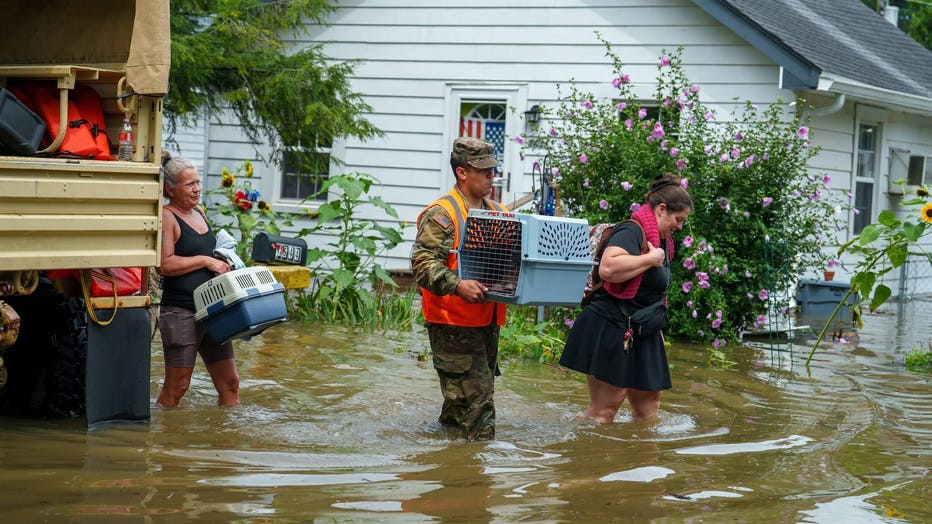
(Indiana National Guard)
Local perspective:
The storm's winds, heavy rainfall, and flooding also contributed to mass power outages and hundreds of structural threats.
The storm's winds reached 90 to 100 mph in northern Indiana, while the National Weather Service stated that over 11 inches of rain fell in parts of the state over two days.
This caused the White River to surge, cresting near 25 feet, which according to local reports, overtakes the previous record of 23.6 feet set in 1913.
In a press conference Sunday, officials noted the loss of the Hazel Dell Parkway, which collapsed as a result of rising floodwaters. Engineers are currently assessing the bridge to determine if it is repairable, or if a full replacement is needed.
The extreme water levels also caused significant infrastructure damage. On Saturday, the Indianapolis Department of Public Works warned of an imminent structural failure at multiple buildings due to erosion from a severe washout on an Indianapolis roadway.
As of Sunday, about 130,000 utility customers in Indiana remained without power. This is down from earlier in the week, when those numbers hit around 300,000, according to the online utility tracker PowerOutage.us.
Storm impacts
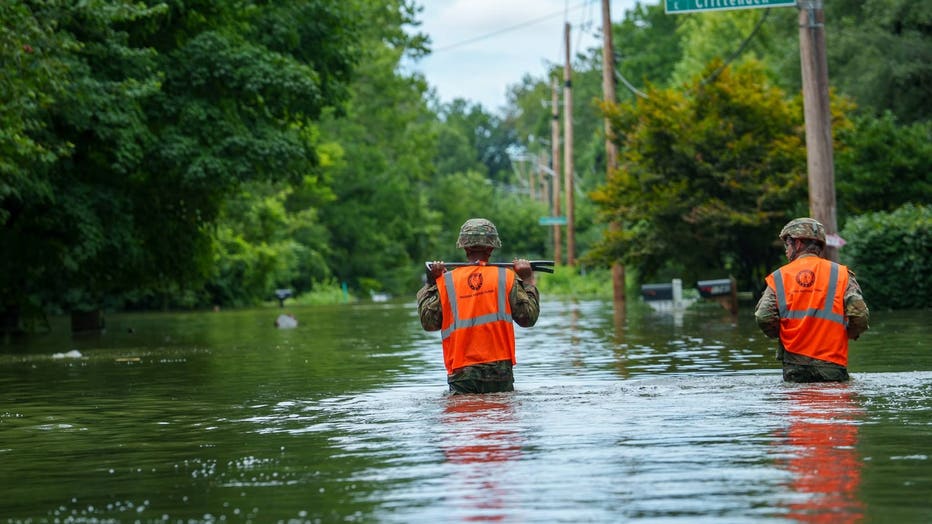
(Indiana National Guard)
Records broken :
Heavy rains over the past week caused rivers to crest, setting new records. The White River, which runs through Indianapolis, crested at more than 24 feet, surpassing records set in 1913.
Indianapolis Mayor Joe Hogsett said the flooding was the worst Indianapolis has seen in over 30 years. While Gov. Mike Braun’s office stated that over 350 evacuations had been implemented throughout Indiana.
Flood safety
What you can do:
On average, flash floods claim the lives of over 89 people each year in the U.S., with most fatalities occurring in vehicles when drivers attempt to cross flooded roadways.
The National Weather Service (NWS) urges drivers to pay attention to barricades and to follow the advice "Turn Around, Don’t Drown," recommending never to drive through flooded roadways, since the condition of the roads is often unknown.
They also advise never to camp or park a vehicle along streams or flood washes, as creeks and streams can rise rapidly during heavy rainfall.
What to do if you have to drive through deep water or flooded streets
- Take extreme precaution while driving through deep water.
- Do your best to estimate the depth of the water.
- Drive slowly and steadily through the water.
- Avoid driving in water with downed electrical and power lines.
- Stay off your phone.
- When an engine stalls in deep water, it’s best to restart the engine to make it to safety.
- Watch for large items traveling downstream – they may crush or trap you.
- If you are unable to safely exit the car due to flooding, try to call 911 or seek help by getting the attention of someone nearby.
The Source: This article sources information from The Associated Press, National Weather Service, Indiana National Guard, FEMA, the Indiana State Emergency Operations Center, the Indiana State Guard, as well as the Indiana Governor's office. This story was reported from Eden Prairie, Minnesota.