

Little Village sees demographic shift with influx of Black residents
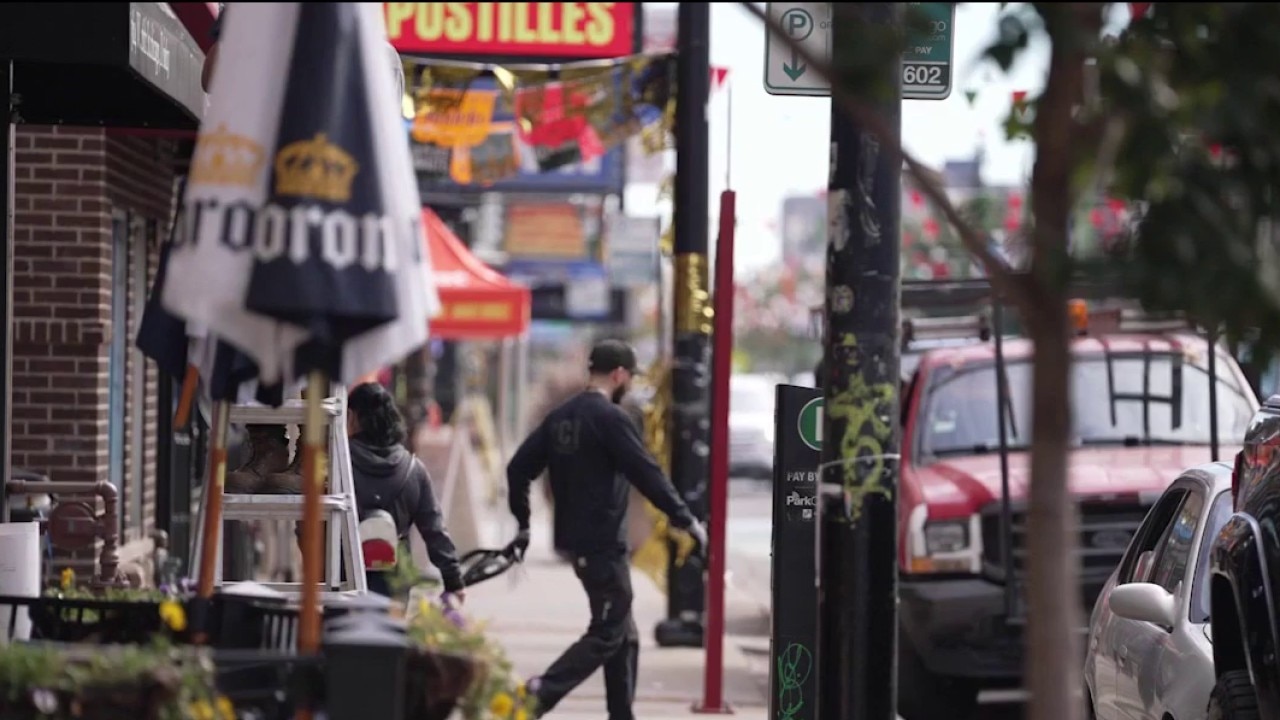
Black families are moving into Little Village as Chicago’s West Side demographics shift
North Lawndale and Little Village sit just a few miles apart on Chicago’s West Side, but the two neighborhoods are experiencing very different demographic changes.
CHICAGO - North Lawndale and Little Village sit just a few miles apart on Chicago’s West Side, but the two neighborhoods are experiencing very different demographic changes.
North Lawndale has long been one of Chicago’s predominantly Black communities. But decades of population loss and disinvestment have left parts of the neighborhood with vacant lots, boarded-up buildings and fewer businesses.
Shifting demographics
By the numbers:
The numbers show how much the community has changed.
According to Great Cities Institute, in the 1980s there were 61,534 Black residents in North Lawndale. By 2017, there were 35,942.
As North Lawndale’s population has declined, another West Side neighborhood is seeing growth among Black residents.
Little Village, officially known as South Lawndale, is home to nearly 75,000 people. About 81% identify as Hispanic or Latino, while about 13% are Black.
Local perspective:
For some of those new residents, the neighborhood’s businesses, services and sense of community are part of the appeal.
Britteny Cobbins and her wife moved from the South Side to Little Village about four years ago.
"Most of the stuff I need are in one spot, always vibrant, people selling so many amazing things outside," Cobbins said.
Cobbins said her previous neighborhood had fewer nearby stores and services.
"[In the] neighborhood I was at, there was not a Walmart around, not even a Walgreens and a Family Dollar was five blocks away," she said.
She said Little Village offered more resources, including medical and dental services, restaurants and grocery stores.
"There are so many resources, dental places, medical places, stores restaurants, grocery stores that are very in-area and it's a great place to be around. You can also learn a lot of Spanish," Cobbins said.
Cobbins also said she feels safer in Little Village.
"The police are actually very active around here and I think due to all the businesses," she said.
Lamont Norwood made a similar move, relocating from North Lawndale to Little Village with his girlfriend about four years ago.
Norwood said he noticed more storefronts and businesses in Little Village and appreciated the neighborhood’s walkability and resources.
But his experience as a Black resident has been more complicated.
"I wouldn’t say welcomed, but I wouldn’t say unwanted either," Norwood said.
He said he recognizes the pride longtime residents have in their community.
"It’s their area and they take pride in their culture here," he said.
Teiona Mallett, a local teacher, said she has also noticed the neighborhood becoming more diverse.
"From Hispanic to African Americans, I’ve even seen some Asians," Mallett said.
Mallett said the neighborhood’s businesses and resources have continued to grow.
"I would say probably more resources, I’ve seen a lot more stores opening up. It’s a lot of stuff happening on over here now," she said.
The backstory:
The demographic shift was not immediate, and it comes with a complicated history between Chicago’s Black and Latino communities.
During the 2020 protests following George Floyd’s death, tensions flared between some Black and Latino residents and business owners. Black residents also reported harassment in some predominantly Latino neighborhoods.
But Black and Latino leaders also worked to push back against those divisions, emphasizing common interests between the communities.
Baltazar Enriquez of the Little Village Community Council said some longstanding stereotypes about Black residents have contributed to tensions.
"It’s the bad reputation and the bad mouths ‘oh, you can’t trust the Black community, they will rob you.’ We are saying no, that’s not true," Enriquez said.
Enriquez said the neighborhood has had to adapt as more families from different racial and ethnic backgrounds move into Little Village.
"We have to change the way you serve the community, now you need bilingual staff. Now you need to hire other races," Enriquez said. "It gives us a uniqueness that other communities don’t have."
He also pointed to cooperation between Black and Latino residents during Operation Midway Blitz.
"During Midway Blitz, the African community came and helped us and they were blowing whistles and they were chasing ICE out of, not only out of Little Village, but also ‘don’t come to our side, stay out of our neighborhoods too," Enriquez said.
Enriquez believes those moments of solidarity may be one reason more Black families are moving into the neighborhood.
"We were not going to divide, if anything we were going to unite and we did that during George Floyd and that’s why we now have families in Little Village moving in because they saw that it was not us hating each other," he said.
Local businesses are seeing a demographic change as well.
Jesus Davila, who has operated Davila Tax Service along 26th Street for more than 40 years, said he has seen an increase in Black customers.
"I do have a lot of Black customers … as a matter of fact, it has increased," Davila said.
He said that increase has helped businesses, particularly at a time when many lost sales during Operation Midway Blitz.
"We don’t see them as a threat. In the past, there was that fear of different races but now the more they come into the area the more we realize it’s a plus to the community," Davila said.
Part of what continues to draw residents to Little Village is the 26th Street commercial corridor.
Sixteen primarily Latino commercial corridors across Chicago generated approximately $1.76 billion in taxable sales in 2024.
For Norwood, the sense of community is also important.
"The community, they stand together, especially when the ICE situation was going on, they had the signs, they had the whistles. That's just something I think our culture should have more of — that bond," he said.
Davila said he sees the arrival of Black families as an opportunity rather than a threat.
"When we see a Black family move in, back in Mexico we usually bring a cake or something but in reality, to us it's not a challenge," Davila said.
But Little Village itself is changing.
Dig deeper:
A new UIC report found Belmont Cragin has now passed Little Village as Chicago’s largest Latino community by population.
Belmont Cragin has nearly 58,000 Latino residents, while Little Village has about 56,000.
The shift is another sign of the demographic changes taking place across Chicago’s West and Northwest sides.
Those changes also are raising concerns about gentrification and whether rising rents and housing costs could eventually push out families who have lived in Little Village for generations.
Enriquez said affordability remains a major concern.
"A family here combined they’re making about $45K a year, that’s what we’re scared of. Rich vs. the poor. When rich people move in here, our taxes go up, our businesses start disappearing, our culture disappears. That’s what threatens us more," Enriquez said.
At the same time, residents and business owners point to potential benefits from the neighborhood’s growth, including more businesses, jobs, investment and services.
Enriquez said the goal is to build a community where residents from different backgrounds can live alongside one another.
"When people ask about race, the answer should be human. That's the only race that should exist," Enriquez said. "We are fighting segregation, division and we're doing it by welcoming our brothers and sisters into our neighborhood."
The Source: The information in this report came from Great Cities Institute reports and data, interviews with Little Village and North Lawndale residents and community leaders, local business owners and a teacher, and UIC research on demographic and economic changes across Chicago.