

Lawsuit over fatal 2021 Chicago police shooting of Adam Toledo goes to trial
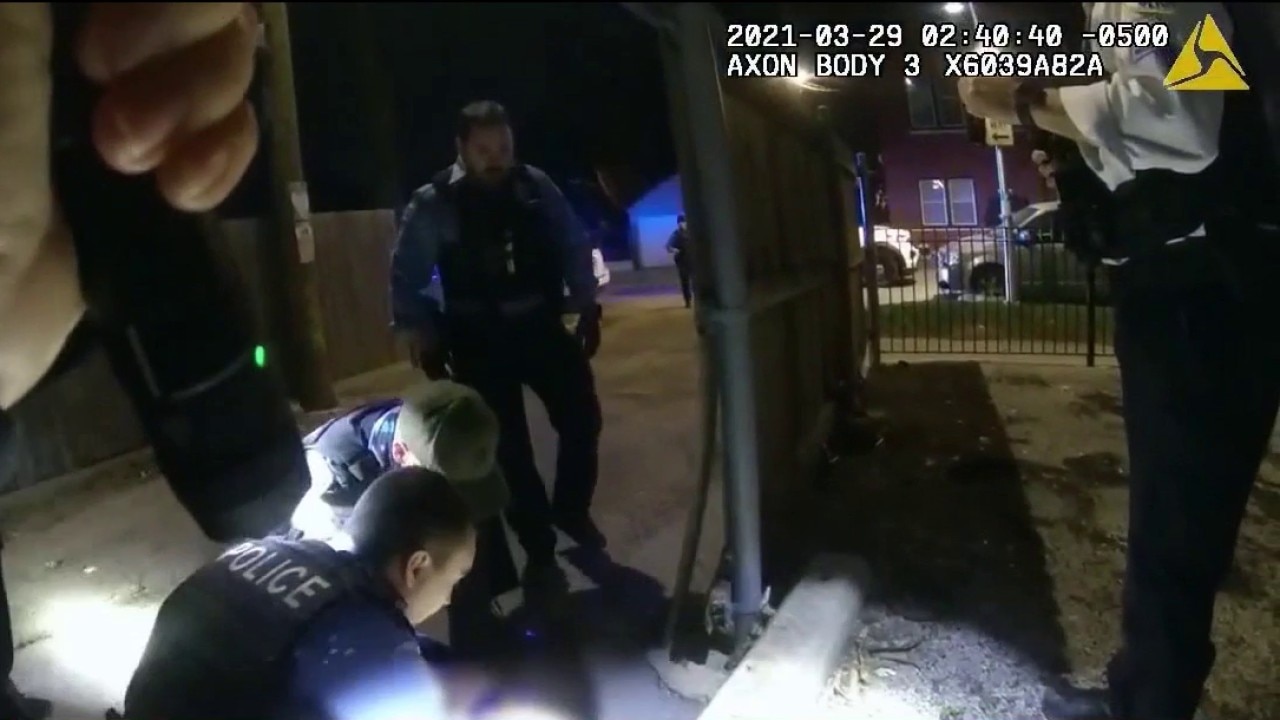
Lawsuit over fatal CPD shooting of Adam Toledo goes to trial
A wrongful death lawsuit filed in the 2021 police killing of Adam Toledo is expected to go to a jury trial on Monday.
CHICAGO - Just over five years after a Chicago police officer shot and killed Adam Toledo, a 13-year-old boy, during a foot chase on the city’s West Side, a wrongful death lawsuit filed by his family will be heading to trial on Monday.
The fatal shooting sparked outrage and calls for reform to the Chicago Police Department’s protocols on foot chases.
In 2022, Toledo’s parents filed a wrongful death lawsuit against the city and the officer who fatally shot the boy, Eric Stillman. In their lawsuit, the Toledo family claimed Stillman did not follow department protocols as he chased and then fatally shot the boy.
"It has been extremely excruciating for them every day that has gone by, every family event, every child's birthday, every anniversary of his death," said Adeena Weiss Ortiz, the Toledo family's attorney, on The Chicago Report last week.
Weiss Ortiz said she plans to bring forth a variety of evidence related to the case that the public hasn't seen before and that the proceedings could include around 90 witnesses. She said the trial could "easily" last for around two months.
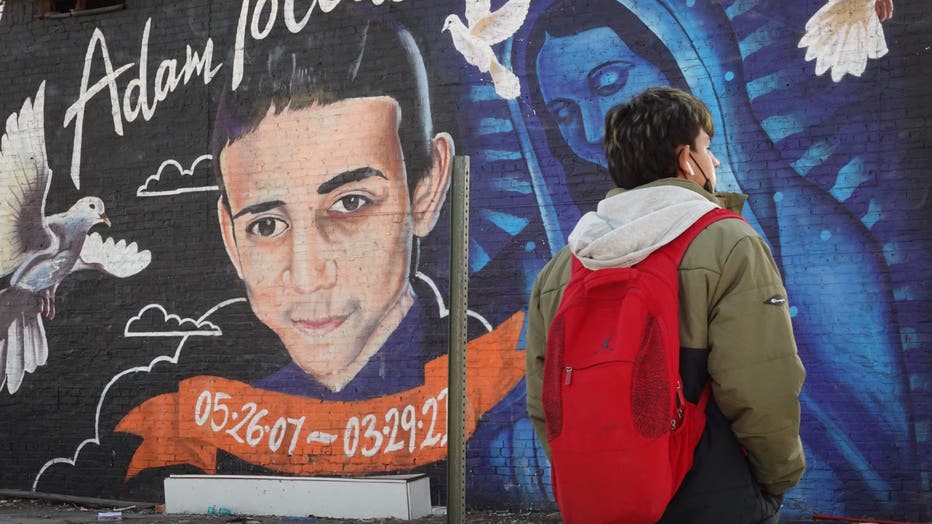
CHICAGO, ILLINOIS - MARCH 15: A mural painted on the side of a small grocery store in the Little Village neighborhood memorializes 13-year-old Adam Toledo on March 15, 2022 in Chicago, Illinois. Toledo was shot and killed by a Chicago police officer
The shooting death of Adam Toledo
The backstory:
Around 2:36 a.m. on March 29, 2021, Stillman and his partner were on patrol when they were notified about a report of gunfire in the 2300 block of S. Sawyer Avenue by ShotSpotter, a gunshot detection system the city used at the time.
Stillman and his partner responded to the location where they found Toledo and Ruben Roman, a 21-year-old man, near an alleyway. Toledo and Roman saw the officers’ car and ran, according to a summary of an investigation from the Civilian Office of Police Accountability (COPA). The officers got out of their unmarked car and "immediately pursued the two on foot," according to the lawsuit.
Within seconds, Roman was apprehended by the officers, and Toledo continued to run away with Stillman giving chase, which was contrary to CPD’s foot pursuit training at the time, the lawsuit claims. Stillman and his partner also did not notify the city’s Office of Emergency Management and Communications of the pursuit, according to COPA.
As Stillman chased Toledo, he ordered the teen to show his hands. He saw the boy had a "dark-colored pistol" in his right hand, before, unbeknownst to Stillman, Toledo tossed it alongside a wooden fence.
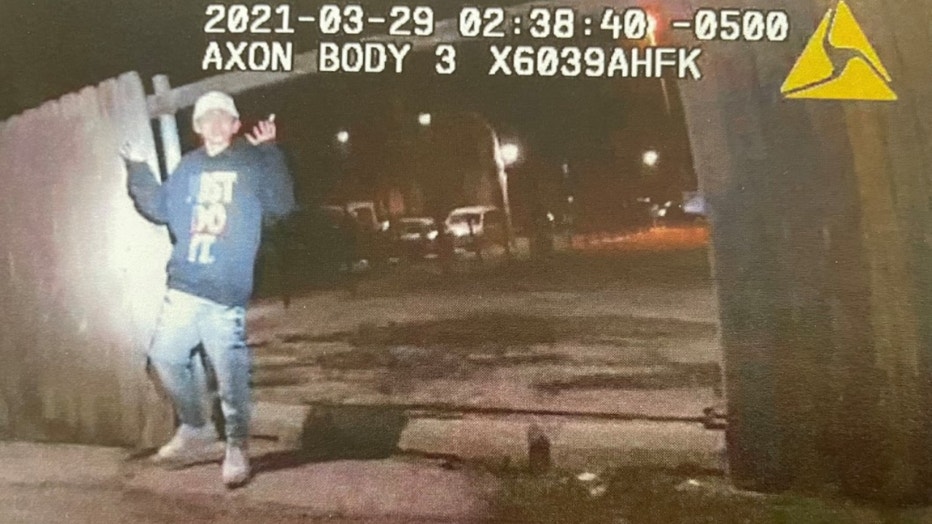
Adam Toledo is seen raising his hands in an alley just before being fatally shot by Chicago Police Ofc. Eric Stillman, on March 29, 2021.
Toledo "slowed down to surrender as he approached an opening in the alleyway fence," according to the lawsuit. The boy stopped to face Stillman and put his hands in the air, but the officer shot Toledo once in the chest.
Toledo immediately collapsed to the ground.
Stillman then tried to render aid to Toledo, but he died at the scene.
A black, semi-automatic pistol was later found next to a wooden fence several feet from where Toledo was shot, according to the COPA report.
‘I know that he’s going to kill me’
Dig deeper:
Like in all other cases in which a Chicago police officer shoots someone, COPA investigated the shooting.
Stillman told investigators that he feared Toledo would shoot at him over his shoulder. According to the COPA report, Stillman described his thought process leading up to the shooting: "I know that he’s going to go ahead and if he turns at me he’s going to shoot me. I know that he’s going to kill me. I just know it. He starts to turn, I end up shooting. I shoot one time. After I shoot, I re-accessed [sic] it. I see his hands. I know he doesn’t have the gun."
When asked why he decided to chase Toledo, Stillman told investigators he had reasonable suspicion to stop him based on the ShotSpotter alert, the fact that no one else but the teen and Roman were present, and that they were in an area of "high gang activity." Stillman added that he believed Toledo was likely to be armed because he fled and disregarded his verbal commands.
"And I felt that he was a danger to society, and that’s why I took chase," Stillman told investigators. "I was doing my job."
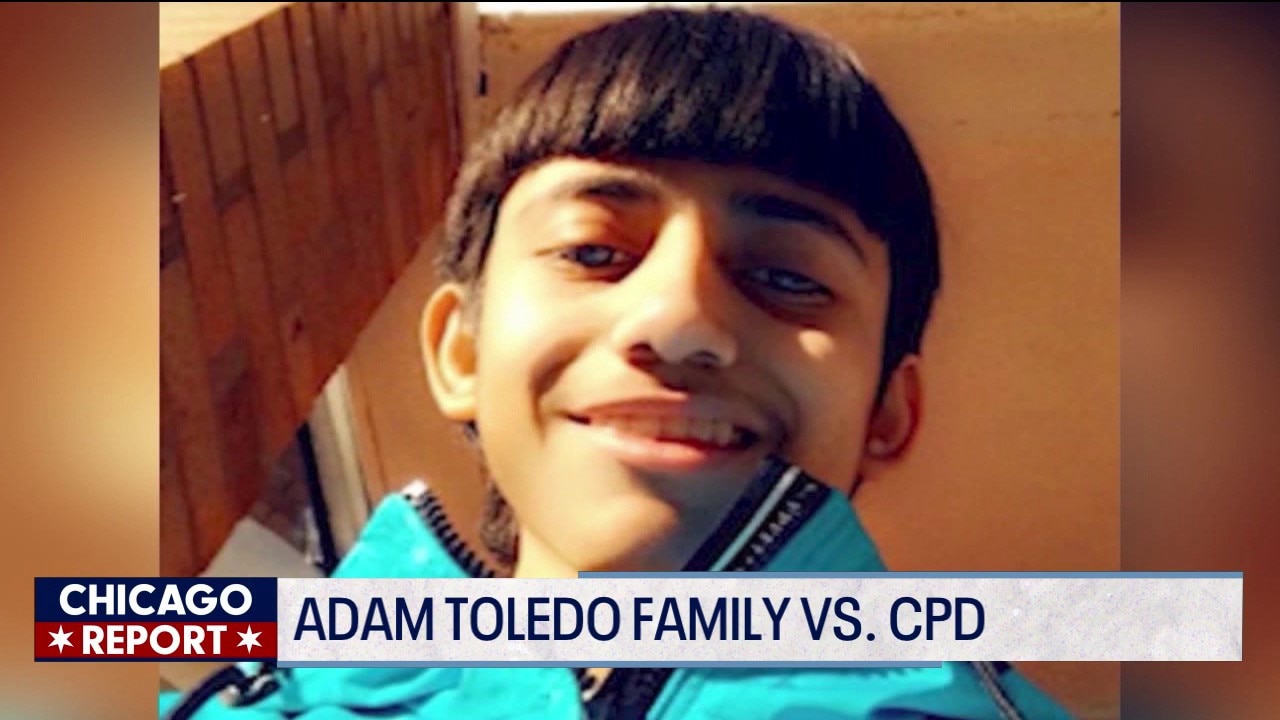
Adam Toledo Family vs. Chicago Police Department | The Chicago Report
On Monday, the civil trial begins against the Chicago Police Department and former police officer Eric Stillman for the death of 13-year-old Adam Toledo. The Toledo family’s attorney Adeena Weiss joins us now to give us an update before the trial gets underway.
In their lawsuit, Toledo’s parents claim that Stillman’s use of deadly force was "unjustified, excessive, and violated CPD’s policy on the use of force."
The lawsuit added, "Adam never posed an imminent threat of death or great bodily harm to Stillman or any other person." The Toledo family said Adam never pointed the gun or threatened the officers, and that Stillman firing his gun was "not objectively reasonable."
After its investigation, COPA found that Stillman "used force that was not proportional" to Toledo's actions and that he failed to follow his training in regard to foot pursuits. The agency recommended that he be fired.
Then-CPD Supt. David Brown disagreed with some of COPA's conclusions and argued that Stillman fired his gun "under reasonable belief that [Toledo] was preparing to shoot at him." Brown also argued that Stillman should not be fired.
In 2022, the Cook County State's Attorney's Office declined to file criminal charges against Stillman in connection with the shooting.
Revised foot chase policy
Why you should care:
In the year after Toledo’s shooting death, the Chicago Police Department revised its policies and, for the first time, instituted permanent rules about when an officer can and can’t chase someone.
Essentially, the policy states that officers can only chase someone on foot if there is a valid need to detain the person that outweighs the threat a pursuit poses to public safety.
An officer cannot chase someone solely because the person runs away or tries to avoid the officer.
The policy states that the safety of officers, members of the public, and the person being chased "is the primary consideration" for whether an officer should start or continue a foot pursuit.