

Trump threatens to leave NATO again over Iran war: Can he do it?
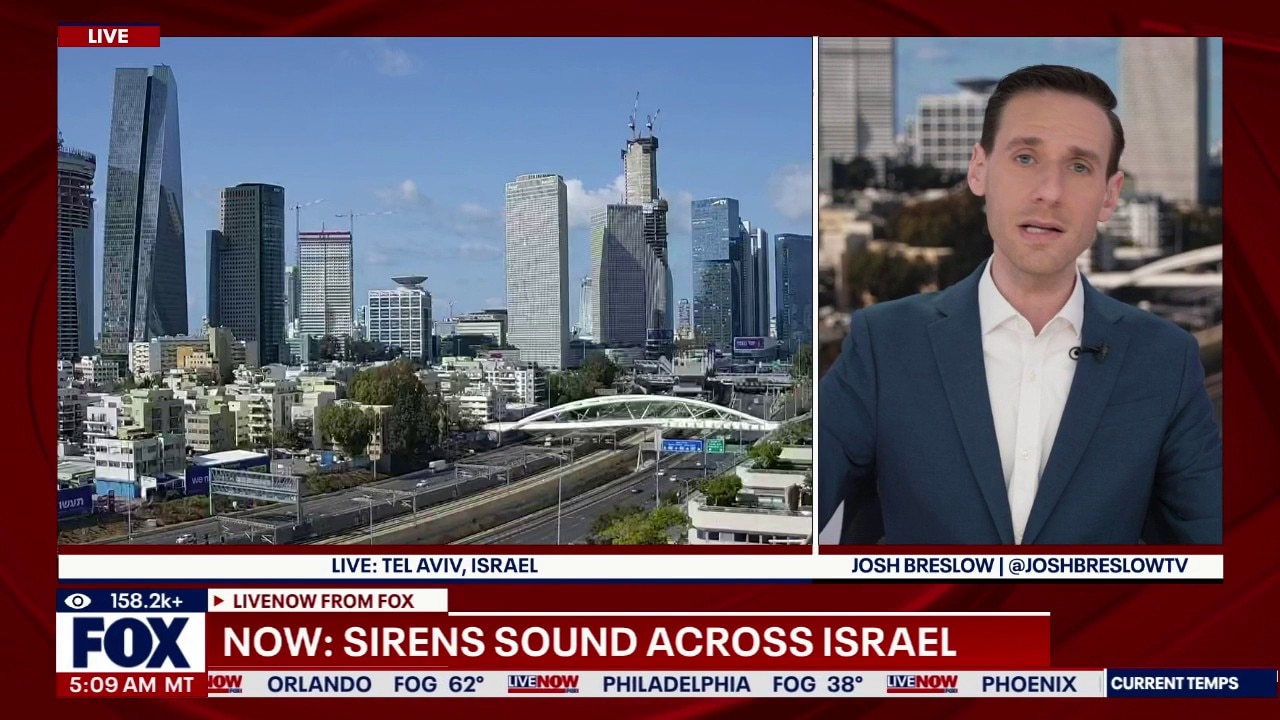
NATO intercepts Iran missile aimed at Turkey
According to the Turkey Defense Ministry, NATO defenses shot down an Iranian drone fired toward the country. The incident marks the first time a country like Turkey has received Iranian missile fire. Andrew Borene over at the George Mason University weighs in.
President Donald Trump told a British newspaper he’s strongly considering pulling the U.S. out of NATO over the reluctance of European allies to join the U.S.-Israeli war against Iran.
A U.S. pullout would essentially spell the end of the North Atlantic Treaty Organization, which British Prime Minister Keir Starmer called "the single most effective military alliance the world has ever seen." Here’s the latest:
Why does Trump want to withdraw from NATO?
What we know:
Trump has been desperate to get allied countries to send their ships to the Strait of Hormuz, where 20% of the world’s oil passes through each day. The strait has been closed since the start of the Iran war on Feb. 28, leading to soaring gas prices that averaged more than $4 a gallon in the U.S. on Wednesday.
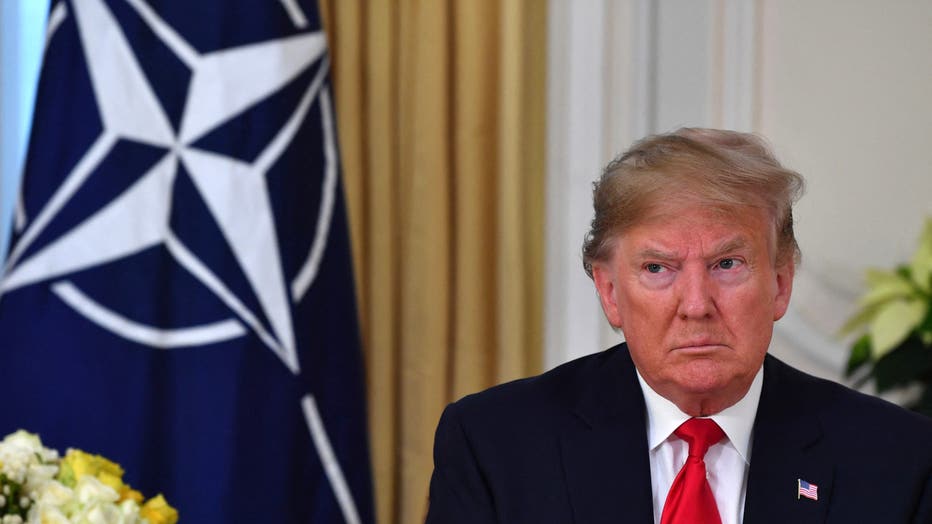
FILE - US President Donald Trump speaks during his meeting with Nato Secretary General Jens Stoltenberg at Winfield House, London on December 3, 2019. ) (Photo by NICHOLAS KAMM/AFP via Getty Images)
NATO countries and other allies, and even rival China, have so far declined to help secure the strait. European leaders have fumed since the war’s outset because they weren’t informed ahead of time, seen as a break with precedent.
RELATED: Iran war latest: Trump says Iran wants ceasefire, says conflict could end within two to three weeks
Trump, meanwhile, has repeatedly called NATO allies "cowards" as he tries to get help with the fallout of a war that no ally was consulted on or asked to take part in.
What we don't know:
It’s unclear how serious Trump is about leaving NATO. He has raised the idea before, but the comments to Britain’s Telegraph newspaper, published Wednesday, were among the clearest and most disparaging yet.
What they're saying:
Asked whether he would reconsider U.S. membership in the alliance after the war on Iran ends, Trump told The Telegraph. "Oh yes, I would say (it’s) beyond reconsideration."
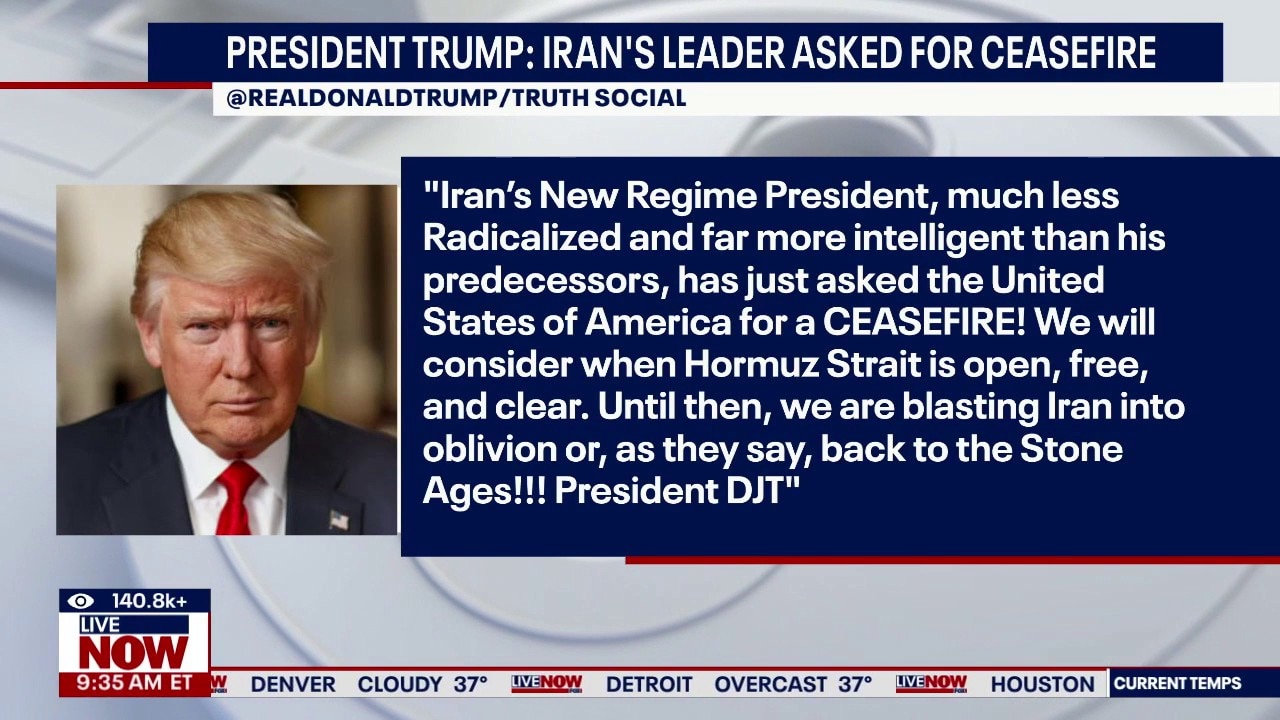
Trump: Iran's leader asking for ceasefire
President Trump says Iran is now asking for a ceasefire. This comes as president Trump is set to address the nation at 9PM on operations in Iran. Here's what the president had to say on Truth Social: "Iran’s New Regime President, much less Radicalized and far more intelligent than his predecessors, has just asked the United States of America for a CEASEFIRE! We will consider when Hormuz Strait is open, free, and clear. Until then, we are blasting Iran into oblivion or, as they say, back to the Stone Ages!!! President DJT"
On Truth Social on Tuesday, Trump lashed out at countries "like the United Kingdom, which refused to get involved in the decapitation of Iran," and suggested they buy U.S. oil or go to the Strait of Hormuz themselves "and just take it."
READ MORE: Trump’s signature will appear on US currency, a first for a sitting president
He also wants allies to help fix damage from the war, even though they had no say in starting it.
The other side:
NATO has not responded to a request for comment from The Associated Press, but European Union leaders have been firm in their stance on Iran.
"This is not Europe’s war. We didn’t start the war. We were not consulted," EU foreign policy chief Kaja Kallas said in mid-March.
RELATED: Trump to address nation on Wednesday regarding conflict in Middle East
Frank-Walter Steinmeier, Germany’s largely ceremonial president, last week called the aggression against Iran a "dangerous mistake" in violation of international law.
Spain — the most vocal critic in Europe — on Monday said it closed its airspace to U.S. planes involved in the Iran war.
What is NATO?
The backstory:
NATO is an alliance of democratic nations in Europe and North America that support each other through collective defense. It was founded in 1949 in the aftermath of World War II, as Western nations sought collective security against the growing influence of the Soviet Union. The alliance initially included 12 countries from North America and Europe, united by the principle of collective defense.
In response, the Soviets created the Warsaw Pact in 1955. It was a military alliance of Eastern European countries under Russian influence. That alliance fell apart in 1991 with the collapse of the Soviet Union. Today, NATO has grown to 32 members, including more than a dozen former Warsaw Pact countries.
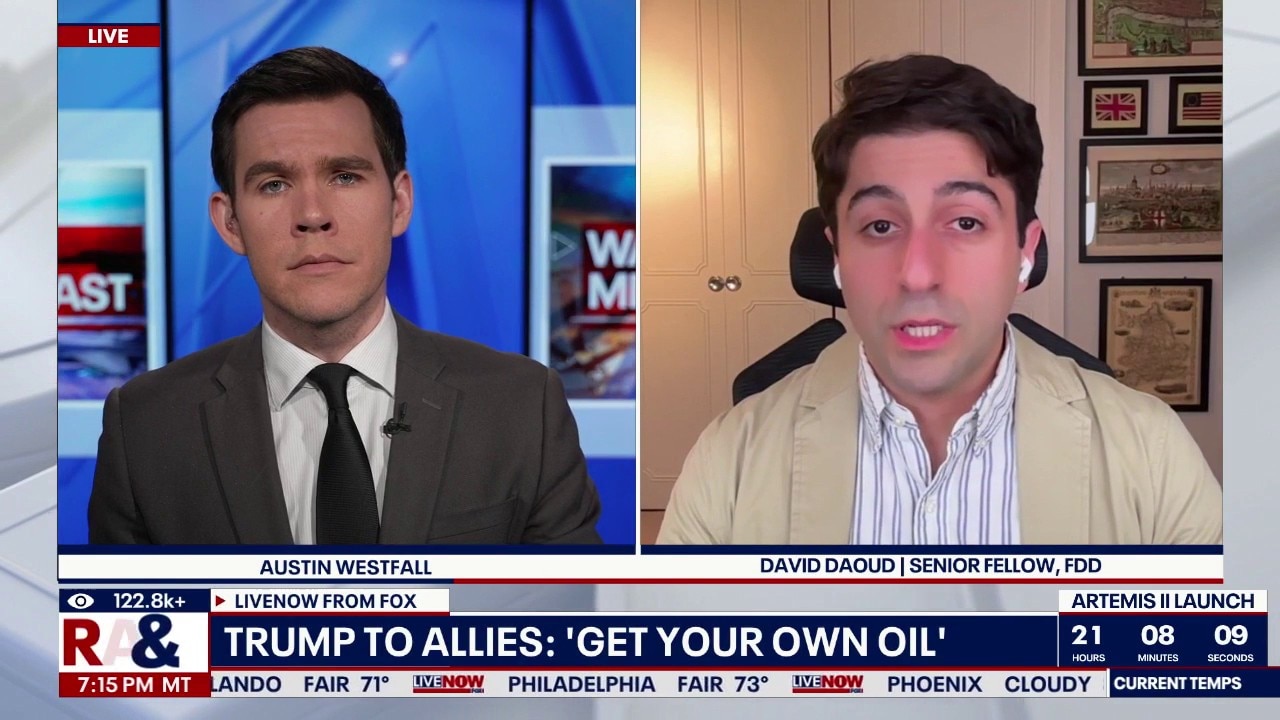
Trump says US will leave Iran in 2 to 3 weeks
LiveNOW’s Austin Westfall is speaking with David Daoud, a Senior Fellow at the Foundation for Defense of Democracies, as the war in Iran continues for yet another week.
NATO is built on Article 5 of its founding treaty, which pledges that an attack on any one member will be met with a response from them all. That principle is what gives the alliance its strength. The United States is one of the only NATO members large enough to defend itself against a big threat. The alliance helps small countries feel largely protected.
NATO operates uniquely by consensus. All 32 countries must agree for it to make decisions, so political priorities play a role. Even invoking Article 5 requires agreement among the allies. Turkey or the U.K. cannot trigger it alone.
Can Trump leave NATO?
Dig deeper:
Despite Trump’s repeated threats, the president cannot legally withdraw the U.S. from NATO. A 2023 law passed by Congress and signed into law by former President Joe Biden requires approval from two-thirds of the Senate or an act of Congress to exit the military alliance.
The Source: This article includes comments from President Trump’s interview with The Telegraph and his Truth Social platform, and information from The Associated Press and Congress.gov.