

Chicago History Museum's 'Us at 250' uses art to reexamine America's story
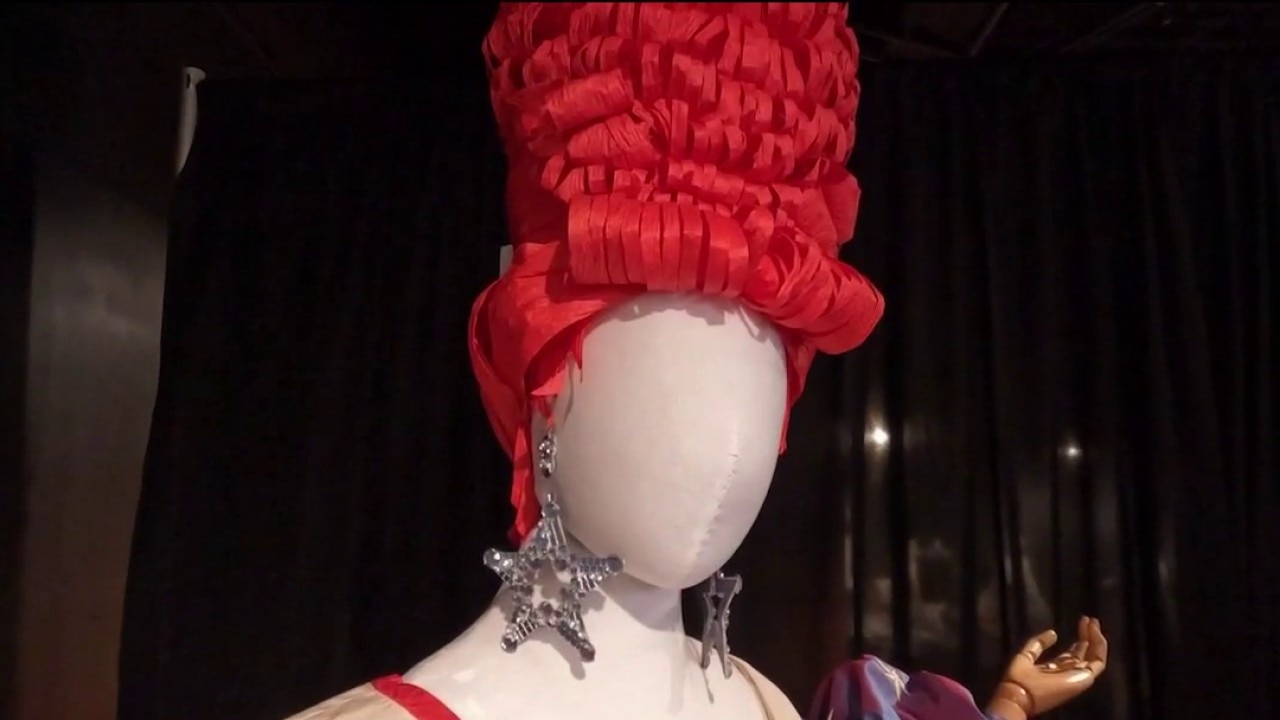
Chicago History Museum's 'Us at 250' reexamines America
250 years of America's history told through a wheelbarrow. It's a story of land, loss, and communities that refused to disappear. Tia Ewing takes us inside the exhibit challenging how we remember our nation's past.
CHICAGO - As the United States approaches its 250th anniversary, the Chicago History Museum is asking visitors to look beyond the fireworks, flags, and celebrations and take a deeper look at the stories that shaped the nation.
What we know:
The museum's newest exhibition, Us at 250: Civic Action in Chicago, brings together local artists and historical documents to explore themes of freedom, displacement, resilience, citizenship, and social justice.
"We knew that we needed to do something significant for the 250th anniversary of the Declaration of Independence," said Elena Gonzales, curator of civic engagement and social justice at the Chicago History Museum. "The important thing for us today is not to celebrate the nation's birthday with, 'yay, everything's a big birthday party,' but rather to take this moment, which is an anniversary, to comment on where we are now. What's happening now? Where are we going as a nation? How do we feel about that? What could we do to create a more perfect union?"
The exhibition features artists' responses to four foundational documents in American history: the Declaration of Independence, the Northwest Ordinance, the U.S. Constitution, and the Thirteenth Amendment.
One of the featured installations, Porta(til), responds to the Northwest Ordinance of 1787, a piece of legislation that opened the door to westward expansion.
"What we're looking at is really talking about the way that this piece of legislation made it possible to turn territory in the West into states, displaced Native Americans from their lands here, and enabled the entire western part of the United States to become part of a country," Gonzales said.
The exhibition's second installation was created by two Chicago artists whose work explores displacement from different perspectives.
"They are really telling two different stories about displacement with their two different pieces," Gonzales said.
Carlos Flores, an interdisciplinary artist rooted in Chicago's Southwest Side communities, uses his installation to explore colonial expansion, environmental injustice, and the displacement of Indigenous and Latino communities. Built around portable altar-inspired monuments, Flores' work examines how communities continue to resist gentrification and maintain cultural identity in neighborhoods like Pilsen and Little Village.
Across the gallery, Englewood-based artist Deon Reed examines the legacy of redlining and housing discrimination.
"He's looking at the history of displacement of African Americans across the nation and here in Chicago," Gonzales said. "From 1910 to 1970-ish, you get the Great Migration coming to Chicago, 500,000 people coming to Chicago, making their homes here, against all odds, and yet still experiencing profound displacement through redlining and other means here in Chicago."
The exhibit also features works that challenge visitors to think about issues still shaping American life today.
One installation, Let Freedom Read, highlights the growing number of books facing bans and censorship across the country.
The piece serves as a reminder that the fight over whose stories are told—and whose are left out—continues today.
For Gonzales, that's one reason art plays such a critical role inside a history museum.
"Sometimes there are situations when we're talking about history where certain people are not showing up as much as they should in the historic record," Gonzales explained. "Art helps us fill in those gaps. When there are stories that are not represented the way that we need in the historic records, artists can step in to help bridge those gaps and allow us to tell stories that so need to be told."
Throughout the exhibition, visitors are encouraged to examine the promises of America's founding documents alongside the realities that followed.
Gonzales said one of the most eye-opening parts of the project was digging deeper into the Northwest Ordinance and the Thirteenth Amendment.
"Thinking deeply about the 13th Amendment, and how it connects to mass incarceration today, and the Northwest Ordinance and how it has been a part of shaping not only the city, not only the Midwest, but the nation as a whole—that has all been a real education for me."
As America approaches its 250th birthday, Gonzales hopes visitors leave with a better understanding of their place in the nation's story.
"I think that the way that we remember this anniversary is important to how we move forward as a nation," she said. "What we have to offer here is the opportunity to see yourself in history, to engage in questions about what that might look like, and to build that future going forward rather than just wave a flag and not really think closely about it."
What's next:
Us at 250: Civic Action in Chicago is now open at the Chicago History Museum and will continue to evolve throughout the year with additional artist installations examining America's founding documents and their lasting impact.
To learn more about the exhibition, museum hours, tickets, and upcoming installations, visit the Chicago History Museum website.
The Source: This story contains reporting from Fox Chicago's Tia Ewing.