

Indiana’s new CDL law puts English proficiency, license checks under the microscope
New Indiana CDL requirements include mandatory English test
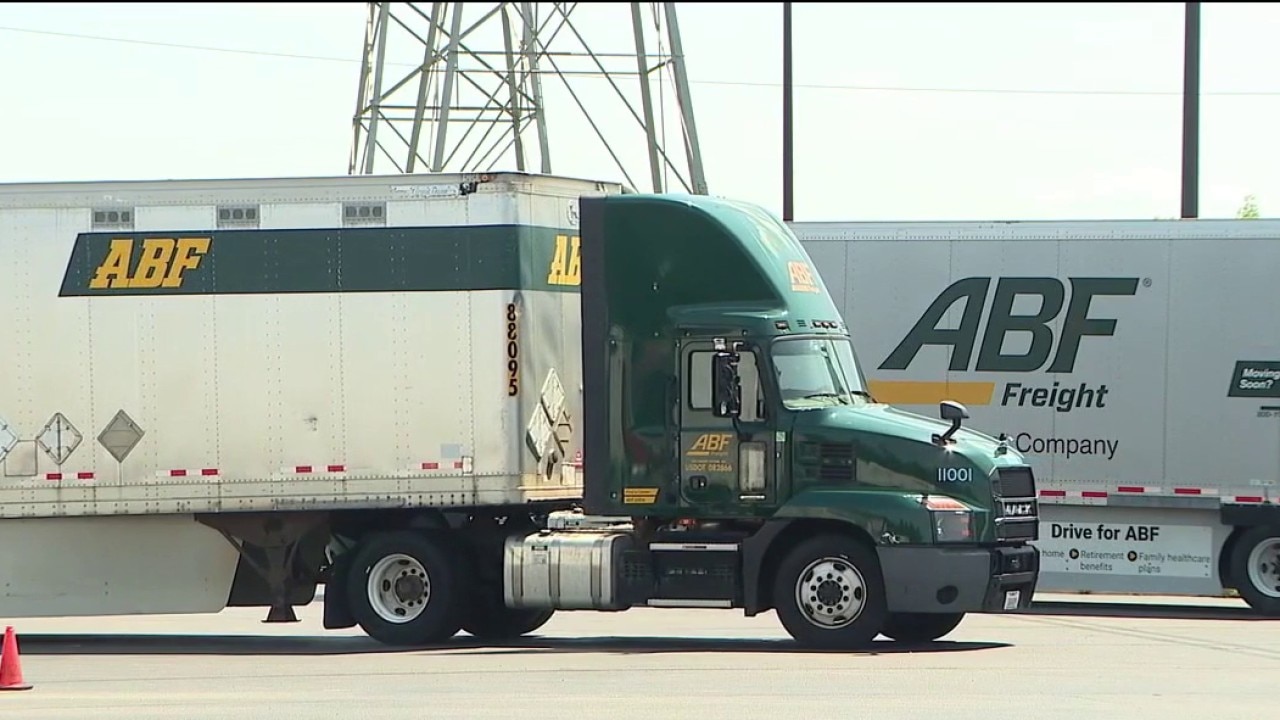
There are new requirements in Indiana when it comes to obtaining a Commercial Driver's License, or CDL. That includes completing a test in English.
GARY, Ind. - A new Indiana law aimed at tightening requirements for commercial truck drivers is now changing how the state checks who is allowed behind the wheel of a big rig.
New Indiana CDL requirements
The backstory:
House Enrolled Act 1200, now state law, adds new English proficiency requirements for commercial drivers and requires CDL applicants to prove they can communicate effectively, understand traffic signs and signals, respond to law enforcement and complete required records.
The law also requires commercial drivers to take their knowledge and skills exams in English or American Sign Language.
State leaders say the changes are about safety.
Indiana Attorney General Todd Rokita said the law came after deadly crashes that raised questions about how some drivers obtained commercial licenses.
One of those crashes involved an Amish family killed in northeastern Indiana by a truck driver holding a Pennsylvania CDL, Rokita said.
He also pointed to the death of Terry, whose crash helped inspire what supporters call "Terry’s Law."
"This was a bill, 1200, that came on the heels of Terry’s death," Rokita said. "We jumped in right away to help write it."
Indiana found nearly 1,800 CDL holders who were not compliant.
Rokita said Indiana took action after reviewing its CDL database and identified roughly 1,800 licenses that needed to be removed.
"We got rid of 1,800 CDLs," Rokita said. "That was my point, not that we’re criminally liable for anything like that, but we at least stood up. We found out that we have some people that shouldn’t have CDLs as well and we got rid of them."
Rokita said the state worked with the Bureau of Motor Vehicles to clean up the database and verify licenses.
"The BMV does not answer to me, they answer to the governor," Rokita said. "But we requested them immediately on the heels of these accidents to start cleaning up their database."
He said Indiana was already compliant by the time the legislation became law.
The law also directs additional verification of certain commercial licenses and requires the state to coordinate with federal agencies when determining whether a driver remains eligible.
How does Indiana know who is qualified?
Rokita said technology and better cooperation between agencies will play a major role moving forward.
"You don’t want to wait to the accident, right?" he said. "There is a lot that we can do."
He said government databases can now be cross-referenced more quickly to identify problems before a crash happens.
"The databases now come right into the squad car," Rokita said. "They can check these things almost in real time."
He said employers also have tools available when hiring drivers, including federal employment verification systems.
"A company can’t knowingly hire someone if they know that person’s an illegal alien with a bad CDL," Rokita said.
CDL schools say communication has always been part of training
At DriveCo CDL Training Center, leaders say students have already been required to communicate in English as part of the testing process.
Karen Orosz with DriveCo said the biggest issue uncovered nationally involved drivers who were able to complete CDL testing despite not being able to communicate effectively.
"The biggest issue was the people that could not speak English," Orosz said. "Somehow they got through the CDL skills test without being able to communicate in English."
Orosz said DriveCo identifies those issues early and often directs students to English as a second language classes before they return for testing.
"We always are held to such high standards," Orosz said. "You have to be able to speak English and communicate with your examiner to get through the exam."
Indiana’s CDL skills test includes three parts: a pre-trip inspection, backing skills and road driving. Orosz said communication is critical because drivers must understand instructions from examiners.
"If they can’t communicate with them, they can’t test," she said.
Will removing drivers hurt the trucking industry?
The trucking industry has raised concerns that removing thousands of drivers could create shortages and impact the economy.
Orosz said she does not expect a major disruption.
"I do not," she said. "I think there’s a lot of CDL schools out there who have done it the right way."
She said trucking remains a strong career opportunity, with many new drivers earning between $50,000 and $90,000 after completing training.
"The biggest thing that hurts is just like every company right now, there’s a lot of attrition," Orosz said. "People retiring that they need to backfill."
She said carriers that work with DriveCo have not reported major problems because many employers already follow the rules.
What happens next?
State officials say enforcement will focus on making sure drivers meet the new standards before they are on the road.
Rokita said there could be future adjustments as Indiana learns how the law works in practice.
"Might there be specific revisions in the future? Sure, as we learn how to put it in practice," he said.
For CDL training providers like DriveCo, Orosz said the message is simple: continue following the requirements already in place.
"We’re going to continue to do what we’ve always done," Orosz said.
The goal, state officials say, is to make sure every commercial driver operating on Indiana roads is properly licensed, trained and able to safely communicate.
The Source: The information in this article was reported by FOX Chicago's Bret Buganski.