

DePaul begins demolishing historic Lincoln Park buildings for new $50M basketball facility
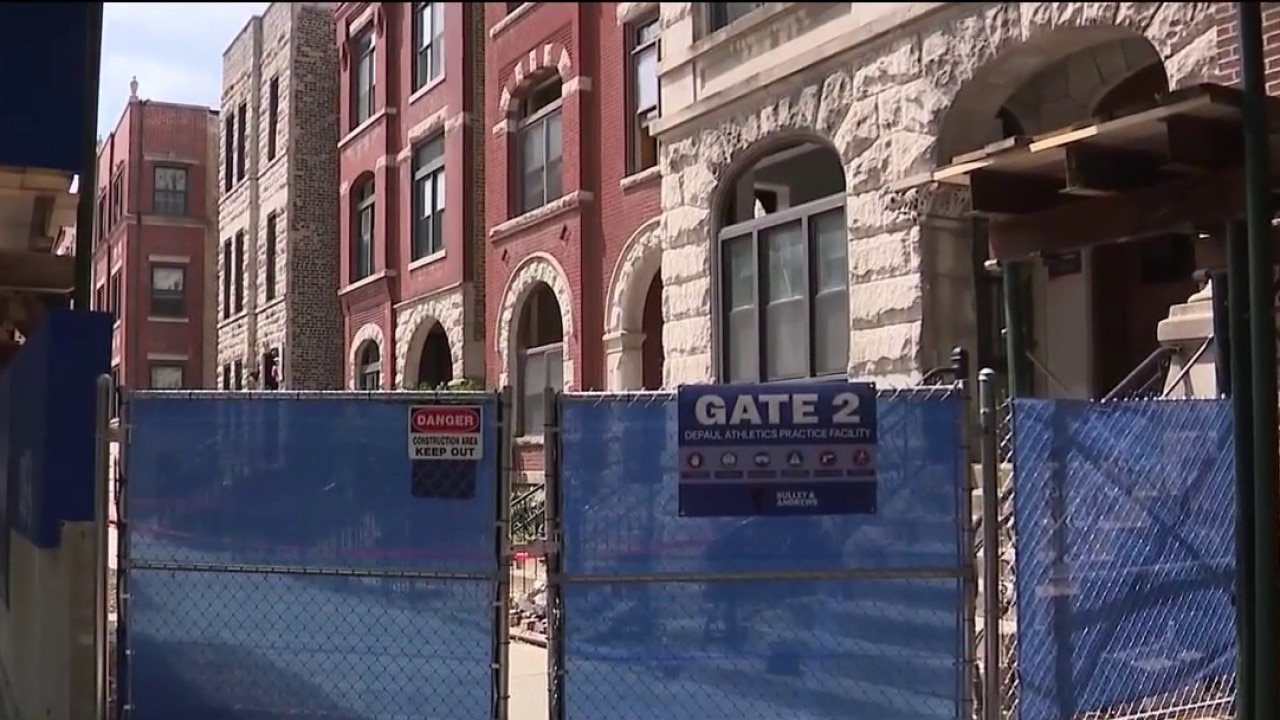
DePaul begins demolition for new basketball practice facility despite criticism
Demolition is underway in Lincoln Park as DePaul University clears former student housing to make way for a new four-story basketball practice facility, a project the university says will strengthen its athletic programs but preservation advocates argue will permanently change the neighborhood.
CHICAGO - Construction crews are demolishing a group of row homes and apartment buildings in Lincoln Park to make room for DePaul University's new practice facility.
DePaul University begins demolition in Lincoln Park
It's a $50 million investment that will help the men's and women's basketball teams have dedicated practice spaces. The building will be four stories tall, with two new basketball courts, locker rooms, training rooms and athletic offices.
DePaul says the project will help the Blue Demons compete at a national level and elevate the university's athletics brand.
But preservationists say the project is coming at the expense of historic buildings and student housing that have been part of the neighborhood for more than a century.
At the corner of Sheffield and Belden, scaffolding, construction fencing and demolition equipment now surround the site of DePaul's future athletics practice facility.
The university says the project is being funded entirely through philanthropy generated by DePaul Athletics, including donor contributions and corporate partnerships.
DePaul competes in the Big East Conference. During a December 2025 city committee meeting, a university lawyer said DePaul was the only school in the conference without a dedicated basketball and training facility.
The project is expected to be completed in fall 2027.
Dig deeper:
But making room for the facility means demolishing historic row homes and apartment buildings that were mainly used for student housing. Ward Miller, executive director of Preservation Chicago, says the buildings should have been saved.
"We see this as the undermining of the community," he said.
Miller says some of the buildings date back to the 1880s and 1890s. Two of them are rated as significant in the Chicago Historic Resources Survey, which was created after a decade-long effort to document the city's historic buildings. He says the buildings are also part of the fabric of Lincoln Park's history.
"We're losing part of the fabric of Lincoln Park. And these buildings predate DePaul University's founding," said Miller.
Miller says Preservation Chicago suggested building the practice facility on a former grocery store site and a paved parking lot about a block north instead.
"Why not build there instead of demolishing these really beautiful buildings?"
The demolition also means the loss of about 80 apartments and housing units, some of which were later used for student housing.
Miller says that is especially concerning as Chicago continues to deal with a shortage of housing.
"We're demolishing these buildings for a basketball practice and athletic facility. In our mind's eye, that doesn't seem to work with plans for our growing healthy neighborhoods."
What DePaul says:
DePaul says the location was chosen after an extensive feasibility study and needs assessment. The university says it consulted student-athletes, coaches, athletics staff and campus partners and reviewed facilities at other Big East schools before deciding where to build. DePaul also says it engaged with the local community and the City of Chicago during the planning process.
As part of its agreements with the city, DePaul agreed to designate two other campus buildings as Chicago landmarks, allowing the university to move forward with plans for the new athletics facility.
The university says the project is intended to support athletic success, especially for men's and women's basketball, while also elevating DePaul's reputation and self-generated revenue.
DePaul says the project will be funded entirely through athletics philanthropy.
The university also acknowledged that the project will mean fewer student housing options on campus. But DePaul says it is experiencing a significant enrollment decline, meaning its available student housing is outpacing demand.
Preservationists push back:
Miller says the issue goes beyond one construction project.
He says Lincoln Park is losing historic buildings throughout the neighborhood, particularly in areas without the stronger protections provided by a Chicago landmark district.
He also says the demolition could eventually threaten the character of the Sheffield National Register District.
Miller says the city and institutions should look for creative ways to build new facilities without destroying historic structures.
"Why are we demolishing historic fabric that makes our city special?"
Miller also questioned whether DePaul could have found another location for the practice facility, especially given the university's financial challenges and other recent changes, including the closure of its art museum and the sale of the Merle Reskin Theatre in the Loop.
What's next:
Demolition is expected to continue through the initial phase of construction, which DePaul says is scheduled to run through early September. Miller says the fight over this particular site may be over.
He worries the next battle could be over what happens to other historic buildings nearby.
"What is going to be left of the character of DePaul University and the Lincoln Park neighborhood in this particular vicinity?"
The Source: The information in this article was reported by FOX Chicago's Bret Buganski.