

Chicago City Council to weigh ban on officers' participation in ‘extremist activity’
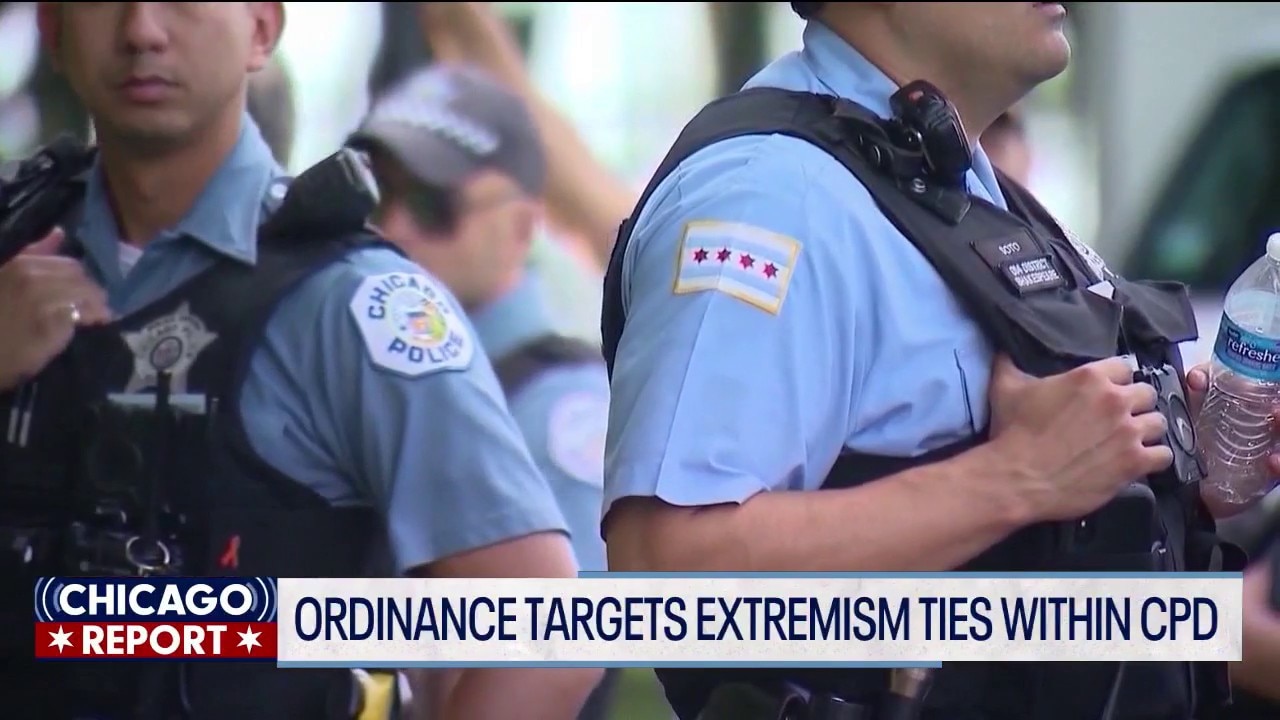
Chicago alders target extremist activity among CPD officers | The Chicago Report
The Chicago City Council is weighing an ordinance that would ban members of the police department from participating in extremist activity.
CHICAGO - The Chicago City Council is expected to consider an ordinance that would ban police officers from engaging in "extremist activity."
What they're saying:
Ald. Matt Martin (47th Ward) sponsored the ordinance, which would also authorize the Civilian Office of Police Accountability (COPA) to investigate allegations of ties to extremism in CPD’s ranks.
The city’s Office of Public Safety Administration would also be tasked with checking CPD applicants for a history of extremist behavior as part of the hiring process.
Martin argued the ordinance was needed in light of the Jan. 6, 2021, riot at the U.S. Capitol and a 2024 Office of Inspector General investigation, which found that the city’s "handling of extremism in its police ranks has fallen short of commitments made by the City and CPD leadership."
The City Council’s Committee on Workforce Development advanced the measure on Monday in a contentious 6-3 vote.
CPD leadership said it was "supportive" of the measure in an email to members of City Council this month.
"To clarify, the Chicago Police Department is supportive of this measure and believes every city employee should be held to the same standards outlined in this proposed ordinance," according to an email from the Office of the Superintendent.
Read the draft ordinance here.
A Chicago police officer was fired late Thursday, Dec. 15, 2022, for his role 18 years ago in one of the biggest scandals in department history. (Antonio Perez/Chicago Tribune/Tribune News Service via Getty Images)
How broadly this ordinance would apply was a key point of contention during debate on Monday.
Ald. Nicholas Sposato (38th Ward) was the most ardent critic of the proposal during Monday’s committee meeting. He took issue with the ordinance’s focus on police officers and asked why such a rule wouldn’t apply to other city employees.
"My problem is you’re singling somebody out," Sposato said. "This is a very accusatory-type ordinance."
Sposato added that he was "baffled" that the ordinance "singles police officers out."
Martin and a member of the city’s law department said the original version of this ordinance did apply more broadly beyond just members of CPD. But after an "intensive review," city attorneys suggested the ordinance should be narrowed to avoid potential constitutional challenges that the ordinance violates officers’ free speech rights.
"I do feel that at the end of the day, despite me wanting this to have a broader application, I believe that the pared-down and substitute ordinance that’s before this committee is responsive to issues that have been identified nationally and locally and is better to move forward than to do nothing at all," Martin said.
CHICAGO, IL- NOVEMBER 11: The Chicago police logo shown on a uniform before a college basketball game between the Buffalo Bulls and the DePaul Blue Demons at the Wintrust Arena on November 11, 2025 in Chicago, Illinois. (Photo by Mitchell Layton/Gett
What qualifies as extremism?
Martin broke down what types of actions would qualify as extremism according to the ordinance. He said the language used in the ordinance was "inspired" by Biden administration policies.
Active participation in extremism means:
- Fundraising for extremist groups
- Recruiting or training others to commit extremist activities
- Using city property or sharing confidential information to support extremist activities
- Knowingly wearing clothing or getting tattoos with extremist symbols
As far as what "extremist activities" mean, the alderman said that would include:
- Overthrowing the government or altering it through unconstitutional or violent means
- Hate-based or biased behavior like hate crimes
"I believe that this has a high bar in place and is content neutral," Martin said, meaning it would apply to anyone engaging in such activity, regardless of their political stances.