

Megaprojects bill could save Bears millions on new stadium property taxes for decades: analysis
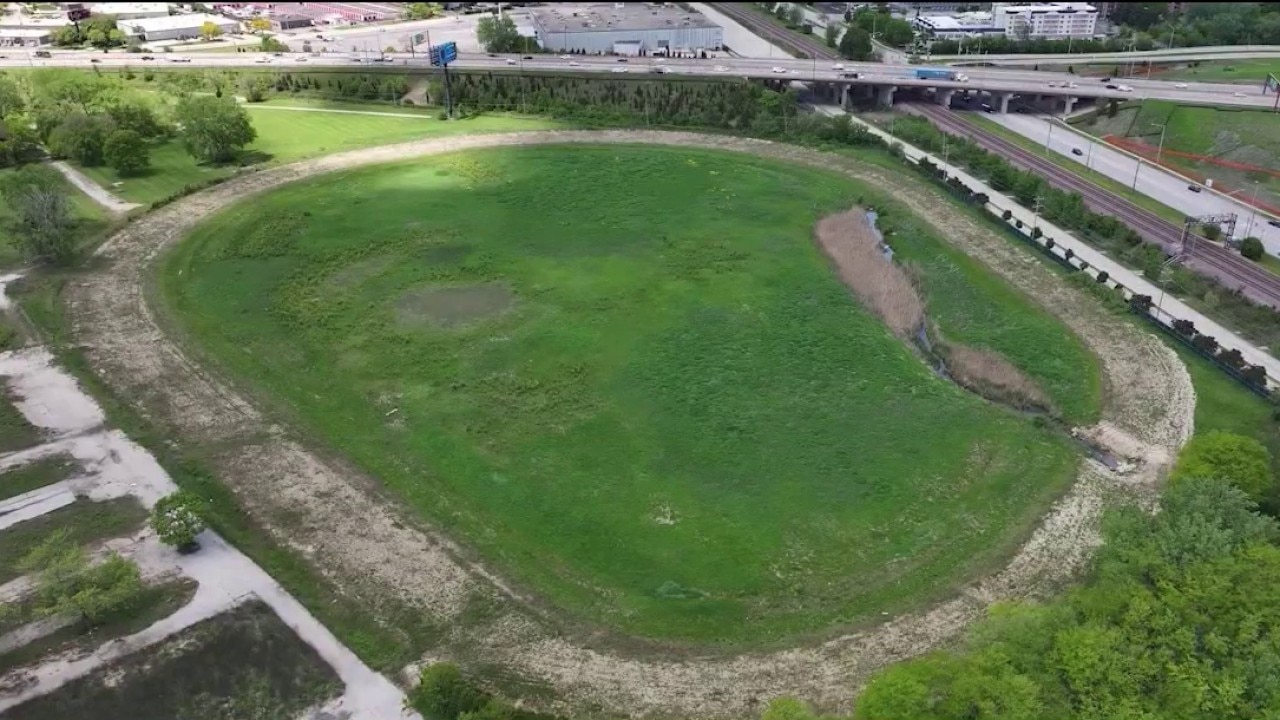
Bears stadium project could save team millions while raising questions for homeowners: tax study
A new Cook County Treasurer’s Office study estimates the Chicago Bears could save more than $39 million a year in property taxes under the proposed megaprojects bill, while residents and officials debate what the long-term impact could mean for local taxpayers.
CHICAGO - The Chicago Bears could save tens of millions of dollars a year in property taxes for decades under the provisions of the so-called "megaprojects" bill passed by the Illinois House of Representatives last month, according to a new analysis by the Cook County Treasurer's Office.
The bill is being debated, and likely amended, in the Illinois State Senate, but the Bears have maintained it’s a necessary step for the team to build a new domed stadium in suburban Arlington Heights.
Dig deeper:
While there’s been much interest in the bill being approved, many critics have warned that the megaprojects bill, as written, would give significant property tax breaks to a franchise worth $8 billion, potentially further shifting the burden of funding local schools and governments to homeowners who have already seen their bills spike in recent years.
The megaprojects bill would essentially allow developers of large projects, like the Chicago Bears, to get property tax breaks, potentially for multiple decades.
The analysis found that if the Bears built a $2 billion stadium and took advantage of the provisions in the bill, like a property tax assessment freeze and paying only a portion of their potential tax liability, the team could save more than $1.5 billion over 40 years.
Property taxes are many times the main source of revenue for entities like local school districts, cities and villages, library districts, townships and other local taxing bodies.
According to the analysis: "If the frozen payment and special payment are not high enough to fund those added services, other taxpayers, particularly homeowners, would have to make up the difference. That, in effect, would be an additional subsidy paid by people who live in Arlington Heights and potentially any other community that is home to a megaproject."
Illinois megaprojects bill raises tax, equity concerns as Bears stadium drives debate | ChicagoLIVE
We break down a new Illinois megaprojects bill tied to major developments like the Chicago Bears’ proposed Arlington Heights stadium and what it means for you.
The megaprojects bill
What we know:
First, here is a breakdown of the key provisions of the bill analyzed by the report.
Property assessment freeze: The assessed value of a megaproject development, which would have to cost at least $100 million, would be frozen before construction starts. That means the amount of value the property is taxed on won’t increase, unlike other properties like homes and commercial buildings, whose values periodically get reassessed to see if they’ve increased or decreased.
Special payments: The bill would also allow developers like the Bears to make "payments in lieu of taxes," often referred to as PILOT, as opposed to paying a normal property tax bill like most other property owners. The developer would be able to negotiate the amount of that payment with local taxing bodies, like local schools and governments. Any agreement would need to be approved by those local bodies.
Sales tax breaks: The bill included provisions to exempt construction materials for megaprojects from the state’s sales tax of 6.25%.
Property tax relief: The version of the bill passed by the House requires a portion of a megaproject developer’s PILOT (payment in lieu of taxes) to be dedicated toward property tax relief for homeowners. This specific provision has caused concern among members of the Senate and Gov. JB Pritzker, at least in part because the projected amount of money individual taxpayers could receive would likely be minimal.
The bill would also expand state loan programs for municipalities wanting to make major investments in capital projects related to tourism, entertainment, and retail.
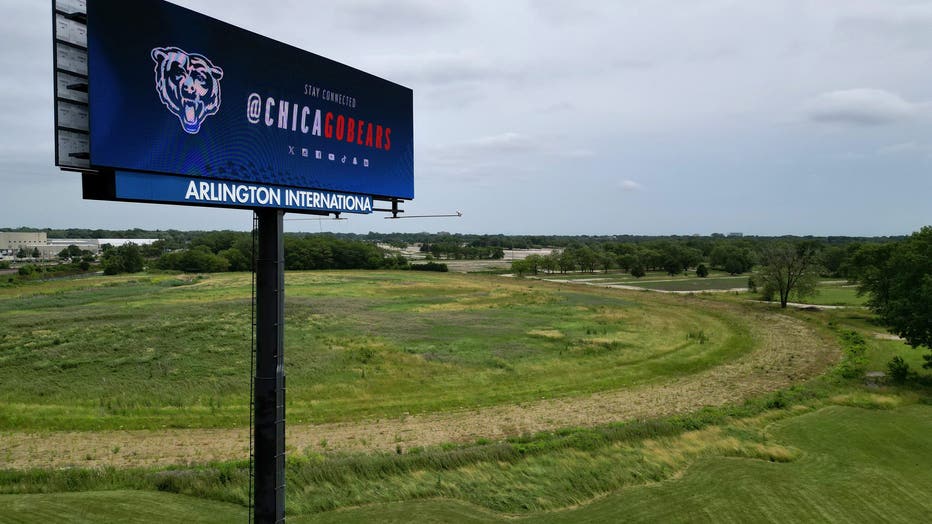
A digital billboard advertising the Chicago Bears is seen near the practice track of the former Arlington International Racetrack, near Route 53 and Northwest Highway, on June 25, 2024, in Arlington Heights, Illinois. (Stacey Wescott/Chicago Tribune/
What might the Bears pay?
By the numbers:
The analysis said it’s difficult to project exactly how much the Bears would pay or save in property taxes and other expenses related to the construction of a new domed stadium because "there’s nothing else like it in Illinois."
But the study used stadium tax expert Geoffrey Propheter’s conservative estimate that such a stadium would command a $675 million market value.
At the current tax rate in Arlington Heights, the Bears would usually pay nearly $53.2 million in property taxes a year, according to the analysis.
Under the megaprojects bill, however, the assessed value of the land that the stadium would sit on would be frozen at the level before the stadium is ever built. That means the Bears’ property tax bill would actually be less than $4 million. Since the development is estimated to cost more than $1 billion, that assessment would be frozen for 40 years, although it would be adjusted for inflation. (Megaproject developments that cost less than $1 billion would see shorter assessment freezes.)
The analysis then assumes that if the Bears paid a $10 million payment in lieu of taxes (PILOT) in addition to that $4 million property tax bill, their total tax liability would be around $14 million a year, or about $39 million less than they would normally pay if not for the mega projects bill.
Over 40 years, that would mean the Bears would save about $1.5 billion in property taxes, according to the analysis.
To be sure, it’s unclear exactly what that PILOT amount would ultimately be.
When asked to respond to the analysis, Pritzker's office noted that the PILOT tool is already used in 35 states today and that the Bears currently do not pay property taxes at Soldier Field, which is Chicago Park District property. To be clear, the Bears pay an annual fee for their lease.
The Bears have argued that the construction and operation of a new stadium would generate 9,000 permanent jobs "statewide" and $60 million in local and state tax revenue. The analysis noted that while large real estate deals do create jobs and boost tax revenues, giving significant property tax relief would negate one key goal of economic development: expansion of the property tax base.
The analysis also noted that the Bears are valued at more than $8 billion and generate around $625 million in annual income, netting about $80 million in profit.
"If the Bears move to Arlington Heights, with the team owning its own stadium, profits would be even higher," the analysis said.
The study also cited other cities across the country with large professional sports stadiums that "fall massively short of delivering on their claims of producing jobs and boosting the local economy."
ARLINGTON HEIGHTS, ILLINOIS, UNITED STATES - SEPTEMBER 10: A view of Arlington Height on September 10, 2025 in Illinois, Chicago, United States. The northwest Chicago suburb is known as the birthplace of Charlie Kirk, founder of Turning Point USA. Co
Other taxpayer expenses
Why you should care:
The study went on to detail other financial considerations where taxpayers would be on the hook for issues related to a move by the Bears to the suburbs.
First, lawmakers have expressed concern over the remaining $467 million in debt that the City of Chicago owes for the renovations of Soldier Field in the early 2000s. The Bears would pay no more than $90 million to break their lease at Soldier Field, which is owned by the Chicago Park District, which would leave the remaining debt to be paid for by the city. The current lease terms run through 2033, according to multiple outlets.
Pritzker has previously suggested the Bears pay more of that debt in exchange for getting help to finance a new stadium, although no official agreement has been offered.
The study also noted how a massive development could increase costs for local governments in the Arlington Heights area, such as more police and fire protection. It remains unclear if the construction of a new stadium under the megaprojects bill’s provisions would generate adequate property tax revenue to cover such costs.
The analysis stated: "Should the Illinois bill become law, one key question will remain: would the amount of property taxes the team and any other megaproject developers end up paying be enough to cover the increased costs of education and other local services made necessary by their projects?"
If the Bears’ tax payments are not high enough to cover costs, then, the study said, homeowners would have to "make up the difference."
The analysis also referenced the potential benefit to Illinois residents and Bears fans if the team decides to build in Hammond, Indiana.
"It’s also worth noting that a Bears stadium in Hammond would be just 20 miles from Soldier Field, compared to the 38-mile distance from the city to Arlington Heights," the study said. "As a result, a stadium in Hammond would still produce economic benefits for Chicago and the state of Illinois — with Indiana taxpayers picking up the $1 billion tab to subsidize the development."