

Walgreens to close Chatham store after more than $1M loss, cites theft and declining sales
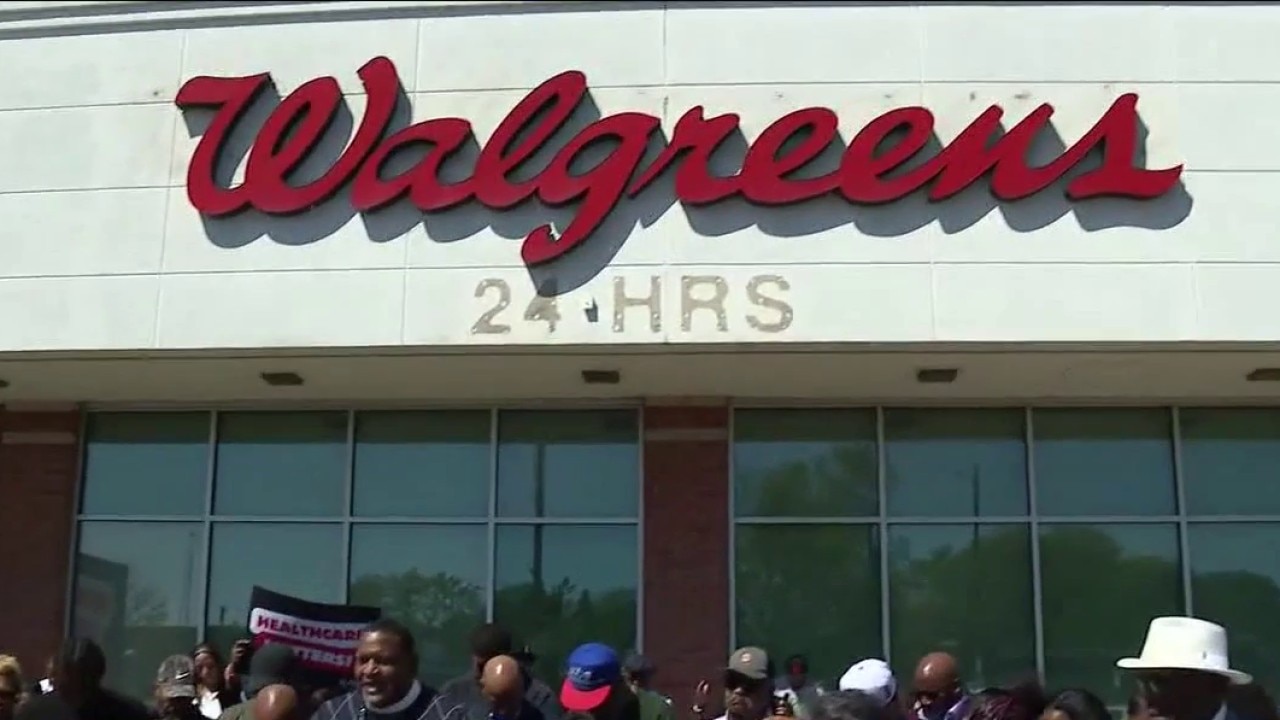
Walgreens holds town hall on Chatham store closing
For the first time Walgreens is revealing some of the specific financial problems that prompted it to close a longtime location on Chicago's South Side.
CHICAGO - For the first time, Walgreens is revealing some of the specific financial problems that prompted it to close a longtime location on Chicago's South Side.
The announcement that the Walgreens at 86th and Cottage Grove will close on June 4 has prompted a major backlash among customers and Chatham residents.
"I'm here today because we're closing the store at 86th and Cottage Grove. But I just want to make sure everyone understands closing stores are not our goal. This is the last resort," Reginald Johnson, the Walgreens Regional Vice President, said at a town hall.
A trio of Walgreens executives, including the manager of the soon-to-be-closed store, explained the company's controversial decision at a community forum hosted by State Senator Elgie Sims.
"If this decision is not going to be reversed, what we want to understand is what is next for this community," Sims said.
RELATED: Losing a lifeline: Chicago South Side residents push back against Walgreens closure
Earlier this week, Walgreens announced the closing of the store, which has served the Chatham community for more than 20 years, creating what many residents call a "prescription desert" and a continued disinvestment in the Black community.
On Saturday, the Walgreens executives revealed the store lost more than a million dollars last year, partly due to declining prescription sales but also a massive amount of store theft.
"Theft at this store is 16%," Johnson said. "That's four times above the company average."
And the company explained that they tried to stop theft.
"Lock boxes help us protect the merchandise in the store. A lot of the time, those lock boxes were getting destroyed. And that's at a great cost to the company," said Jason Vasquez, Walgreens District Manager.
They say Walgreens was spending $400,000 a year on security guards in the store, but there were still attacks on store employees.
"We've had people jump across the counters, because we sell liquor behind the counter, taking liquor, cigarettes... That wears. That wears down. Not so much the financial piece but the endurance of that day in and day out," said Lonnie Fuqua, the store's manager.
What's next:
Walgreens is encouraging people to use the nearest Walgreens store a little more than a mile away and has sent letters and emails to customers explaining how they can have their prescriptions sent by mail.
"For seniors, there's some solutions that have been put in place where you'll get free delivery. That has started already for those medications you may have that under the law, can be delivered," Fuqua said.
But many customers are still unhappy with the decision to close the store.
"To close it in a community that is filled with senior citizens is a disservice to us," Carla Germany, a Walgreens customer, said. "I don't drive. Having to go across town to get my medicine will be an inconvenience."
Walgreens has 115 stores in the city of Chicago, but is closing a number of them as part of a nationwide plan to close 1,200 stores over the next three years.
The Source: This story contains reporting from Fox Chicago's Dane Placko.