

As America nears 250th birthday, Pullman National Historical Park reflects nation's railroad, labor legacy
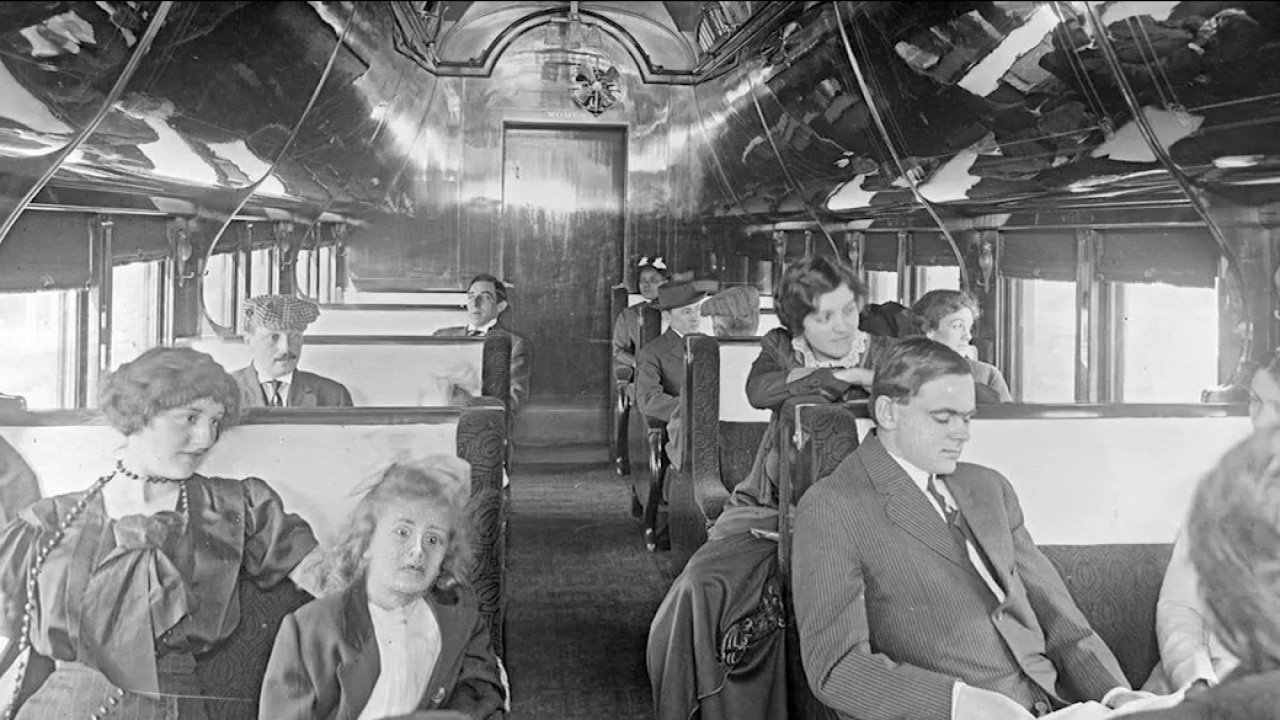
How Chicago's Pullman neighborhood helped build America
As the United States approaches its 250th anniversary, Chicago's Pullman neighborhood is reflecting on its outsized role in shaping American rail travel, labor history and urban development while preparing for a major restoration and revival.
CHICAGO - As America prepares to celebrate its 250th birthday, few places have shaped the nation's history more profoundly than Chicago's Pullman neighborhood.
"[George Pullman's] innovation with the Pullman Railcar, making it more convenient and more comfortable for people to travel, connected people like never before," said Joseph Szabo, a 5th generation railroader.
They were "Hotels on Wheels" built by the 19th century industrialist George Pullman.
Pullman's impact on rail travel
What they're saying:
"The railroads created a level of convenience in travel that had never existed before, but it still was far from comfortable and, as a young man, when George Pullman migrated from New York to Chicago in the early 1850s, the trip was rough. It was rugged. Your accommodations were a wooden bench. And so, this is really where the seeds got planted in his mind that there had to be a better way. And that you could really grow people’s willingness and desire to travel if there was some comfort to it. So, in essence, he created this hotel on wheels that would allow people to travel with many of the comforts of home," Szabo said.
Szabo is President Emeritus of the Friends of Pullman National Historical Park, but his love of trains started as a toddler. By 18, he was working on the commuter train on the Illinois Central, where his dad worked as a switchman.
"Being able to make a difference here, for me, is just kind of a fulfillment of my life's passions," Szabo said.
Szabo argues that perhaps no other square mile in the country did more to impact the development of the nation than what's now the Pullman National Historic Park.
From the industrial ingenuity Pullman used to deliver his palaces on wheels, the urban planning it took to create his so-called "Perfect Town," and the labor and civil rights battles waged here in 1894 — considered the most impactful labor strike in U.S. history, and the clinching event that led to Labor Day becoming a national holiday.
"This really tells the story of the hardship that they faced. At the time, there was an economic downturn. The orders for Pullman cars plummeted, so he cut wages by about 50 percent, but he didn't cut the rents. And his argument was that they were separate entities and that he owed it to his investors on the real estate side to make sure they could get their return on investment," Szabo said.
The backstory:
When the workers here went on strike, the American Railway Union backed them, which ended up thwarting mail delivery across the U.S. Szabo says in the 1890s, that would have been the equivalent of a nationwide internet blackout today.
"And what they decided to do is they would not move any train that had a Pullman car attached to it. So, initially, it didn't have any impact on the railroad industry, but after that, they decided to attach a Pullman car to every train, including the mail trains," Szabo said.
He added, "And to give it some context, it really is like the Internet of today. The internet is our means of commerce and connectivity. Well, it was the rail network that Pullman was in the center of that served that role in the mid-1800s."
Decades after the factory closed, residents battled to save the historic buildings from the wrecking ball. In 2015, under President Obama, the site was named a National Monument. By 2020, it attained full National Historical Park status under President Biden.
As America rounds the corner on 250, progress there is going at the speed of a bullet train. Some $100 million in funding has been secured to completely restore the historic Hotel Florence, which sits directly across the street from the factory, and the town's historic Market Hall has been stabilized for future rehab with $1 million.
Another one of Pullman's most recognizable landmarks, which is getting new life, is the 92-foot steeple of Greenstone Church. It was built in 1882 of a green, serpentine stone which gives the church its name.
But perhaps most exciting: Pullman will soon be re-connected back to the national railroad network. A new spur line will finally bring what's been conspicuously missing from the National Park — three fully restored Pullman railcars: An 1899 Wooden Parlor Car that was once served by the famed Pullman Porters, a 1928 Steel Sleeping Car called "the Heavyweight," and a Pullman Business Car once used by Robert Todd Lincoln, complete with an office, bedroom, full kitchen, dining and living room.
In other words: Start planning your visit.
"The whole design is for this glorious presentation, and you still get that impact today," Szabo said.
The Source: The information in this story was obtained and reported by FOX Chicago's Anthony Ponce.