

Experts urge early back-to-school shopping as Trump tariff deadline looms

Experts urge early back-to-school shopping as Trump tariff deadline looms
Even though its only mid July, the heat is on to buy your school supplies now. That's because the tariffs President Trump launched in April may take full effect on August 1.
CHICAGO - Even though it’s only mid-July, the heat is on to buy your school supplies now.
That’s because the tariffs President Donald Trump launched in April may take full effect on Aug. 1. They would apply to all products made in the European Union.
In a Fox 32 money-saver special report, Terrence Lee finds out which school supplies on your list will be affected the most.
Why you should care:
August 1 is considered to be right in the heart of the back-to-school shopping season. Some consumer experts say you might not want to wait until then to get started.
That’s if you want to avoid paying higher prices for two of the most expensive items on your list, according to Chip Lupo, a financial writer and analyst with WalletHub.
"It's going to primarily affect clothing and electronics, which is some of the most popular, most common items that parents or students purchase during back-to-school shopping," Lupo said.
Those items are expected to see big price hikes if the United States and its trading partners don’t reach a deal on the tariffs initiated by President Trump by the start of next month.
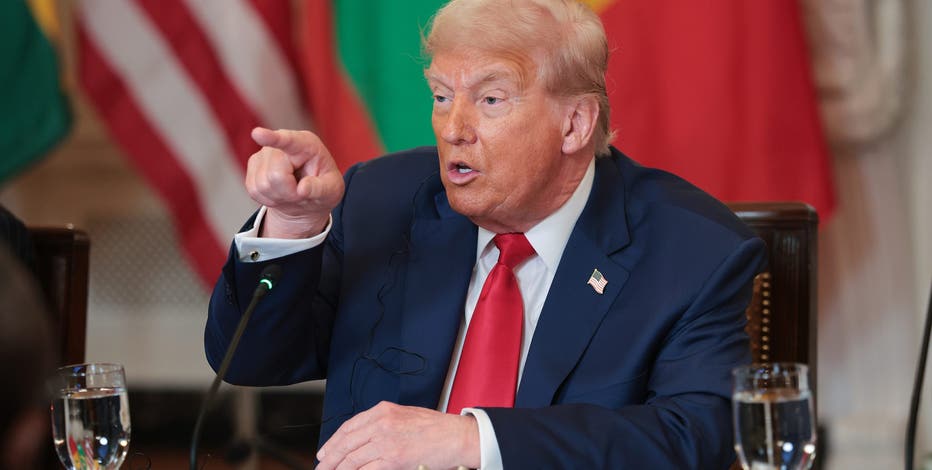
Trump says he's imposing new 30% tariffs on EU, Mexico
President Donald Trump announced a new round of tariffs on Mexico and the European Union, two of America’s biggest trading partners.
"I think consumers are going to be worried because we found that more than half of parents already say that they're going to be spending more on back-to-school shopping this year compared to last year, even without tariffs," Lupo said.
"The prices of everything is still going up or still high. And again, people, again, the rate of inflation hasn't been keeping up with people's wages. And again, people are finding themselves still struggling to just make ends meet," he added.
What you can do:
That’s why he says it can pay to shop early this year.
"I mean, now is as good a time as ever to start your back-to-school shopping and take advantage of what we call retailer price holds because stores like Target are keeping prices flat right now on key supplies," Lupo said.
Plus, the current stock retailers have on their shelves was bought at pre-tariff pricing.
Tariffs aside, Lupo said you still need to be strategic when doing your back-to-school shopping.
"Look online for deals because we found that 40% of the parents find the best prices online, use price comparison tools, promotional codes, those types of things," Lupo said.
In light of the August tariff decision deadline, Lupo anticipates retailers offering more sales between now and then.

EU threatens tariffs on US goods
Indonesia has reached a trade deal with President Trump, while EU leaders prepare to negotiate to avoid 30% tariffs by August 1.
When it comes to buying electronics, Lupo said you might want to consider buying a less expensive brand to save a few dollars or consider buying certified refurbished from a reputable retailer.
When it comes to clothing, consumer expert Andrea Woroch says store brands usually cost about 30% to 70% less than name brands.
"The point is, when you are sticking with the store brands, this is going to cut your back-to-school shopping significantly," Woroch said.
"Look at the secondhand options. Through OfferUp or Facebook Marketplace, you could find backpacks, maybe uniforms, kid’s sneakers, you know, sometimes kids grow out of their sneakers really quickly, they haven't really been worn, and you can find used options for over half the cost of regular retail prices," Woroch said.
For your general school supplies, pens, pencils, and paper, Woroch said you can save if you still stick with the store brand.
"I think that people don't realize how much more a name brand costs. And you know, when school supply items cost just a handful of dollars, you're not really thinking that that's expensive because you know, $2, $3 is not a lot of money. But when you compare one item versus another, and there's such a big price discrepancy, and then you multiply that by the 20 different items you need to purchase. Now all of a sudden you're saving $20 to $30. That’s when people are seeing the big savings," Woroch said.
Before you hit the stores, Woroch also suggests you take inventory of what you have at home first. You may have some supplies that you could re-use from last year.
The Source: For this story, the Fox 32 Chicago Special Projects Unit spoke interviewed two well known consumer finance experts.