

Chicago paleontologist discovers new dinosaur species in Sahara Desert
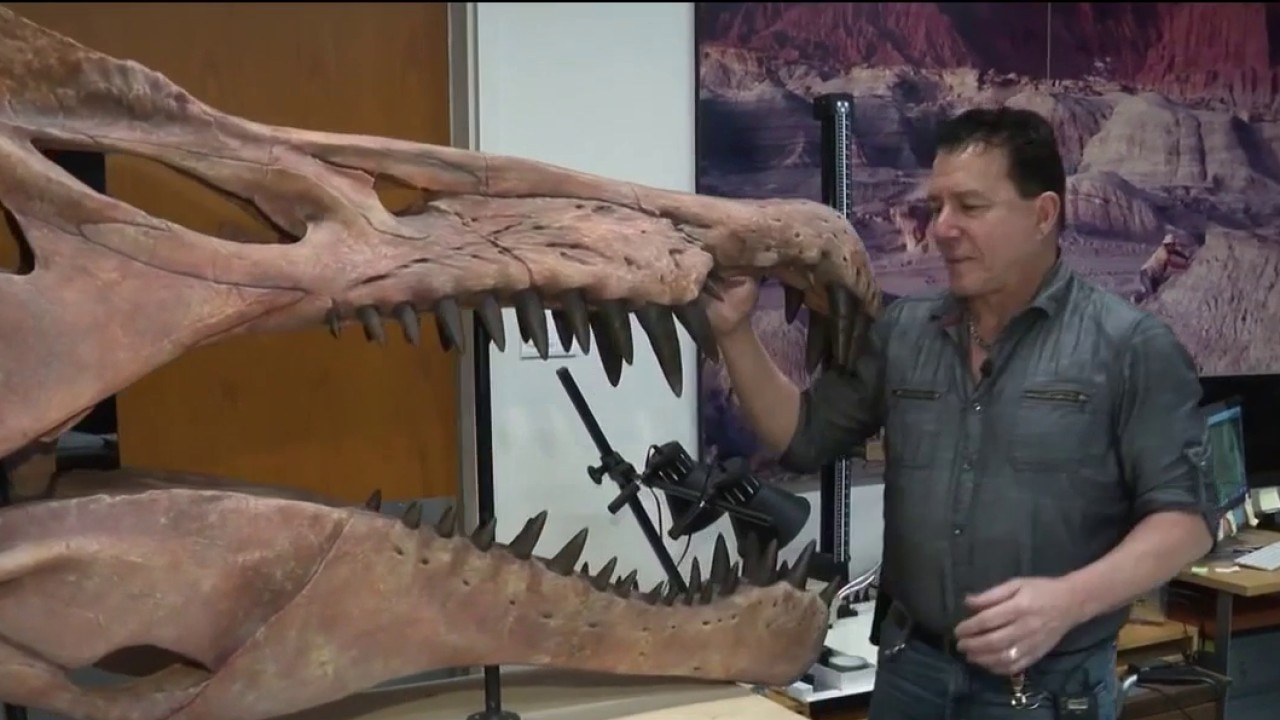
New dinosaur species discovered by Chicago paleontologist
A scientist from the University of Chicago has discovered a new dinosaur species. Kasey Chronis reports.
CHICAGO - Millions of years in the making, a major discovery is turning heads around the globe. A paleontologist from the University of Chicago has uncovered a new dinosaur species in the Sahara Desert.
What we know:
Led by Paul Sereno, a paleontologist from the University of Chicago, a 20-person team unearthed the fossil of a previously unknown Spinosaurus in Niger, West Africa.
Their expedition to a remote corner of the desert was grueling, but the payoff was priceless — resulting in a discovery that is giving scientists a rare glimpse into a prehistoric world.
It was a single line in a book by Hughes Faure, who pioneered Quaternary studies, that inspired Sereno to travel to a desolate part of the Sahara Desert.
Sereno's first mission to the region, known as Jenguebi, took place in 2019, when he found jaw fragments with the help of a local guide. Due to the COVID-19 pandemic, he was unable to return until 2022. During that expedition, the team made a remarkable discovery.
"It was everything it was meant to be. We collected more bone — 50 tons — than probably any team will ever collect, under the harshest conditions," Sereno shared.
Their findings were announced last week in a new paper published in "Science."
Sereno named the species "Spinosaurus mirabilis," which translates to the "amazing" or "remarkable" Spinosaurus.
"We knew that no one had ever seen anything like this. We began to understand the piece we had picked up belonged to this exotic crest — like a scimitar, like a sword coming off the top of the head," Sereno explained. "It was such an emotional moment, because this dinosaur is so exalted, it's so bizarre, it's so rare. No one had found that much of a Spinosaurus since 1915."
The fish-eating dinosaur featured a striking crest and long claws.
"You don't want to get close to this animal. It is using its arms much more than T. rex was using its arms, and it was using its head to catch fish and to gnaw at things, and its arms would dice and slice," Sereno said.
Sereno suspects the dinosaur may have been buried suddenly by a river, ultimately causing its death.
He and his team used CAT scans and other technology to help reconstruct its skeleton, bringing the ancient animal back to life.
What's next:
Recreations of the "Spinosaurus mirabilis" skull and crest will be on display at the Chicago Children's Museum, located at Navy Pier, beginning March 1.
Sereno plans to return to Niger for future expeditions. He is also setting out to build a fossil lab there and help the country establish a museum.
The Source: The information in this article was reported by FOX Chicago's Kasey Chronis.