

Chicago port workers warn expansion could worsen safety concerns
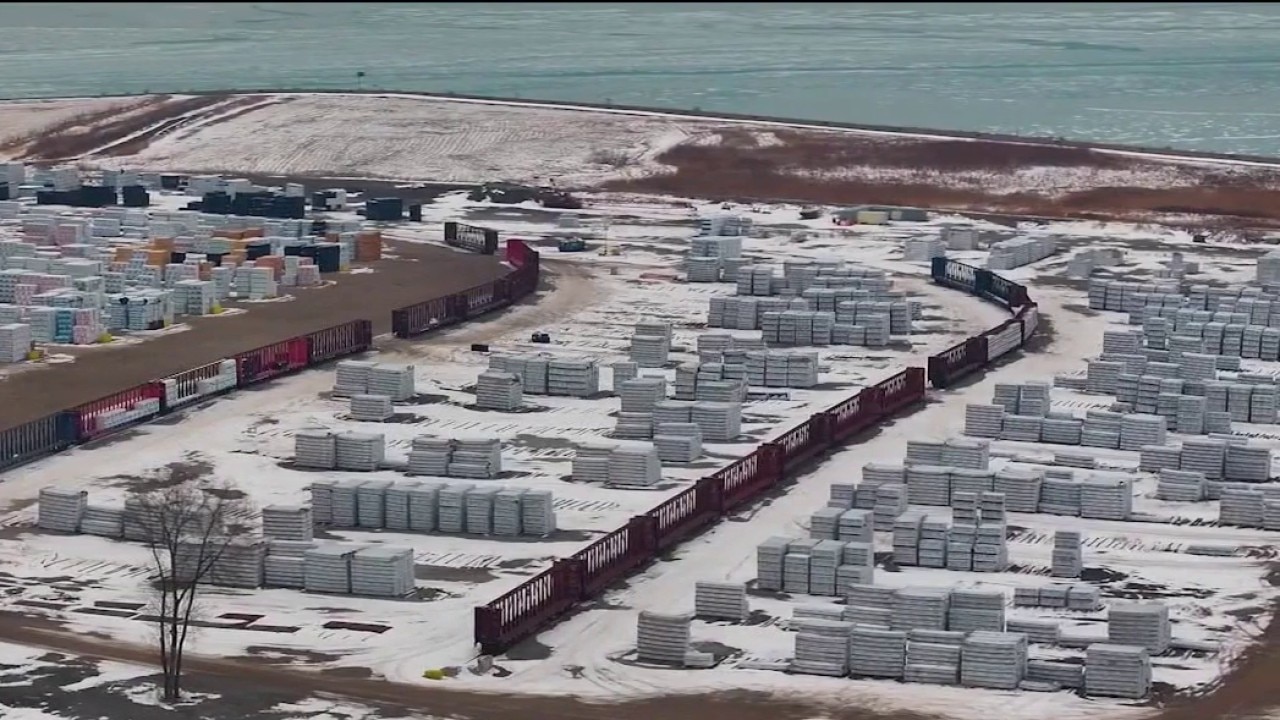
Safety concerns raised amid port strike as waterway expansion is considered
With a regional push to expand port traffic, some workers say they fear on-site safety risks could increase.
CHICAGO - Chicago is home to the nation’s largest inland port, and for the past eight months, workers there have been raising concerns about safety on the job. With an announcement to expand waterway traffic, those concerns are intensifying.
What we know:
With a regional push to expand port traffic, some workers say they fear on-site safety risks could increase.
This week, the American Great Lakes Ports Association (AGLPA) announced it is looking to expand cargo movement between the Great Lakes and the Inland Waterways system.
"For too long, the connection between the Great Lakes and the Inland Waterways has been an underutilized asset in America’s freight network," said Captain Paul C. LaMarre III, AGLPA President.
Already, close to 700 million tons of cargo move through the system each year, including steel, limestone, and coal. Other cargo consists of sugar, grain, and raw materials like sand and gravel.
For more than 250 days, picketers have gathered at Iroquois Landing. Some are port workers who say they are on strike over unsafe conditions.
One worker, Alejandro Munoz, says he feels an increase in port traffic will only heighten safety concerns at QSL America.
"Honestly, I would say between 70–80 percent of the machines that we have here, tires that were severely worn down, brakes that didn't work at all, lighting that was just below standard, machines that have no horns; machines that are used to lift anywhere between 10,000 to 60,000 pounds" Munoz said. "We want them to understand that as we arrive with 10 toes, 10 fingers, that's how we want to go to our families at the end of the day."
QSL is a private company that operates the terminal at Iroquois Landing under the name North America Stevedoring Co. (NASCO), located in the 3600 block of E. 95th Street.
The International Union of Operating Engineers (IUOE) Local 150 has been organizing the strike line there — though it does not formally represent the employees at Iroquois Landing.
"It basically started with members, workers from the inside reaching out to us and complaining about safety," said Martin Durkan, assistant to the president-business manager, IUOE Local 150. "When they started bringing to us some of the atrocious conditions they were working under, we decided to file some unfair labor practices against QSL."
What they're saying:
QSL America has denied claims of unsafe working conditions. The company released a statement, writing, in part:
"On November 4, 2025, the International Longshoremen's Association (ILA) became the exclusive bargaining representative of the longshore employees working at QSL America (aka NASCO)’s Iroquois Landing, Lake Calumet, and 106th Street facilities in the Port of Chicago, after a neutral third party verified that a majority of QSL employees supported joining the ILA. The ILA is the largest union representing maritime workers in North America."
"Even since ILA began representing NASCO’s employees, Local 150 has continued its efforts to organize our employees."
"NASCO is subject to OSHA’s jurisdiction, and even though Local 150 has been making numerous allegations of unsafe practices and incorrect use of equipment, there has been no legal finding of any serious violations against NASCO. NASCO continues to firmly deny all allegations made by Local 150 and has submitted evidence to the NLRB refuting all claims related to unfair labor practices."

Union points to safety concerns amid port strike
With port traffic poised to grow, picketers at Iroquois Landing warn that safety concerns could also increase.
The Illinois Longshoremen's Association confirmed it represents the workers employed at NASCO as of last November, with a spokesperson adding that the union is working on a collective bargaining agreement that addresses safety.
The Illinois Longshoremen's Association released the following statement to FOX Chicago on Thursday:
"After over a decade of working to organize QSL, the International Longshoremen’s Association (ILA) became the authorized bargaining representative of the longshore workers employed at QSL’s terminal facilities in the Port of Chicago in November of last year. The ILA is the largest and most experienced longshore union in North America and these port workers fall into our core area of expertise. The ILA is working diligently to finalize a comprehensive collective bargaining agreement that will establish industry leading wages, benefits, and safety standards for Chicago's longshore workers—an agreement that will benefit the working people of Chicago and the surrounding community. The ILA remains focused on getting a contract for these workers that improves their standards of employment and takes care of their families."
What's next:
AGLPA has launched a regional study to see where cargo traffic could be increased, with expansion possible at ports in Chicago, Milwaukee, or Indiana.
The Source: This story contains reporting from Fox Chicago's Kasey Chronis.