

Chicago woman finds freedom after 30-year battle with fibroids
Women & Fibroids: Talk about treatment options
Doctors say fibroids affect 60 to 80% of women in the U.S. While some experience little to no side effects, others suffer debilitating life style changes - often in silence.
CHICAGO - Doctors say fibroids affect 60% to 80% of women in the United States.
While some experience little to no side effects, others suffer debilitating lifestyle changes — often in silence.
In a Fox 32 special report, Dawn Hasbrouck looks at how this common condition is now being taken more seriously and how treatment options have changed.
Living with fibroids in silence
What we know:
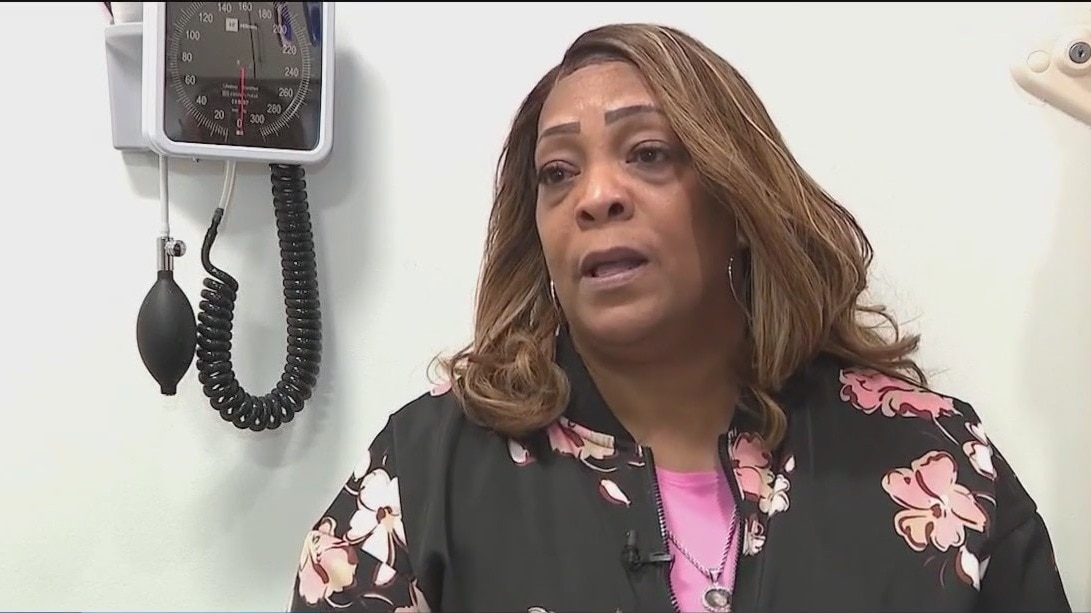
It’s only been a few months since Dr. Kayla Nixon Marshall put an end to Michelle O'Neal's 30 year battle with fibroids. The 55-year-old Chicago woman is pretty happy with how the surgery went.
"It was times I couldn't cook for myself," O’Neal said. "I couldn't make it to the bathroom. I couldn't walk so I was immobile. I was in the bed and it had got to the point that it got so bad, and I feel that I wouldn't be here if my daughter wouldn't step forward and gave me that strength to come out."
O’Neal says she's now back to walking outside, exercising at the gym and planning vacations. She's also spending less time at the hospital, which is where O’Neal says she was when her daughter first told her about Nixon Marshall.
"I was in an emergency because I had to have a blood transfusion, and that's the other part of where that, my fibroids took me at, took me to after all of those years. So, I was getting a blood transfusion, and she called, she said, I got some wonderful news," O’Neal said.
She says she made a lot of trips to the hospital last winter because she was anemic due to her fibroids.
In some women, doctors say fibroids can cause heavy bleeding which can lead to not having enough healthy red blood cells.
A daughter's determination to find help
Since she was caring for her at home, O’Neal says her daughter saw just how much she was dealing with and began to look for some real help.
"I was just gonna deal with it like so many of us do," she said.
Like O’Neal's mom and aunties all did for years.
"We all just dealt with it. Like it was something that we had to deal with, like a disease or anything, and that's just it. And as of now, I look back on all of that suffering that I went through and my aunties and family went through, they could have been free too," O’Neal said.
"Fibroids have higher incidence in women of color and that tends to be predominantly black or African-American women, as well as some Latina women as well," Marshall Nixon said. "But up to 80% of women of African descent may experience fibroids. And they tend to have more early presentation, so sometimes younger and more advanced growth of fibroids as well."
Breaking the stigma and finding better care
Unlike previous generations in their family, O’Neal says she and her daughter began talking about how to treat her fibroids.
"So, it was kind of a you know, a hush thing. So, it wasn't more than just go through it and then when your time comes when it's over you get back up out of the bed and you go about your day, so it isn't talked about. So, I shunned away from our education on it or even pursuing because I just thought that was something once again that I had to live with," she said.
"I want women particularly who are suffering from fibroids to know that there are doctors out there who want to listen to you and want to hear your story and want work with you to find a treatment option that's really the right choice for you," Nixon Marshall said.
O’Neal says she was surprised at how much time Nixon Marshall took to listen to her and find out about her symptoms.
Over the years, she says other doctors told her that her fibroids were benign and to take over-the-counter pain medication.
New treatments offer hope and healing
"I usually think of a fibroid as five centimeters or more as becoming large, but of course, in a patient that has multiple, even smaller fibroids, they can still have significant symptoms from those as well. So. I usually think once patients are getting larger fibroids or if they're having significantly heavy bleeding, leading to anemia, that some intervention is warranted," Nixon Marshall said.
For years, a hysterectomy was the primary choice for doctors when it came to treating a patient's fibroids.
"Now there are a lot more uterine preserving options, non-surgical options as well, medication options, and minimally invasive options. I think the growth, in particular, robotic surgery, the growth of minimally invasive gynecologic surgery as a specialty, which really focuses on complex, benign gynecolysis, really expands the access for minimally invasive procedures to patients. And minimally invasive routes have much lower complications," Nixon Marshall said.
Nixon Marshall performed a robotic hysterectomy on O’Neal, which is not as invasive as a typical hysterectomy.
She added O’Neal went home that same day and didn’t require much pain medication."I think recently we've seen patients advocating for themselves a lot more, doing a lot more research online, coming across other experiences with fibroids and recognizing that their abnormal symptoms are not something that should be brushed off. So, patients are really taking ownership over their symptoms and presenting more commonly to physicians, looking for options," Nixon Marshall said.
That’s something O’Neal says she's glad she did for herself.
"I am so excited for life. I have a new life. I have so much freedom," she said.
Nixon Marshall added that not all fibroids need to be removed. She said some patients with small fibroids that are not causing symptoms should be left untreated.
The Source: For this story, the FOX 32 Special Projects Unit interviewed Dr. Kayla Nixon Marshall, a Chicago-based OB-GYN specializing in minimally invasive gynecologic surgery, and Michelle O’Neal, a Chicago woman who shared her experience living with fibroids for more than 30 years.