

Colonial Pipeline says it expects restored service to all markets by mid-day Thursday
Days after the nation’s largest fuel pipeline was forced to halt operations due to a cyberattack by a gang of hackers, the Colonial Pipeline said it restarted operations and expected service to be restored to all markets by mid-day Thursday.
The ransomware attack Friday on the pipeline prompted fuel-hoarding and many rushing to the pump in parts of the Southeastern U.S., striking fear and stress among those who've waited in long lines for gas. Colonial initiated the restart of pipeline operations late Wednesday and predicted it would take several days before operations to return to normal.
But by Thursday morning, the company said it had made "substantial progress" in safely restarting the system and predicted it would resume deliveries to all markets later in the day.
"Colonial Pipeline has made substantial progress in safely restarting our pipeline system and can report that product delivery has commenced in a majority of the markets we service," the company said in a statement Thursday morning. "By mid-day today, we project that each market we service will be receiving product from our system."
President Joe Biden, who signed an executive order Wednesday to improve cybersecurity, was scheduled to deliver remarks about the pipeline situation at 11:50 a.m. ET.
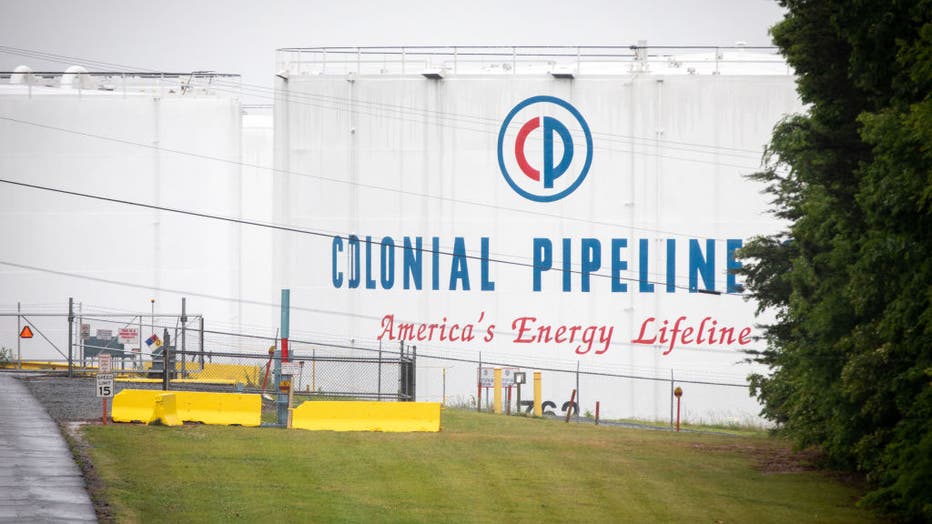
A Colonial Pipeline storage site in Charlotte, North Carolina on May 12, 2021.(Photo by LOGAN CYRUS/AFP via Getty Images)
The administration has scrambled into action after the ransom-seeking hackers shut down the pipeline, which delivers about 45% of the East Coast’s gas. The shutdown caused a supply crunch and spiking prices, all of which the White House was preparing to address.
Biden's team has used the shutdown of the pipeline as an argument for approving the president's $2.3 trillion infrastructure package. Transportation Secretary Pete Buttigieg said the cyberattack was a reminder that infrastructure is a national security issue and investments for greater resilience are needed.
"This is not an extra, this is not a luxury, this is not an option," Buttigieg told reporters at the White House on Wednesday. "This has to be core to how we secure critical infrastructure."
RELATED: Colonial Pipeline attack: White House launches ‘all of government’ response
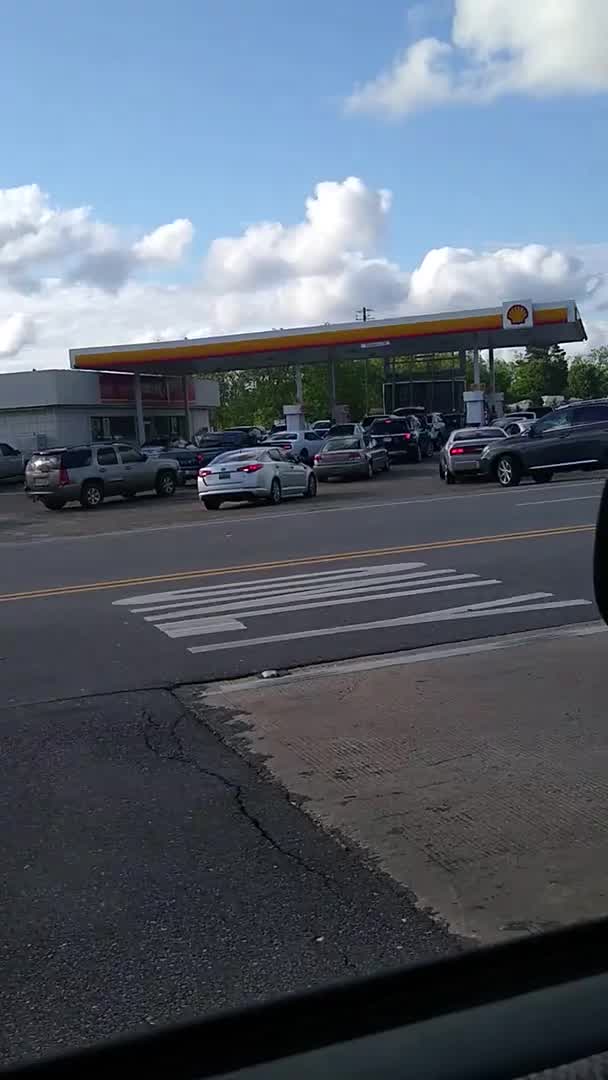
The pipeline plays a key role in transporting gasoline, jet fuel, diesel and other petroleum products from the Gulf Coast to the New York metropolitan region. The disruption of the country’s fuel artery caused both distribution issues and panic-buying, draining supplies as thousands of gas stations in some Southeast states.

Jamar Gatison, 36, was filling up his tank in Norfolk, Virginia, Wednesday before a doctor’s appointment.
"I’m about to run out of gas, so I have no choice," the construction worker said while waiting in line at a 7-Eleven.
"I’m also an Uber Eats driver. I also need gas for that," said Gatison, who added he probably won’t deliver food Wednesday night because he doesn’t want to wait in line again while the shortage continues.
In North Carolina, more than half of gas stations were out of fuel, according to Gasbuddy.com, a technology firm that tracks real-time fuel prices across the country. Just outside Raleigh, two people were charged with assault after fighting and spitting in each other’s faces while arguing over their spots in line Tuesday at a Marathon gas station, authorities said.
North Carolina Democratic Gov. Roy Cooper urged people Wednesday to only buy gas if their tank is low, and to report any instances of price gouging.
"This news is another reason people do not need to panic buy gas right now unless they really need it," he tweeted after Colonial announced it was restarting the pipeline.
Georgians and Virginians were also getting squeezed, with about half of stations there out of gas, according to Gasbuddy.com.
To help address the gas situation, the Department of Homeland Security issued a temporary waiver of a federal law overseeing maritime commerce to an individual company, not identified by the department, to allow the transport of additional gas and jet fuel between Gulf Coast and East Coast ports.
The Transportation Department was surveying how many vessels could carry fossil fuels to the Gulf of Mexico and Eastern Seaboard to provide gasoline. Waivers were issued to expand the hours that fuel can be transported by roadways. The Environmental Protection Agency issued waivers on gas blends and other regulations to ease any supply challenges.
At the state level, the governors of Florida, Virginia and North Carolina each declared a state of emergency this week to help ensure a sufficient supply of fuel following the cyberattack. They noted their states’ heavy reliance on the pipeline.
RELATED: 'Do not fill plastic bags with gasoline': U.S. agency tweets safety reminders amid gas shortage
American Airlines rerouted two long-haul flights from Charlotte, North Carolina, because of possible jet fuel shortages. Passengers flying to Honolulu will have to change planes in Dallas, and those heading to London will stop in Boston to refuel.
Southwest and United flights carried extra fuel on flights to Nashville, Tennessee, Baltimore and some other airports in case jet fuel was unavailable at those airports. Normally airlines load only enough fuel for a single flight, because topping off adds to the plane’s weight and hurts mileage. Most planes can carry enough fuel for a round trip, but the extra fuel burn costs money.
The FBI on Monday named DarkSide as the criminal syndicate whose ransomware was used. The group's members are Russian speakers, and the syndicate’s malware is coded not to attack networks using Russian-language keyboards. Russia, however, denied any involvement in the attack.
Ransomware scrambles data that can only be decoded with a software key after the victim pays off the criminal perpetrators. Hospitals, schools, police departments and state and local governments are regularly hit.
Such attacks are difficult to stop in part because they’re usually launched by criminal syndicates that enjoy safe harbor abroad, mostly in former Soviet states. An epidemic of ransomware attacks has gotten so bad that Biden administration officials recently deemed them a national security threat.
RELATED: Colonial Pipeline sought a cyber-security manager months before hack
This story was reported from Cincinnati. The Associated Press contributed.