

Cook County Board president candidates weigh in on property taxes, safety ahead of election
CHICAGO - Cook County Board President Toni Preckwinkle is facing a serious challenge in the Democratic primary race from Chicago Ald. Brendan Reilly.
Below, you can read each candidate's responses to our questions. Only candidates whose campaigns responded are included.
The candidates' responses have been lightly edited for clarity.
Toni Preckwinkle

1. Obviously, property taxes are not just an issue that’s affected by county government, but what more can the county do to address rising property tax bills?
Property taxes are high, and I don’t dismiss that, families feel the burden every year. This is a structural problem across Illinois, which relies on property taxes more than almost any other state and has more units of local government than anywhere in the country. That drives costs onto residents.
Property taxes are set by hundreds of local governments (cities, school districts, municipalities, and special districts) but I have not raised Cook County’s property taxes during my time in office. We’ve passed balanced budgets, fully funded pensions, and earned four credit rating upgrades in four years, showing that fiscal responsibility can go hand-in-hand with supporting residents.
I’ve also fought for real relief programs: expanding the Senior Citizens Assessment Freeze allows more seniors on fixed incomes to stay in their homes without facing unmanageable tax increases.
The COVID pandemic shifted much of the property tax burden onto homeowners, as commercial property values, especially downtown, declined. To address this, I’ve prioritized economic development that strengthens communities and the commercial tax base. Since 2020, Cook County has delivered $67 million in grants to small businesses with 20 employees or fewer, helping entrepreneurs recover, grow, and stay competitive. We also invested $7.5 million to permanently sustain Cook County’s guaranteed income program, the largest in the nation, giving families stability and the freedom to meet their basic needs. As County President, I’ve worked to provide property tax relief through fiscal discipline, targeted resident support, and investments that help communities thrive.
2. What would be your approach to address the projected growing budget deficits in the years to come for the county? Can you name specific new or increased revenues and/or cuts to spending you’d support?
Addressing projected budget deficits requires long-term, structural solutions. My approach focuses on building reserves, increasing pension payments, reducing debt, and aligning ongoing revenues with ongoing expenses.
Over the past decade, Cook County has reduced its outstanding debt by more than $800 million and we have increased pension contributions to strengthen the County’s long-term financial position and reduce future liabilities. This disciplined approach has produced measurable results. Even after navigating the pandemic and broader economic uncertainty, Cook County has received four bond rating upgrades in four years.
We have also established dedicated reserves to prepare for emergencies, from public health crises to potential federal funding cuts. Our FY2026 budget adds more than $320 million to shore up our strategic reserves. It also includes $65 million for a grant risk mitigation fund, a safeguard against reckless federal actions that could jeopardize congressionally appropriated dollars.
These improvements reduce borrowing costs and save the County millions of dollars over time, freeing up resources that can be reinvested in core services and programs without increasing the burden on taxpayers. It demonstrates that responsible financial management can deliver stability, protect taxpayer dollars, and position the County to meet future challenges.
3. What more should be done to ensure that the Sheriff’s Office, State’s Attorney’s Office, and court system have adequate staffing and resources to keep Cook County residents safe?
Ensuring the safety of Cook County residents requires a justice system that is adequately staffed, well-resourced, and able to function efficiently across law enforcement, prosecution, defense, and the courts.
The FY2026 budget continues targeted investments to strengthen that capacity. We are increasing full-time staffing for both the State’s Attorney’s Office and the Office of the Chief Judge, including resources to support recruitment and retention, so cases can be processed in a timely and fair manner. We are also investing in modern infrastructure that improves efficiency and coordination, including $4.6 million for an advanced digital evidence management and transfer system and $5 million for upgrades to the Public Defender’s case management system.
These investments build on significant long-term commitments. Since 2016, the combined budgets of Cook County’s public safety offices have grown from approximately $1 billion to nearly $1.8 billion. During that period, the State’s Attorney’s Office budget has doubled, the Office of the Chief Judge’s budget has increased by more than 70 percent, and the Sheriff’s Office budget has grown by nearly $300 million, reflecting expanded responsibilities and operational demands.
In addition to staffing and system capacity, Cook County continues to invest in prevention and stabilization efforts that reduce strain on the justice system. The County has invested more than $200 million in community investments, including $110 million in Community Violence Intervention and prevention strategies, along with $44 million through Cook County Health’s Stronger Together initiative to expand access to behavioral health services. This summer, an additional $25 million was awarded for intervention and wraparound services for survivors of gun violence, and the County will again invest $20 million in violence prevention this fiscal year.
Together, these investments reflect a comprehensive approach to public safety, strengthening core justice system operations while also addressing the underlying factors that impact safety and case volume across Cook County.
4. With cuts to Medicaid and other federal programs, what can the county government do to ensure its healthcare system can continue to provide services to residents?
With cuts to Medicaid and other federal programs, more people will rely on County services. That’s why we are expanding outreach and enrollment assistance to help residents maintain coverage despite increased federal administration burdens or navigate changes in coverage. This ensures residents understand their options, can maintain coverage where possible, or transition to other safety-net health plans.
I am also working with our Illinois congressional delegation and I am co-leading a working group of local units of government through the National Association of Counties (NACO) to support potential Congressional efforts to provide relief through expanded or restored healthcare funding.
To ensure we can continue serving all residents, regardless of income or immigration status, we are establishing new and expanded strategic partnerships across sectors to plan for and maximize resources in the wake of significant federal funding cuts to the healthcare safety net. Through the Cook County Health Medicaid Impact Working Group, Cook County is convening partners across sectors to address these impacts. Cook County Health has strengthened its partnership with the University of Illinois College of Medicine and UI Health, aligning clinical care, medical education, and research to maximize resources and meet community needs. These collaborations ensure patients continue to receive high-quality, accessible care in an increasingly uncertain healthcare landscape.
We are also taking proactive fiscal steps. In our FY2026 budget, we are adding more than $320 million to strategic reserves, along with $65 million for a grant risk mitigation fund to protect against federal actions that could jeopardize congressionally appropriated dollars. My administration is working with Cook County Health to identify opportunities for operational optimization, strategic growth, and non-workforce related cost cutting to ensure fiscal resilience. These measures help ensure Cook County’s healthcare system remains strong and reliable for all residents.
Brendan Reilly
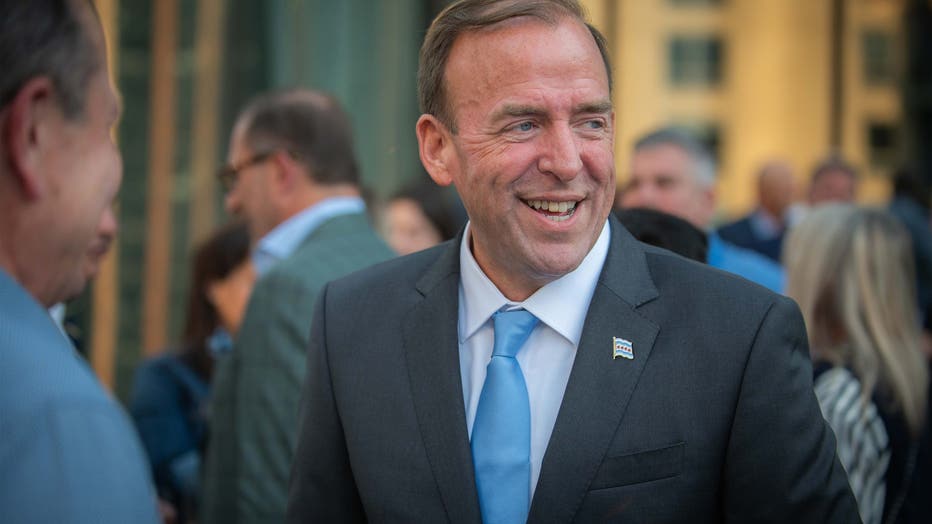
Ald. Brendan Reilly (42nd Ward) is running in the Democratic primary for the Cook County Board president. (Brendan Reilly campaign)
1. Obviously, property taxes are not just an issue that’s affected by county government, but what more can the county do to address rising property tax bills?
Property taxes are driven by many factors, but Cook County has far more influence than it admits. The most effective way to slow rising property tax bills is to grow the tax base responsibly rather than continuing to push higher levies onto existing homeowners and renters. As County Board President, I will prioritize policies that bring vacant land, brownfields, and underutilized commercial properties back into productive use, especially through housing and mixed-use development, so costs are spread across more taxpayers. I will also work to rein in the unchecked growth of levies across the hundreds of taxing bodies in Cook County and demand greater accountability for how those dollars are spent. Simply raising taxes year after year is not a strategy, but expanding the base, controlling levy growth, and restoring commercial property values is.
2. What would be your approach to address the projected growing budget deficits in the years to come for the county? Can you name specific new or increased revenues and/or cuts to spending you’d support?
The County’s projected deficits are the result of years of rapid budget growth without sufficient attention to long-term sustainability. Under the current administration, the County budget has expanded dramatically while mandatory obligations continue to grow. My approach will start with slowing the growth of spending by refocusing County government on its core responsibilities and rigorously evaluating the return on investment of existing programs. I will support consolidating duplicative services, reducing administrative overhead, and eliminating programs that are not delivering measurable outcomes. On the revenue side, I believe the County should prioritize economic growth strategies, particularly redevelopment of underutilized properties, rather than relying on new or higher taxes. Growing the tax base through development is a more responsible and sustainable solution than repeatedly asking residents to pay more.
3. What more should be done to ensure that the Sheriff’s Office, State’s Attorney’s Office, and court system have adequate staffing and resources to keep Cook County residents safe?
Public safety requires a fully functioning justice system, not independently functioning agencies. Cook County must ensure that the Sheriff’s Office, State’s Attorney’s Office, and court system are adequately staffed, properly resourced, and better coordinated. As President, I will prioritize filling critical vacancies, reducing case backlogs, and ensuring front-line staff have the tools they need to do their jobs effectively, including with the basics, like office supplies. I also believe we must invest smarter, expanding alternatives for nonviolent offenders, improving pretrial services, and strengthening reentry programs, so law enforcement and prosecutors can focus their resources where they are most needed. Public safety is undermined when any part of the system is stretched too thin, and restoring balance and coordination will be a top priority. A final component of my strategy is to ensure that violent offenders are kept from re-offending and clogging the systems with crimes that could’ve been prevented by improving our electronic monitoring process and suggesting an amendment to the SAFE-T Act.
4. With cuts to Medicaid and other federal programs, what can the county government do to ensure its healthcare system can continue to provide services to residents?
Cook County’s healthcare system is one of the largest and most important public safety nets in the country, and protecting it is non-negotiable, especially as federal Medicaid support becomes less reliable. The County must respond by improving efficiency, modernizing service delivery, and targeting resources where they have the greatest impact. This includes expanding outpatient care, bringing healthcare services directly into senior housing and community settings, and reducing unnecessary hospital utilization through preventive care and mental health services. At the same time, we must aggressively pursue every available federal and state dollar and strengthen partnerships with community providers. The goal is not simply to preserve the system as it exists today, but to make it more resilient, more accessible, and financially sustainable for the future. Fiscal responsibility and transparency are paramount, especially when it comes to the County’s hospital system.
Michael Murphy

Michael Murphy, candidate for Cook County Board President (Photo provided)
1. Obviously, property taxes are not just an issue that’s affected by county government, but what more can the county do to address rising property tax bills?
Property taxes aren’t set by the county alone, but county government still has real tools to help slow rising bills. The county should push for assessment limits so taxable value increases are capped at no more than 1% of a property’s value with a fixed annual growth rate tied to inflation, similar to California’s model, while also improving assessment accuracy and transparency so homeowners aren’t overcharged. It should expand and simplify exemptions for seniors, veterans, and working families so relief is automatic, not buried in paperwork. Finally, the county must be honest about cost drivers like rising pension and labor obligations instead of deflecting responsibility, and use that transparency to push for reforms that protect taxpayers while still funding essential services.
2. What would be your approach to address the projected growing budget deficits in the years to come for the county? Can you name specific new or increased revenues and/or cuts to spending you’d support?
My approach to addressing projected county budget deficits would focus on long-term structural stability rather than short-term fixes. I would shift appropriate roles from county employment to the private sector where it makes sense, recognizing there may be short-term costs but that this can limit long-term pension liabilities. I would also support auditing contracts and outside consultants to eliminate waste and redundancy, and tie spending growth to inflation and population changes so government grows only when residents do. The goal is to stabilize finances while protecting core services and avoiding tax hikes.
3. What more should be done to ensure that the Sheriff’s Office, State’s Attorney’s Office, and court system have adequate staffing and resources to keep Cook County residents safe?
The county should focus resources on sworn officers, prosecutors, public defenders, and court staff by cutting administrative bloat, auditing outside contracts, and redirecting funds to positions that directly impact case processing and safety. Improving coordination between law enforcement, prosecutors, and judges, especially around charging decisions, pretrial processes, and case backlogs, would help existing staff work more effectively. Finally, investing in modern technology, data sharing, and training can reduce delays, improve accountability, and make better use of limited resources without simply throwing more money at the system.
4. With cuts to Medicaid and other federal programs, what can the county government do to ensure its healthcare system can continue to provide services to residents?
Prioritizing direct patient care over administrative overhead, auditing contracts, and reducing duplication can help stretch limited dollars further. The county should also expand partnerships with community clinics, nonprofits, and private providers to keep care accessible without relying solely on county-run facilities. Finally, investing in preventative and primary care can reduce costly emergency and inpatient visits, helping stabilize the system while continuing to serve residents who depend on it most.