

Pritzker blasts Trump's policies, touts Illinois' improved finances in budget address
Pritzker blasts Trump's policies, touts Illinois' improved finances in budget address
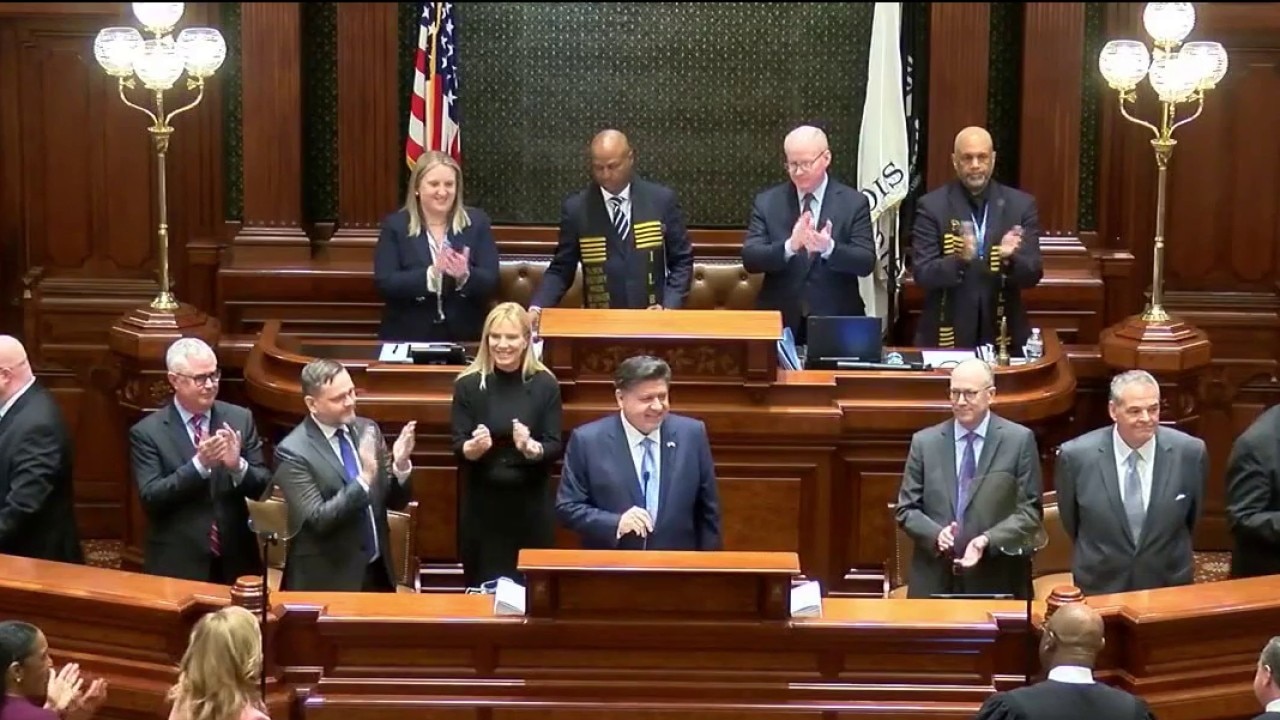
Gov. JB Pritzker covered affordability and pushed back against Trump in his State of the State budget address.
SPRINGFIELD, Ill. - Gov. JB Pritzker focused on affordability, blasted the Trump administration's budget and immigration policies and touted Illinois' improved financial standing in his State of the State budget address on Wednesday.
The annual address is a chance for the governor to unveil his $56 billion budget plan for the next fiscal year, which begins on July 1.
The General Assembly will have to approve the budget by the end of June.
The backstory:
A report from the governor's Office of Management and Budget estimated the state's budget deficit for 2027 would reach about $2.2 billion. The State of Illinois is constitutionally required to approve a balanced budget every year.
Pritzker's address comes as Illinois faces increasing fiscal pressure after the passage of President Trump's budget law. A report from Pritzker's budget office said the new law will result in Illinois losing nearly $600 million in federal funding due to cuts, mostly to healthcare spending.
"Unlike the federal government, every year Illinois must balance its budget. When Donald Trump is taking resources away that are rightfully ours, none of us — Democrats or Republicans — should be ok with that," Pritzker said.
The speech is also an opportunity for Pritzker to highlight his accomplishments after seven years in office and as he runs for a third term as governor in Illinois. He was first elected in 2018 and re-elected in 2022.
Here are some more highlights of Pritzker’s policy proposals:
Improved finances
The governor boasted what he called "historic fiscal progress" during his nearly two terms in office, which has included ten credit upgrades, a $2.4 billion rainy day fund, and the elimination of the state’s bill backlog of $8 billion, according to his office.
The state’s GDP reached $1.2 trillion, which ranks among the top 20 economies in the world.
"Despite the headwinds, the Illinois economy has proven remarkably resilient — forging ahead on our path toward accelerating growth and expansion," Pritzker said.
The Illinois GOP criticized Pritzker for taking a "dystopian vision for Illinois" and proposing "out-of-control spending and sky-high taxes" during his tenure.
"Today’s speech from JB Pritzker was nothing more than empty promises, hypocrisy and fearmongering," said ILGOP Chair Kathy Salvi. "For the last eight years, Pritzker and Illinois Democrats have relied on massive tax increases, financial gimmicks and out-of-control spending to pass a budget. Again, this year relies on, yet another massive spending package filled to the brim with tax increases that will only hurt Illinois families and small businesses."
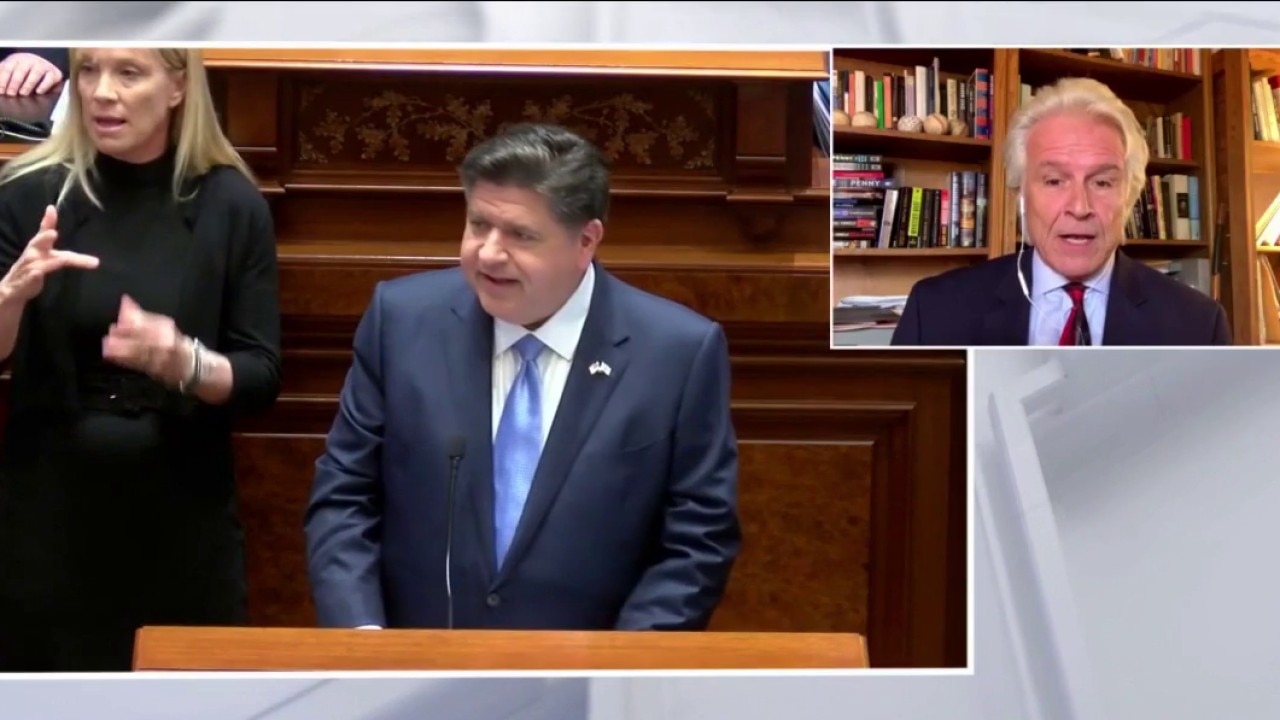
Expert reviews Pritzker's proposed $56 billion budget
We’ve talked about the governor’s address and his new budget plan. Let’s bring in political analyst Thom Serafin now and get his take on what it all means for Illinois.
Pushback against Trump admin
Pritzker repeatedly blasted the Trump administration’s immigration enforcement measures, including the two-month-long Operation Midway Blitz last year in which federal agents arrested hundreds of people across the Chicago area.
He referred to, "Masked, unaccountable federal agents — with little training — occupied our streets, brutalized our people, tear gassed kids and cops, kidnapped parents in front of their children, detained and arrested and at times attempted to deport US citizens, and killed innocent Americans in the streets."
Pritzker added, "Illinois was the canary in the coal mine for what we saw happen in Minnesota."
The governor was a vocal critic of Operation Midway Blitz and the Trump administration’s efforts to deploy National Guard troops in Chicago, which the state successfully fended off in court. The campaign resulted in multiple violent scuffles between federal agents and protesters, lawsuits, and at least two people being shot by agents, one fatally.
"I have joked with many of you that I wish I could spend just one year of my governorship presiding over precedented times," Pritzker said. "I yearn for normal problems."
Pause on data center tax credits
The construction of data centers across the country and state has become increasingly controversial for their use of power and water, potentially causing a significant increase in energy bills.
Pritzker argued the state needs to "think critically about our future energy usage with the needs of Illinois households at the forefront."
He proposed a two-year pause in granting a tax credit for new data centers, a program that’s been in place in the state since 2019. As of the end of 2024, the state approved 27 applications for the credit and approved more than $983 million in estimated tax benefits, according to an annual report from the Illinois Department of Commerce.
Pritzker added, "With the shifting energy landscape, it is imperative that our growth does not undermine affordability and stability for our families."
The Illinois Clean Jobs Coalition, which represents hundreds of environmental advocacy groups, praised Pritzker's proposal in a statement:
"As data centers continue to consume massive amounts of electricity and water while bringing pollution to our doorsteps, it is critical we reassess this industry, its impacts on Illinois, and the taxpayer handouts offered to them, which as of the end of 2024 totaled close to $1 billion in tax benefits."
Meanwhile, the Chicagoland Chamber of Commerce, said it was "concerned about the proposal to pause the data center tax credit program, which will eliminate a proven economic development tool."
Children’s Social Media Safety Act
The governor also proposed a new measure to address the harms of social media on young people, which he said was one of the "deepest concerns" of Illinois parents.
Pritzker referenced other states that have banned cellphone use in the classroom, and said it "is time for Illinois to follow suit."
He proposed the Children’s Social Media Safety Act, which will "put decisions about children’s online safety back into the hands of parents by allowing them more easily to restrict their kids’ access on exploitative websites and apps."
He also proposed a social media platform fee that he said would generate $200 million a year to support K through 12 education.
"If social media giants are going to feed off of Illinois families, they ought to support Illinois families," he said.