

Inside Cook County Sheriff's new CTA Transit Safety Mission to reclaim Chicago's trains
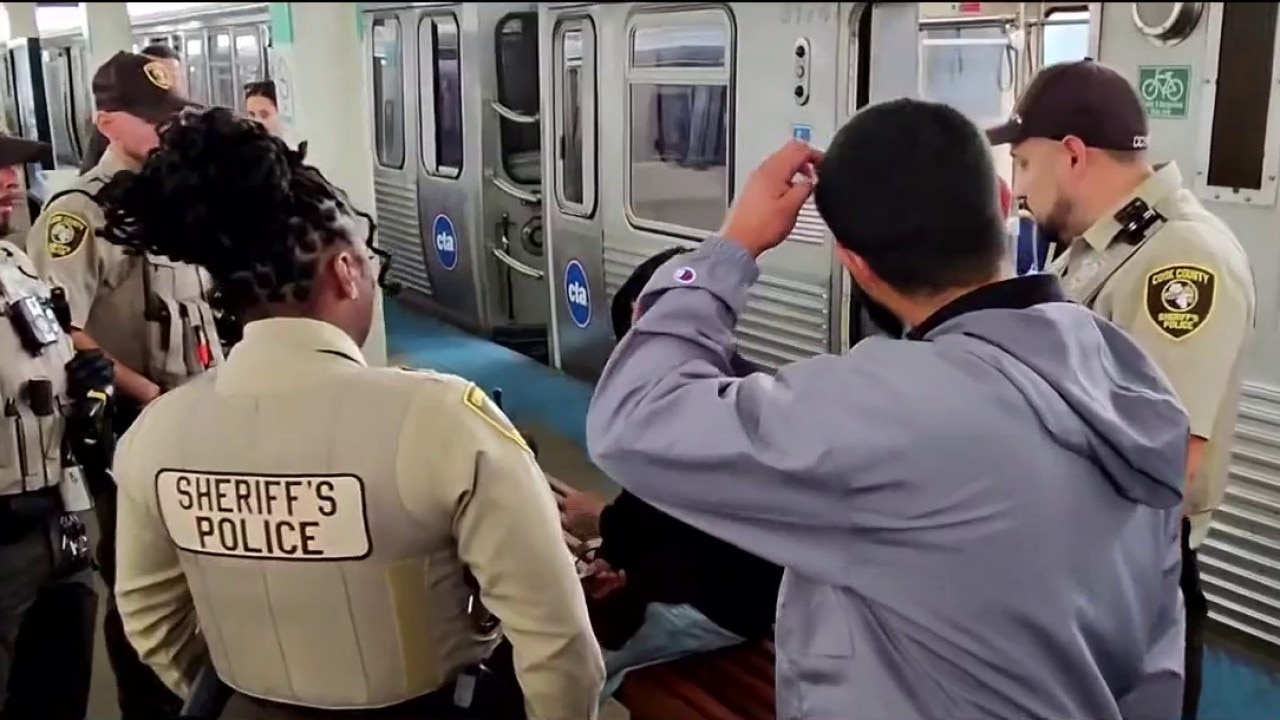
Inside CTA's transit crackdown on crime and fare evasion
FOX Chicago’s Tia Ewing takes viewers inside the Cook County Sheriff’s crackdown on crime and fare evasion across the CTA train system.
CHICAGO - Every few minutes, another CTA train rolls into the station. The doors slide open. Hundreds of riders step aboard. Most are simply trying to get to work, school, or home.
But hidden somewhere among them could be a fugitive, someone carrying a weapon, someone openly using drugs—or someone suffering through a mental health crisis.
For the first time, FOX 32 Chicago rode alongside Cook County Sheriff's Police as deputies searched every rail car, greeted riders, enforced CTA rules, and responded to everything from open drug use to people needing medical attention.
What we witnessed is part of a sweeping new transit safety strategy that extends far beyond routine patrol.
A mission that goes beyond policing
Cook County Sheriff Tom Dart says this assignment wasn't one his office sought.
Instead, Illinois lawmakers asked his department to do two jobs at once: patrol the CTA while simultaneously collecting data that will help design the future of transit policing across the region.
"When this first came to us, it was presented as a task force," Dart told FOX 32. "We thought we'd be studying the system and presenting a report. But the legislature also wanted us to head up the actual policing part of it while that work is being done."
Every arrest, every fare evader stopped, every quality-of-life violation, and every interaction with riders is helping deputies build what Dart calls a more complete picture of where crime occurs, what problems are unique to each rail line, and which enforcement strategies are actually working.
"We wanted to understand the realities instead of just hearing about them," Dart said.
What deputies are finding
During FOX 32's ride-along, deputies responded almost immediately.
One man was seen allegedly smoking from what officers believed was a crack pipe aboard a Green Line train. Investigators say he tossed the pipe before deputies detained him. Moments later, dispatch confirmed he was already wanted on an outstanding warrant.
That arrest mirrors what deputies say they've been finding almost daily.
Since March 27, the Sheriff's Office reports:
- 225 arrests
- 74 wanted fugitives taken into custody
- 23 weapons recovered
- 10 missing people safely located
- 10 registered sex offenders arrested for failing to comply with registration laws
For Dart, those numbers reflect more than arrests. They reveal problems he says had been hiding in plain sight.
Why fare evasion matters
Many riders may wonder why deputies spend so much time stopping people who jump turnstiles.
Dart says it's because fare evasion is often the first sign that no one believes the rules will be enforced.
"When you start your trip breaking the law because you're not paying, it sends the message there are little, if any, rules," Dart said. "A lot of the other behavior flows from that."
Deputies now station officers at high-volume entrances, particularly along the Red Line.
"If someone goes to hop it, we tell them, 'Go pay or leave.' Hopping is not an option," Dart said. "If they do it anyway, we'll arrest them."
He says visible enforcement is already changing behavior.
"Fare evasion has gone to zero where we have officers stationed—not because we gave a good speech, but because we're physically there."
Why the Red Line?
The Sheriff's Office has concentrated much of its effort on the Red Line after reviewing available crime data.
Deputies have also worked on the Green and Blue lines, but Dart says the Red Line presented the greatest challenges.
Each rail line, he says, has different problems requiring different solutions rather than a one-size-fits-all approach.
More than making arrests
The patrols don't begin with handcuffs.
Deputies first walk through every train car, speaking with riders, checking on passengers who appear to be sleeping, looking for medical emergencies, and enforcing quality-of-life violations like smoking, loud music, drinking alcohol, and walking between train cars.
More than 1,500 warnings have been issued since the initiative began. Dart believes those smaller interactions help prevent more serious crime.
"If you're thinking about committing crimes here, we're here," he said. "You're going to get caught."
According to CTA data shared with the Sheriff's Office, violent crime along the Red Line has fallen 77% since the initiative began.
Not everyone leaves in handcuffs
The operation also pairs clinicians with deputies. Their role isn't enforcement. It's intervention.
Since March:
- 115 people experiencing mental health or substance-use disorders have been connected with services.
- More than 100 unhoused individuals have received outreach.
- 26 people have been transported to shelters or hospitals for treatment.
For Dart, public safety isn't measured only by arrests. It's measured by whether riders feel comfortable returning.
"Virtually every indicator says people aren't using transit because they don't feel safe and because it's dirty," he said. "Let's solve those problems and people will come back."
The cost—and the question ahead
The initiative has cost approximately $3.1 million during its first three months.
The state has agreed to reimburse most, if not all, of those costs, according to Dart, who says lawmakers and the governor's office have worked cooperatively throughout the process.
Building the blueprint
The operation is expected to continue through the end of the year while deputies continue collecting data and testing different enforcement strategies. By law, the Sheriff's Office is expected to deliver a comprehensive report and recommendations to the Northern Illinois Transit Authority (NITA) on what long-term transit policing should look like.
Dart says the goal isn't simply to make arrests. It's to determine what actually makes riders safer.
"We're learning as we go," he said, explaining that the information gathered over the coming months will help determine everything from where officers should be deployed to whether physical changes—like redesigned fare gates that make turnstile jumping nearly impossible—could reduce crime while allowing more officers to patrol trains instead of station entrances.
Whether the Cook County Sheriff's Office has a permanent role after this year remains undecided.
"I don't have a preconceived notion," Dart said. "If there's a smart role for us, I'm open to listening."
The Source: The information in this report came from statistics from the Cook County Sheriff’s Office and an interview with Sheriff Tom Dart.