

Lurie Children’s helps lead clinical trial for gene therapy targeting Dravet syndrome
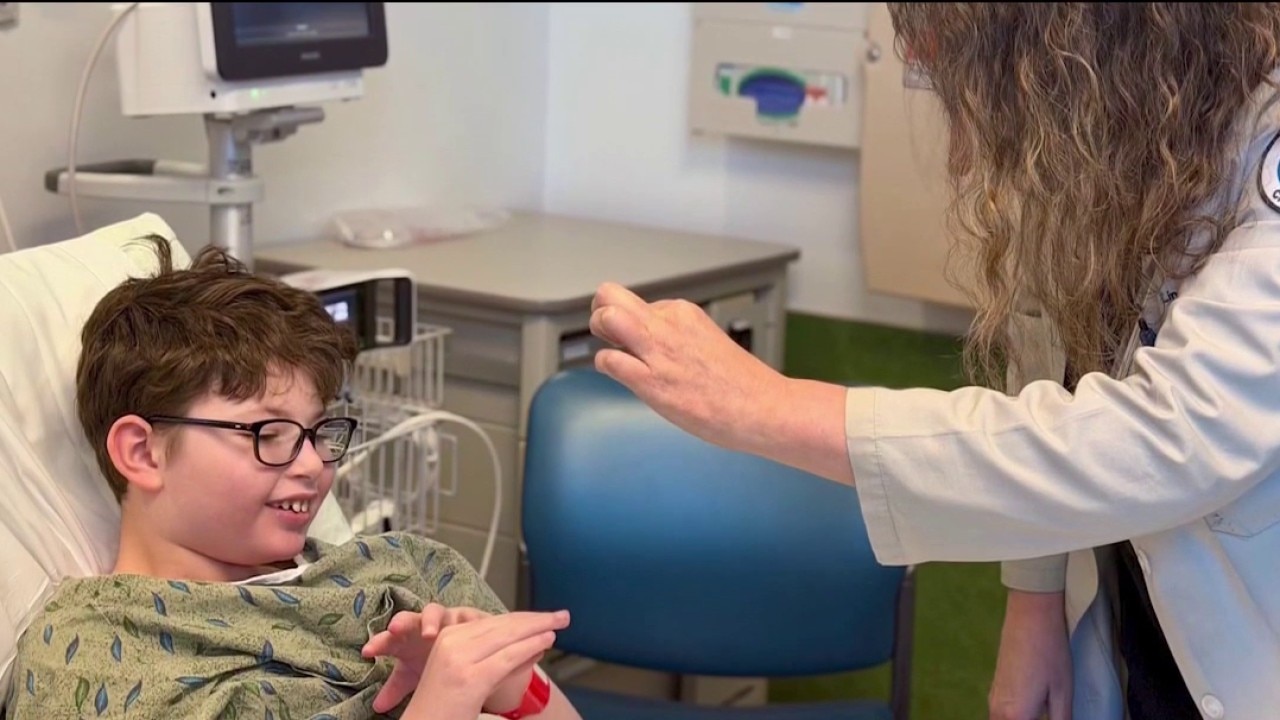
Clinical trial offers hope for Dravet syndrome patients
It is a rare and severe form of epilepsy --- one that can bring daily, debilitating seizures. If approved, the medication would become the first gene regulation therapy for epilepsy. Kasey Chronis has the details.
CHICAGO - A groundbreaking clinical trial, led in part by a doctor at Ann & Robert H. Lurie Children's Hospital of Chicago, is offering new hope for young patients with Dravet syndrome.
Dravet is a rare and severe form of epilepsy — one that can bring daily, debilitating seizures.
If approved, the medication would become the first gene regulation therapy for epilepsy.
What we know:
Doctors in the U.S. and the United Kingdom are studying the use of zorevunersen (STK-001) in children and adolescents with Dravet syndrome.
Clinical trials began in 2020, and early results show major promise, with some patients and their families reporting life-changing improvements.
The treatment targets the genetic cause of Dravet syndrome — making it a first-of-its-kind therapy for epilepsy.
"Children with Dravet syndrome have a genetic mutation in the SCN1A or sodium channel receptor gene. They have one normal SCN1A gene and one abnormal. What zorevunersen does, it makes the normal SCN1A gene work harder to overcome the deficit caused by the abnormal gene," said Dr. Linda Laux, an epilepsy attending physician at Ann & Robert H. Lurie Children's Hospital of Chicago.
Dr. Laux is one of the experts leading the study. She heads the Epilepsy Center at Lurie Children's.
"It's a very promising study. It gives the families the hope of the medicine, that because it's treating the underlying cause of Dravet syndrome, it will help them in all of the ways this sodium channel receptor mutation harms their child," Laux said.
Results from the first two phases of the study were published Wednesday in The New England Journal of Medicine.
A total of 81 patients between the ages of 2 and 18 have participated in the clinical trial so far. As of last spring, 75 patients had joined the extension studies.
What they're saying:
At the height of his struggles, Owen, who is now 12 years old, experienced upwards of 300 seizures in a single day.
"Owen's first seizure was at three months old," said Austin Watson, Owen's mom. "The topic of gene therapies or gene treatments has been a topic that we've been looking at as a community for a long time."
The clinical trial is offering new hope for him and other children with Dravet syndrome.
"Owen has grown leaps and bounds," Watson said. "Seizures have reduced dramatically. Developmentally, he's growing exponentially."
Owen's mom said every four months, they now travel from their home in Idaho to Lurie Children's in Chicago for her son's infusions.
"But I would travel to Timbuktu if I needed to," Watson added.
For Owen, the results have been remarkable — not just in reducing seizures, but also in improving language, social development, and his overall quality of life.
"For the first time since March of 2020, he is at a place where he's able to attend school in person. This study has made it so that he has thrived to where he played on the Gen Ed basketball team with other fifth and sixth grade boys," Watson said.
Watson said it is the "greatest gift" to watch her son blossom.
"He has always been an incredibly strong and remarkable human, and to watch him connect and make friends and remember the friends' names and want to go to school and live the best version of his life possible has been incredible," Watson said.
She is hopeful that, if approved, the medication will help other families, too.
"I am just so excited and hopeful for our community, not just for Owen, but for every child that has Dravet syndrome and is yet to be diagnosed with Dravet syndrome," she said.
What's next:
Researchers are now preparing for the third phase of the clinical trial, which is expected to last one year.
Once the study is complete, the findings will be submitted to the Food & Drug Administration (FDA) for review.
Families seeking resources about Dravet syndrome can learn more through the Dravet Syndrome Foundation.
The Source: This story contains reporting from Fox Chicago's Kasey Chronis.