

Rising e-bike crashes prompt Illinois to launch new safety initiative
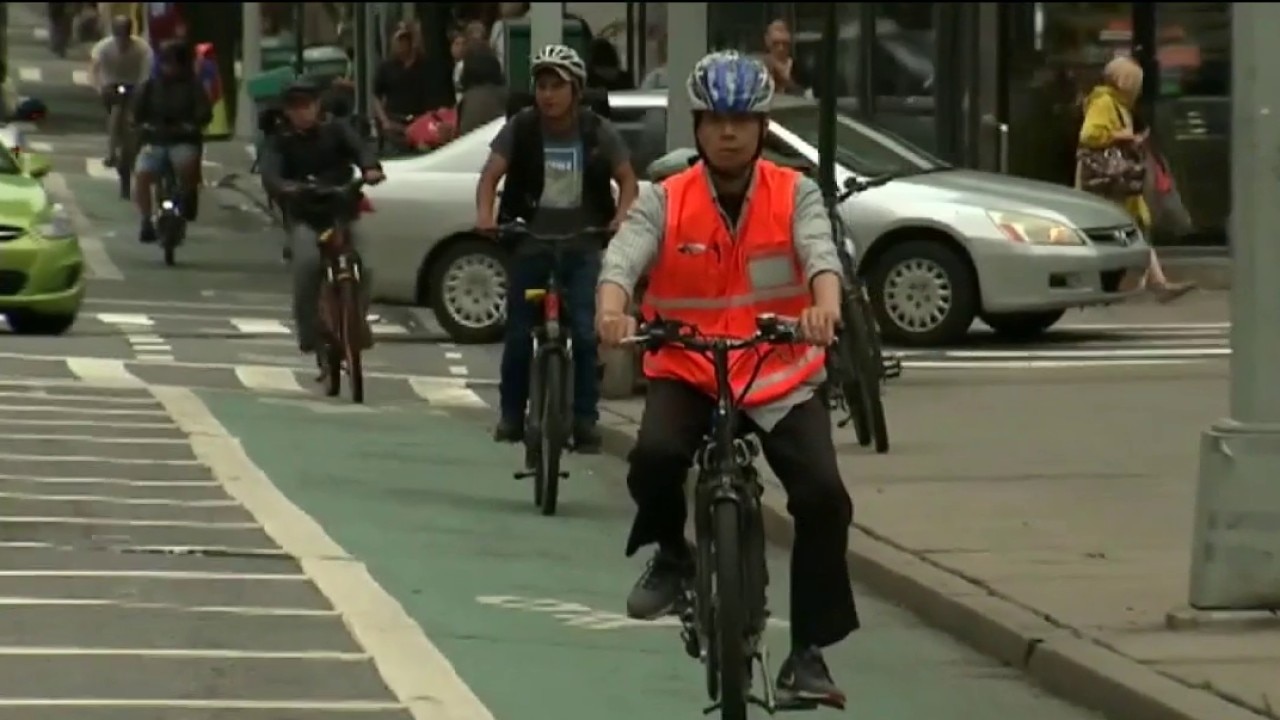
E-bike safety pan announced in Illinois
Illinois plans to pass a new law regulating e-bikes and e-scooters. Secretary of state Alexi Giannoulias announced it Thursday.
CHICAGO - Illinois’ Secretary of State announced a new traffic safety program on Wednesday. It focuses on fast e-bikes, scooters and other electric devices that can go more than 50 miles per hour. He said the law hasn’t kept up with these devices and kids are getting hurt.
Secretary of State Alexi Giannoulias announced the "Ride Safe, Ride Smart, Ride Ready" initiative in Chicago alongside lawmakers, police leaders, bike advocates, doctors and students.
What we know:
He pointed to federal data showing that injuries and deaths from these electric devices have gone up 300% across the country in just three years, from 2019 to 2022. Illinois has also had several serious deaths. A teenager in Mount Prospect was killed when his e-bike hit a pickup truck. An Illinois State University official died after being hit by an e-bike rider in Bloomington-Normal.
The new program wants to make the rules clearer for fast electric devices. It will add more traffic safety education in Illinois schools. It will also give communities and police better guidance on how to keep riders and walkers safe without banning e-bikes completely.
Officials said they want to move fast in the 2026 legislative session. That’s because faster and heavier devices keep showing up on streets, sidewalks and bike paths, and there aren’t many statewide rules right now.
Where the state wants to change
State leaders say Illinois law right now treats some slower devices more strictly than much faster ones. This creates confusion for families and the police.
Low-speed e-bikes that max out at 28 miles per hour already have three categories in Illinois law. These categories include age restrictions. But officials say some faster electric bikes, scooters and "emotos" that can go over 50 miles per hour basically have no state rules at all. There are no age limits.
"There are actually no regulations or age restrictions for any type of electric unicycles or skateboards," Giannoulias said at the event. He called the current mix of state and local rules "the upside down."
The Secretary of State’s office plans to work with lawmakers to:
- Update the Illinois Vehicle Code to clearly define different types of electric devices and set basic statewide rules for high-speed models.
- Consider age limits, licensing or permits, and possible insurance requirements for certain devices.
- Make it clear where different devices can legally be used. This includes city streets, bike lanes, sidewalks and trails.
The effort will be led in Springfield by State Sen. Ram Villivalam, who leads the Senate Transportation Committee, and State Rep. Barbara Hernandez of Aurora. Hernandez said her office has been flooded with complaints about teens on fast e-scooters and e-motorbikes in suburban neighborhoods.
Villivalam called these electric devices "the future" for many riders who need cheaper and cleaner transportation. But he warned that some devices now move as fast as motorcycles without the same rules.
"This program is about updating our approach to electric devices with clear and consistent statewide rules," he said. That way, new technology on the street doesn’t hurt public safety.
Rising injuries, especially for kids
Doctors say they are already seeing the impact in emergency rooms.
Dr. Christine Sislak is the head of pediatric emergency medicine at Lurie Children’s Hospital. She told the crowd that kids have always fallen off bikes and scooters, but the injuries look different now.
She said children thrown from high-speed e-bikes and scooters are showing up with broken facial bones, knocked-out adult teeth, and serious arm and shoulder breaks. Some need surgery instead of a simple cast. She also described cases of skull fractures and serious brain injuries.
"These things are life-changing," Sislak said. "They try it once. That’s it. Life has changed."
In many cases, she said, the devices are birthday gifts. Kids take their first ride the same day. Sometimes they have a friend sitting on the back. They crash before they fully understand how fast the bike or scooter can go.
Sislak said she believes many parents simply do not realize the risk or the speed of the devices they are buying.
State officials say that’s part of why the new program focuses so much on clear rules and education, not just tickets.
New lessons for Illinois students
A major piece of the plan is aimed at changing how young people learn about traffic safety.
Jennifer Brown is president of the Illinois High School and College Drivers Education Association. She said her group is working with the Secretary of State’s office to create new lessons for high school driver education classes.
The updated curriculum is expected to cover:
- How different types of electric devices are classified and what they can do.
- Existing state laws that apply to e-bikes, scooters and other electric devices.
- How drivers and riders should safely share the road with each other.
"The first part of this partnership focuses on electric devices within high school driver education," Brown said. "Through this education, drivers and riders learn how to safely share the road. Safety works best when everyone understands their role."
The plan also calls for expanding a state program that teaches K-8 students about walking and bicycle safety. This way, younger students learn basic walking and biking skills long before they drive a car or use an electric device.
A separate "traffic safety leadership" part will push high school students to take on more active roles teaching their peers. Brown brought three teenagers from Gillespie High School to the announcement. These students have already worked on teen traffic safety projects and helped shape the new plan.
"This is what it looks like when students aren’t just taught safety. They actually lead it," Brown said.
Community-based enforcement and police concerns
Police leaders at the event said they want clearer rules and better tools to prevent crashes. But they also said the focus should be on education and getting people to follow the rules on their own.
Joe Leonas is president of the Illinois Association of Chiefs of Police and police chief in Lincolnshire. He said the new guidelines are meant to help officers work more directly with parents and riders, not just write more tickets.
"Keeping people safe starts with education and prevention, not just enforcement," Leonas said.
He joked that his goal as a police chief is to see "boring behavior" on the street. His two-hour drive to the event, he said, was "nice" precisely because nothing surprising happened and he arrived safely.
Giannoulias picked up that line and said the state could easily adopt "Be safe, be boring" as an unofficial motto for kids on fast e-bikes and scooters.
The program includes a community enforcement plan. It will pair police with local partners to set practical guidelines. The idea is to find problem spots and patterns. For example, teens racing emotos through trail systems or adults riding motorcycle-style devices on narrow lakefront paths. Then they can step in early.
Giannoulias mentioned hearing from residents about electric unicycles zipping along city walkways at around 40 miles per hour. He also heard about motorcycles using Chicago’s lakefront trail like it was a road.
Not a ban on e-bikes
Throughout the announcement, state leaders and advocates stressed that they are not trying to outlaw e-bikes or other electric devices.
Dave Simmons is the executive director of Ride Illinois, a statewide bike group. He said his organization supports keeping existing laws that protect the use of low-speed, legal e-bikes. He wants to keep those devices allowed on bike paths and lanes.
"Someone riding an e-bike is not cheating," Simmons said. "They’re simply using a less common mode to go places."
He said that responsible use of legal e-bikes can help people who don’t own cars, who can’t drive, or who have trouble getting around. And they don’t add pollution or traffic.
But Simmons said Illinois needs to draw a clear legal line between those low-speed e-bikes and larger, faster devices that look similar but act more like motorcycles.
Officials said the program is meant to bring clarity and consistency. It’s not meant to stop the growth of electric devices.
"Today is not about getting rid of electric devices," Giannoulias said. "It’s about understanding that things have changed, and it’s important for us to provide some guidelines."
What happens next
The "Ride Safe, Ride Smart, Ride Ready" program is still in its early stages. The specific details of the bill haven’t been released yet.
Giannoulias said his office is looking at how other states have tried to regulate electric devices. He mentioned New Jersey as one example of an aggressive approach that created confusion and problems. He said Illinois hopes to avoid that while also going beyond states that have done very little.
The Secretary of State’s office expects to work with lawmakers from both parties, police, doctors and advocacy groups over the coming months to write legislation for the 2026 session.
Officials didn’t give a firm timeline for when new rules or class changes might take effect. But they said work on education materials is already happening.
In the meantime, the state has launched a public information website, ilsos.gov/OneRoad. It has explanations of current laws for electric devices and safety tips for riders, drivers, teachers and parents.
The Source: This story contains reporting from Fox Chicago's Terrence Lee.