

US Senate candidates debate ICE, minimum wage, AI and UFOs: 3 key takeaways
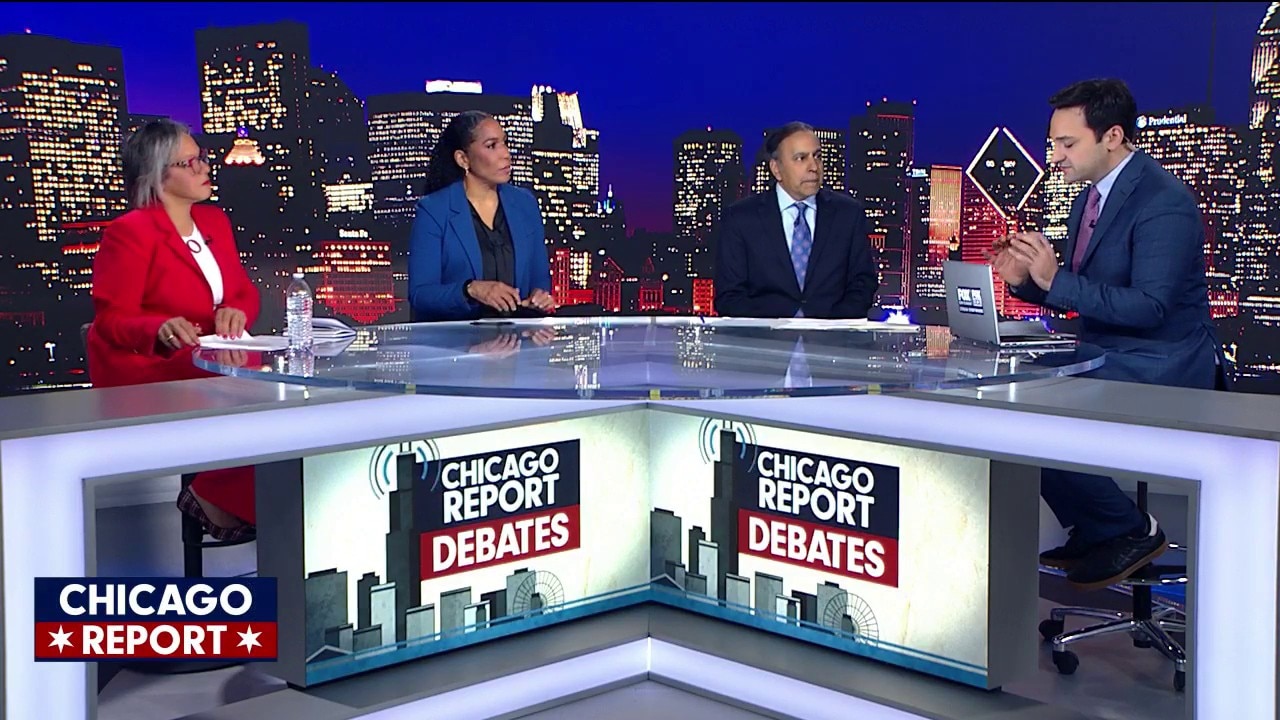
US Senate candidates debate ICE, minimum wage, and AI | Chicago Report Debates
The top three candidates in the Democratic primary for U.S. Senate faced off in Monday night’s debate on "The Chicago Report."
CHICAGO - The top three candidates in the Democratic primary race for Illinois’ open U.S. Senate seat sparred over how to lower the cost of living, whether to abolish ICE, and even whether the feds should disclose findings about UFOs in a primetime debate on Fox Chicago.
U.S. Rep. Robin Kelly, U.S. Rep. Raja Krishnamoorthi, and Lt. Gov. Juliana Stratton are the top candidates running for the seat currently occupied by longtime Sen. Dick Durbin.
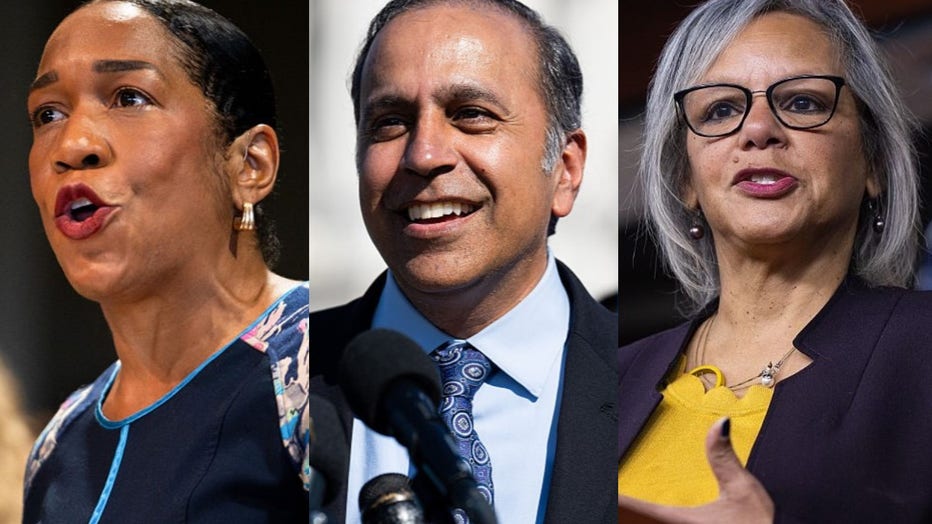
Lt. Gov. Juliana Stratton, U.S. Rep. Raja Krishnamoorthi, and U.S. Rep. Robin Kelly (left to right) are vying for the Democratic nomination to the U.S. Senate in the March 17, 2026, primary race. (Getty Images)
Primary Election Day is March 17 in Illinois, but early voting has already begun this month across the Chicago area.
Here are three key takeaways from the night's debate.
Minimum wage
The Democratic candidates all argued for raising the federal minimum wage as one way to help Americans deal with increasing costs for everyday items like groceries and housing.
But there was a clear distinction on how much lawmakers should raise the minimum wage.
Stratton argued to raise the federal minimum wage from $7.25 to $25 per hour, a mark that her two opponents appeared reticent to endorse. The lieutenant governor pointed out that while she and Gov. JB Pritzker were in office, they helped raise the minimum wage in Illinois to its current level of $15 per hour. That increase happened gradually over a number of years.
Fox Chicago asked Stratton about concerns that a $25 hourly wage would hurt small businesses.
"We included business leaders and business owners at the table to make sure that their voices are represented," Stratton said. "And of course I would do that when I get to Washington. But the bottom line is, why do we still have so many people who are working two and three jobs just to make ends meet?"
She argued $25 was more of a livable wage.
Krishnamoorthi said he supported a bill to raise the minimum wage to $17 and was concerned as a former small business owner that a $25 wage "could really harm small businesses and curtail hiring at those businesses."
Kelly said she’s heard from small businesses in her district that if the minimum wage were raised too high, they’d have to close or hire fewer workers. She also argued that a more "realistic" wage would garner more votes in Congress, which is necessary to pass a higher wage.
Campaign donations
Stratton repeated her criticisms of Krishnamoorthi, accusing him of receiving campaign donations from an executive of Palantir, a company involved in surveillance and tools that the Department of Homeland Security uses.
Krishnamoorthi said he donated that money to three migrant groups. He then came back at Stratton, accusing a Super PAC that supports her of receiving thousands of dollars from CoreCivic, a private prison contractor.
"This hypocrisy of ICE contractors and so forth has got to end, but this is a very disturbing fact with regard to your finances," Krishnamoorthi said, referring to Stratton.
The lieutenant governor criticized Krishnamoorthi for only donating his campaign donations after it became a topic of public news reports, saying, "It wasn’t until people called for it, the public."
Transparency on UFO intelligence
Kelly and Krisnamoorthi voiced support for more public disclosure about what the federal government knows about UFOs, or what are now referred to as unidentified anomalous phenomena, UAP.
Krishnamoorthi even said he had been privy to classified material on the subject. He argued that more transparency and disclosure are needed to "get away from the conspiracy theories."
"I believe in more disclosure, more transparency," he said. "Sunlight is the best disinfectant."
Kelly said she would vote to disclose what the government knew about UAP "as long as it doesn’t interfere with national security."
She added, "If there is something that’s gonna be harmful to the United States, or harmful to the world, yeah I think we need to know about it."
Stratton didn’t give a position but said residents were talking to her more about their wages, healthcare and getting bit corporate money out of politics.
"That’s what I hear people want, and that’s what I’m gonna fight for, the people," Stratton said. "I’m sure they’ll figure out the other issues."
You can watch Fox Chicago's previous debates for the 2026 primary election season here: