

Chicago faces possible credit downgrade amid budget turmoil
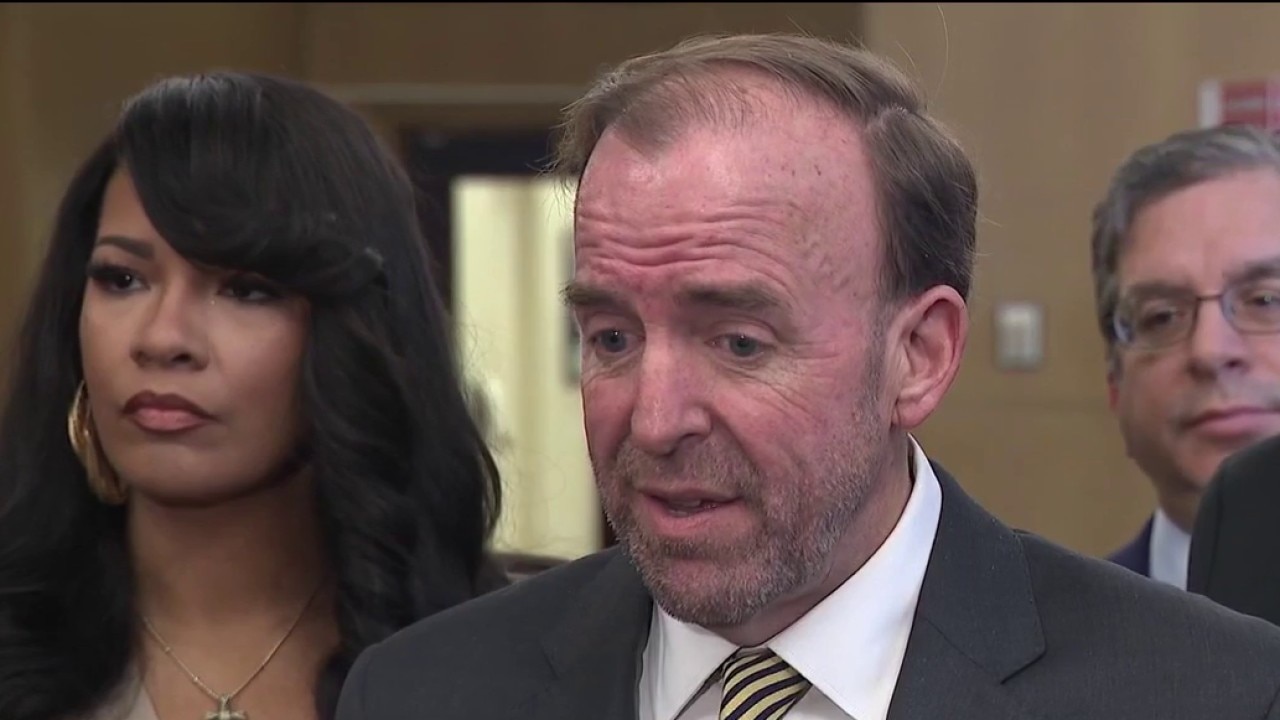
Chicago faces credit downgrade warning as city's financial troubles mount
Chicago's financial troubles are raising new alarms. S&P Global has placed the city on downgrade watch, potentially driving up borrowing costs. The warning comes after the city's CFO abruptly resigned and City Council voted for an outside financial review.
CHICAGO - Chicago is facing a warning about its finances after S&P Global placed the city on credit downgrade watch, raising the possibility of higher borrowing costs.
The warning comes as the City Council voted for an independent review of Chicago’s finances following the abrupt resignation of the city’s chief financial officer.
Chicago placed on credit downgrade watch
The backstory:
S&P cited "political infighting within a condensed budget timeline" as why they are issuing this warning, telling the city it has 90 days to get its act together or potentially face a catastrophic credit downgrade.
"The CreditWatch placement reflects our view that there is at least a one-in-two chance of a downgrade in the next 90 days, pending the passage of Chicago’s fiscal 2027 budget and our evaluation of the city’s progress in reducing the fiscal deficit," said S&P Global in a statement provided to Fox Chicago.
The report also cites "a pattern of management instability that injects added uncertainty into the budget process."
What they're saying:
Mayor Brandon Johnson issued this statement in response:
"S&P's warning comes as a sobering reminder of our collective obligation to the residents of this city that we must work together toward constructive solutions to pass a budget that helps all our residents and puts the city on the right path for long-term success.
"In this moment, we must come together and engage in a good-faith dialogue on behalf of all Chicagoans. It’s time to lower our voices and raise our sights.
"The notice from S&P specifically cautions about the risks of an artificial gridlock as a major driver of their concern — and the notice says that passing a balanced budget would alleviate their concerns.
"Over the past three years, we have advanced structural revenues while identifying $860 million in savings and efficiencies, including $60 million in the Mayor's FY27 informed by EY’s recommendations. The more significant savings initiatives were always intended to be phased in carefully over time, and that work remains underway while our present budget proposal continues to lay the groundwork for future savings.
"S&P's warning makes clear that fiscal stability depends on the advancement of structural revenues, for that reason, it's disheartening that segments of the City Council have rejected more than $400 million in structural revenues in this year's budget.
"I stand ready to meet my fellow Chicagoans from the City Council at the table — and it is my sincere hope and expectation that they will join me there."
And, Acting CFO & Comptroller Michael Belskey issue this statement:
"From my 35 years in the municipal finance industry, I know that the purpose of an S&P CreditWatch notice is to provide a caution about market concerns and to offer an opportunity to remedy those concerns.
"The CreditWatch rationale makes plain that the city can avoid a downgrade by promptly passing a balanced budget built upon structural revenue solutions. The Mayor’s proposed Fair Share Budget includes structurally sound revenue sources, including increases to previously passed sources that have overperformed financial projections in FY 2026. Sustainable financing sources in previous budgets were rejected by members of Council and replaced with one-time, non-structural solutions that have proven to be non-viable. Unfortunately and inexplicably, members of City Council have vowed to once again remove the structural revenue elements form the FY 2027 budget –having yet to offer new viable solutions in their place.
"It is important to clarify that in Chicago, the budget proposal is a product of a collaboration between all the City’s fiscal officers. While the Chief Financial Officer (CFO) serves as one advisor in the budget process, the CFO is primarily responsible for debt management and public-private partnership. Between the City’s Office of Budget and Management (OBM) and the Department of Finance (DOF), more than 675 dedicated, highly skilled public servants are engaged in careful analysis and administration of the City fiscal responsibilities, representing a deep bench of talent, expertise, and capacity.
"Finally, it is important to note that the Ernst & Young (EY) savings recommendations referenced in the S&P notice are, in fact, incorporated into the FY 2027 budget proposal. While $60.2 million in expenditure adjustments as recommended in last year’s EY report are included in the 2027 budget proposal, the majority of the EY report's identified expenditure reductions would take up to ten years to fully implement. As of October, the City is on pace for that implementation schedule with 96% of initiatives on and exceeding their timeline benchmarks.
"As Acting CFO, I look forward to working with all stakeholders to address the concerns outlined in the CreditWatch rationale and resolve them by passing a balanced budget that works for all Chicagoans and secure the city’s long-term financial future."
This is a developing story and we'll bring more updates as they become available.
The Source: The information in this report came from statements and findings released by S&P Global, a statement from Chicago Mayor Brandon Johnson and Chicago City Council actions concerning the city's finances.