

Judge blocks Trump plan to curb DEI initiatives at schools
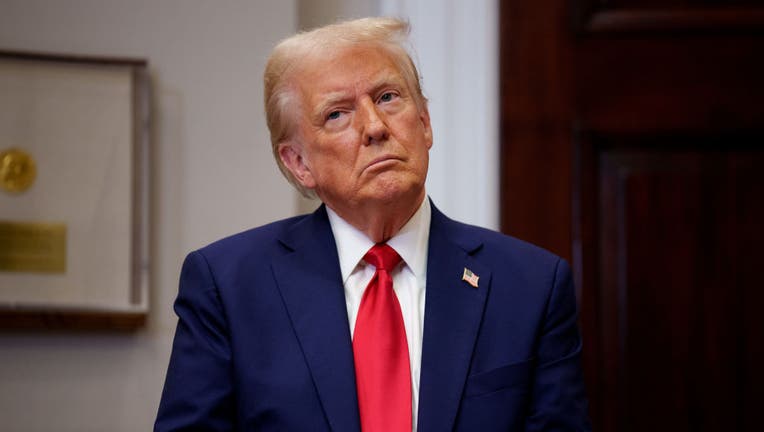
President Donald Trump listens during an event at the White House.
A federal judge has struck down two Trump administration actions aimed at ending diversity, equity and inclusion programs in schools and universities, finding they were issued unlawfully.
U.S. District Judge Stephanie Gallagher in Maryland ruled Thursday that the Education Department violated procedural requirements when it issued memos threatening to strip federal funding from institutions that continued DEI initiatives.
The ruling is the latest blow to the administration’s effort to expand a 2023 Supreme Court decision on race in college admissions to all areas of education.
What the judge’s ruling says
What we know:
Gallagher’s ruling orders the Education Department to withdraw two memos — one from February and one from April — that directed schools to end any "race-based decision-making" or risk losing federal money.
The guidance, now invalidated, warned of penalties up to a total loss of funding and possible prosecution under the False Claims Act. It targeted policies in admissions, financial aid, hiring and student life that it said discriminated against white and Asian American students.
The memos had been on hold since April after three federal judges blocked parts of the anti-DEI measures.
What we don't know:
It remains unclear whether the Trump administration will appeal the ruling or attempt to reissue the guidance through formal rulemaking.
The decision also leaves open how far the Education Department will continue to interpret the 2023 Supreme Court ruling in areas beyond admissions.
The backstory:
The February 14 memo marked a sharp escalation in the administration’s civil rights enforcement. It declared any race-conscious policy in education a violation of federal law and called such practices discriminatory.
In April, a follow-up memo ordered state education agencies to certify they were not using "illegal DEI practices," threatening loss of funds and legal action for violators.
Craig Trainor, the acting assistant secretary for the Office for Civil Rights, wrote at the time that U.S. schools had "toxically indoctrinated students with the false premise that the United States is built upon ‘systemic and structural racism.’"
The other side:
Gallagher, a Trump appointee, rejected the government’s argument that the memos merely reiterated existing anti-discrimination law. She wrote they instead "initiated a sea change" in how the department regulates educational practices, leading "millions of educators to reasonably fear that their lawful, and even beneficial, speech might cause them or their schools to be punished."
Democracy Forward, representing the American Federation of Teachers and the American Sociological Association in the case, called the ruling a major win.
"Threatening teachers and sowing chaos in schools throughout America is part of the administration’s war on education, and today the people won," said Skye Perryman, the group’s president and CEO.
The Education Department said it was disappointed but emphasized that the ruling "has not stopped our ability to enforce Title VI protections for students at an unprecedented level."
What's next:
Without the memos in place, schools and universities can continue DEI-related initiatives without the immediate threat of losing federal funding.
If the administration appeals, the case could move to the 4th U.S. Circuit Court of Appeals, potentially prolonging uncertainty for educators and students.
The Source: This report is based on information from the Associated Press and court filings in the U.S. District Court for the District of Maryland. Additional material was drawn from statements by the Education Department, Democracy Forward, and the American Federation of Teachers.