

New ranking reveals America’s most and least educated cities
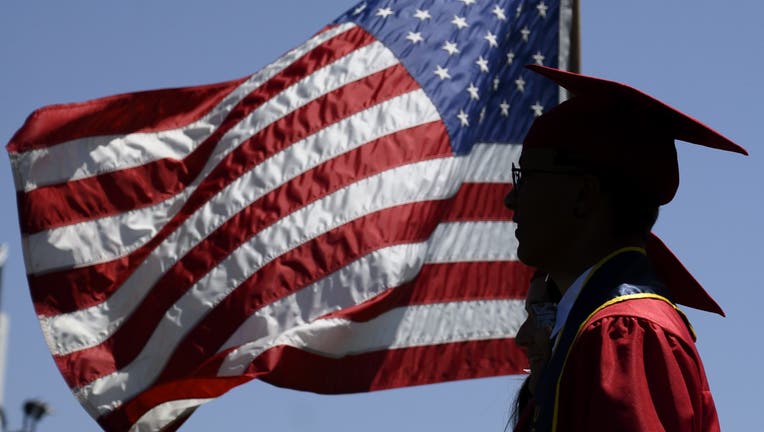
Students enter the stadium for the Garden Grove High School graduation in Garden Grove on Tuesday, May 31, 2022.(Photo by Mindy Schauer/MediaNews Group/Orange County Register via Getty Images)
America’s most educated workers aren’t spread evenly across the nation, they cluster in places that offer better job markets, higher wages and better lifestyle rewards for their degrees.
According to a WalletHub survey that analyzed the 150 largest metro areas across 11 education-focused areas.
Cities court degree holders because they fuel economic growth and contribute more in long-term tax revenue. Graduates, meanwhile, look for communities that match their ambitions, whether that's a big metro area full of peers and networking or a smaller city where their credentials stand out.
"Higher education doesn’t guarantee better financial opportunities in the future, but it certainly correlates with it," said WalletHub analyst Chip Lupo. "The most educated cities provide good learning opportunities from childhood all the way through the graduate level. In addition to overall education, it’s also important to look at how well cities promote educational equality when it comes to race and gender."
RELATED: These states lead the nation in racial equality in education, study finds
Top three cities
Ann Arbor, MI
Ann Arbor, MI and the surrounding area is the most educated area in the country, according to WalletHub. Of the adults 25 years old and older, 96% have at least a high school diploma, nearly 59% have a bachelor’s degree and nearly 32% have an advanced degree.
The area also scored the best public school system and the ninth best in the quality of universities.
Durham, NC
The Durham, NC area is ranked second in the nation. Adults there have a higher rate of residents pursuing higher education. Over 53% of the adults have at least a bachelor’s degree and 26% have a graduate or professional degree.
San Jose, CA
The third-most educated in the country is San Jose, CA metro area. They have over 55% of their population of adults with at least a bachelor’s degree and 28% of them with an advanced degree.
RELATED: These cities rank as the best places to start a career in 2026, according to data
Methodology
In the survey, WalletHub compared the 150 most populated U.S. metropolitan statistical areas across the dimensions of "educational attainment" and "quality of education & attainment gap."
Using those two dimensions, they evaluated 11 different metrics, giving them corresponding weights. Each metric was additionally graded on a 100-point scale, with 100 being the highest educational attainment and quality of education.
The overall score for each metro area was determined from an average weight across all metrics.
Educational Attainment — Total Points: 80
- Share of Adults Aged 25 & Older with a High School Diploma or Higher: Full Weight (~20.00 Points)
- Share of Adults Aged 25 & Older with at Least Some College Experience or an Associate's Degree or Higher: Full Weight (~20.00 Points)
- Share of Adults Aged 25 & Older with a Bachelor's Degree or Higher: Full Weight (~20.00 Points)
- Share of Adults Aged 25 & Older with a Graduate or Professional Degree: Full Weight (~20.00 Points)
Quality of Education & Attainment Gap — Total Points: 20
- Quality of Public School System: Double Weight (~4.44 Points)Note: This metric is based on GreatSchools.org’s ratings of U.S. public schools.
- Average Quality of Universities: Double Weight (~4.44 Points)Note: This metric is based on WalletHub's "College & University" rankings report.
- Enrolled Students in Top 791 Universities per Capita: Full Weight (~2.22 Points)Note: This metric is based on WalletHub's "College & University" rankings report.
- Number of Summer Learning Opportunities per Capita**: Full Weight (~2.22 Points)
- Racial Education Gap*: Full Weight (~2.22 Points)Note: This metric specifically measures the difference between the percentage of black bachelor’s degree holders and the percentage of their white counterparts.
- Gender Education Gap*: Full Weight (~2.22 Points)Note: This metric specifically measures the difference between the percentage of female bachelor’s degree holders and the percentage of their male counterparts.
- Education Equality Index Score: Full Weight (~2.22 Points)
The Source: This story was written with information provided by WalletHub This story was reported from Orlando.