

One in 25,000 people has PKU. This suburban Chicago mom—and her daughter—are among them
One in 25,000 people has PKU. This suburban Chicago mom—and her daughter—are among them
A Crystal Lake woman who teaches special education in Chicago Public Schools has managed phenylketonuria, a rare genetic condition that makes protein toxic to the brain, since she was diagnosed at 14 days old.
CRYSTAL LAKE - Pam Kowalczyk carries a food scale everywhere she goes – to restaurants, to family dinners, to every table she sits down at. Before she takes a single bite of anything, she weighs it.
She has done this every day of her life, because for Kowalczyk, protein is not fuel. It is poison.
Kowalczyk, a Crystal Lake resident who teaches special education in Chicago Public Schools, has phenylketonuria, or PKU, a rare genetic condition that prevents the body from breaking down an amino acid called phenylalanine, found in nearly all protein. When phenylalanine builds up in the blood, it becomes toxic to the brain and can cause irreversible damage. She can only tolerate three grams of protein a day. A single egg has six.
One in every 25,000 people in the United States has PKU. Most will never meet another person with it. Kowalczyk went looking for one.
One daughter, same diagnosis
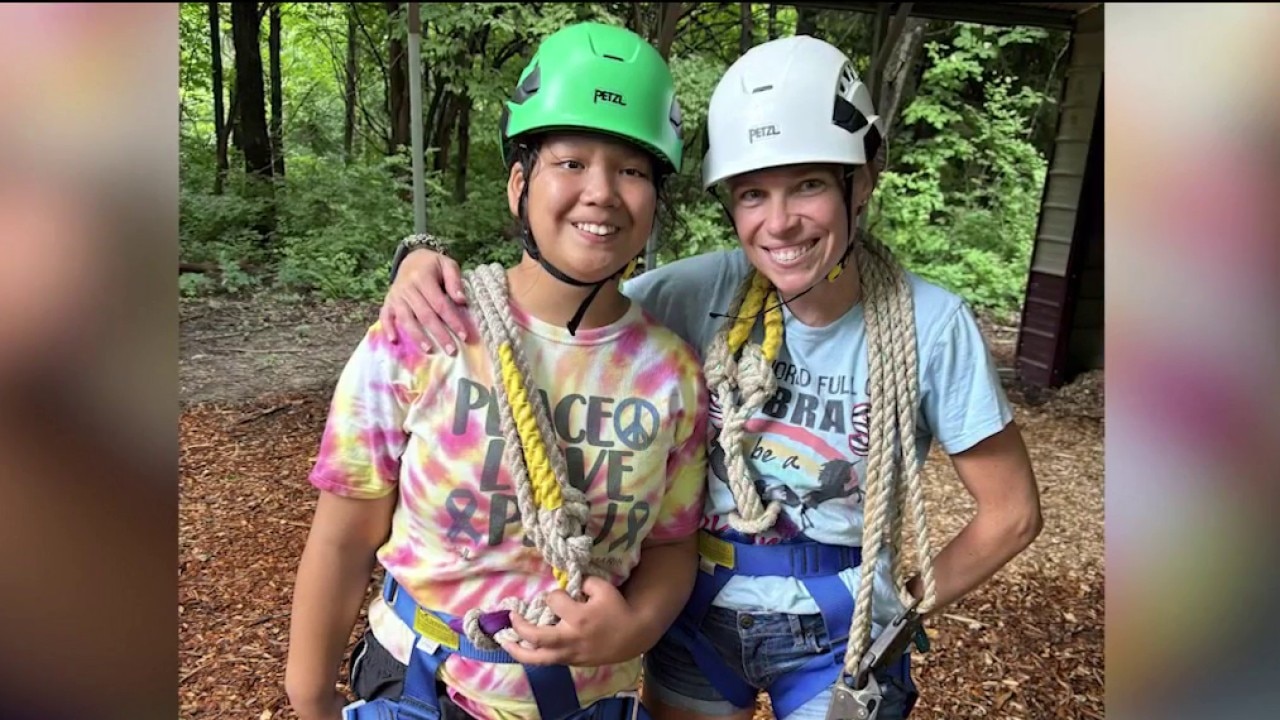
Eight years ago, Kowalczyk adopted a daughter from China named Kelsey, who also has PKU. Kelsey spent her first three and a half years in an underfunded orphanage where her condition went untreated. The protein built up in her blood, reached her brain, and caused damage that cannot be reversed. Kelsey was later diagnosed with autism, which Kowalczyk says is a direct result of those years without care. She does not have a confirmed birthdate. She was found without one.
"She was eating a regular diet, and that protein built up in her system and went through her bloodstream and damaged her brain," Kowalczyk said. "She has some significant delays, cognitive delays, verbal delays, and she has significant mental health challenges now."
Today, Kelsey attends a self-contained classroom with a one-on-one aide. She participates in Special Olympics, sings AC/DC at live band karaoke, and plays on a charity hockey team. Last weekend, her team won a tournament. Kelsey was front and center.
The cost of every meal
Managing PKU for two people means the kitchen never stops. Blood tests come every month. Medical formula, a lab-made amino acid drink that replaces the protein they cannot safely consume, is required twice a day. Every meal is measured to the milligram.
The formula is expensive, and insurance rarely covers it. Kowalczyk has testified before Congress about medical food coverage. She first did it in fifth grade. That fight, she says, is not over.

What is PKU? Chicago doctor explains the rare genetic disorder
Erika Vucko, with Lurie Children's Hospital, joins us to discuss a rare condition called PKU, a rare condition that a CPS special education teacher and her daughter are living with.
What doctors still don’t know
PKU has long been treated as a childhood disease. Kowalczyk says that assumption has done real harm. Adults with the condition are largely uncharted territory for researchers. Nobody knows with certainty what lifelong PKU management looks like at 40, 50, or beyond.
"We just don’t know what’s next for us," she said. "We’re kind of living as a living science experiment."
In 2025, the FDA approved Sephience, the first new PKU treatment in years. For families like Kowalczyk’s, it is the first sign of meaningful progress in a long time.
Why it matters right now
International PKU Day is observed every year on June 28. This year’s theme was mental health. Under the campaign "Traces of PKU," focused on the emotional toll of living with the condition. For Kowalczyk, that conversation is not new. She has been living it for decades, and she is raising a daughter in the middle of it.
For more information on PKU resources and support, visit reimaginepku.com.
The Source: The information in this article was reported by FOX Chicago's Terrence Lee.