

Rescued beluga whales begin new life at Shedd Aquarium after years in troubled Canadian park
Rescued beluga whales begin new life at Shedd Aquarium after years in troubled Canadian park
Their journey to Chicago followed years of controversy surrounding Marineland, where animal welfare advocates alleged overcrowded tanks, deteriorating water quality and inadequate living conditions.
CHICAGO - For years, they lived in aging concrete tanks surrounded by murky water, as advocates documented what they described as deteriorating conditions and a growing death toll.
Now, four female beluga whales, Acadia, Osiris, Sierra and Lillooet, have begun a new chapter at Chicago's Shedd Aquarium after an international rescue effort relocated them from Marineland in Niagara Falls, Ontario.
The whales are the first to arrive as part of a broader plan to rescue the remaining belugas from the now-closed marine park.
Fresh start for rescued belugas at Shedd Aquarium
The backstory:
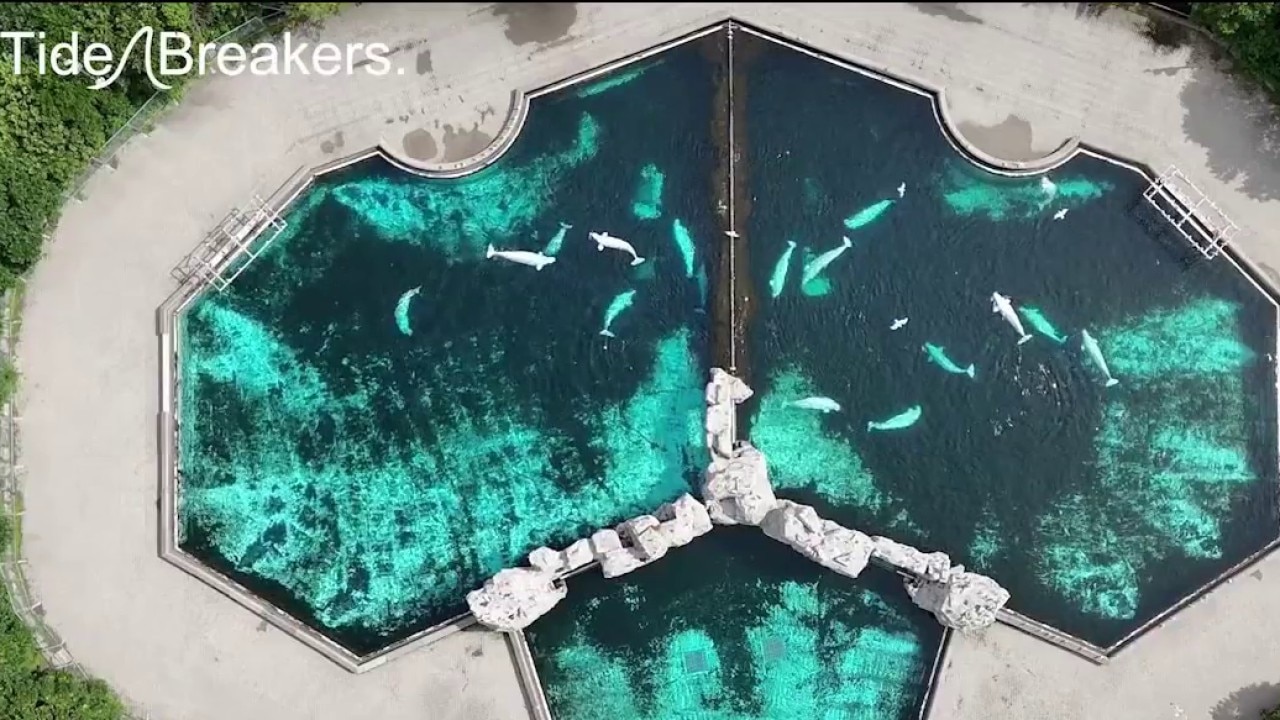
Their journey to Chicago followed years of controversy surrounding Marineland, where animal welfare advocates alleged overcrowded tanks, deteriorating water quality and inadequate living conditions. The park, once home to one of the world's largest captive beluga populations, closed to the public in 2024 but continued caring for approximately 30 belugas while officials searched for a long-term solution.
Marketa Schustervova, co-founder of the Canadian nonprofit TideBreakers, says her organization spent nearly a decade documenting what was happening behind the scenes.
"We have been investigating and exposing Marineland for about the decade," Schustervova said, explaining that investigators used undercover visits and drone footage to monitor the whales both while the park operated and after it closed.
According to Schustervova, those investigations uncovered what she describes as alarming conditions.
"We were the organization that actually exposed the beluga deaths," she said. "The investigation exposed that there were about 20 dead belugas since 2019. The conditions of the tanks were very not up to the standard."
She also noted that Canada's 2019 legislation banning the breeding and import or export of captive whales and dolphins changed the future of marine mammal captivity in the country.
Schustervova described outdated pools that had housed more than 50 belugas at one point.
"The tanks were very outdated," she said. "The animals were very cramped together. You had constant dirt and feces build-up. The water quality was toxic, and that was one of the reasons these animals were dying in such large numbers."
Even after Marineland shut its gates to visitors, she said a limited number of employees continued feeding and caring for the whales. But with the park struggling financially, routine maintenance declined.
"The tanks were not getting cleaned as they should and nothing was getting upgraded," Schustervova said. "The conditions were deteriorating. Right now the move is actually something we were hoping for because they just could not stay there."
Dig deeper:
The rescue itself required months of planning and cooperation among Canadian wildlife officials, U.S. regulators, veterinarians and accredited aquariums. The whales were transported in specially designed, water-filled containers by truck and cargo plane before arriving safely at Shedd Aquarium, where animal care specialists and veterinarians accompanied them throughout the journey.
The four whales were intentionally selected to remain together because of the strong social bonds they had already formed. Shedd officials say the animals will spend the coming weeks behind the scenes while veterinary teams monitor their health, behavior and appetite as they adjust to their new environment.
While Schustervova says Shedd Aquarium is not the ideal outcome for anti-captivity advocates, she believes it offers the whales a significantly better quality of life.
"It is not a sanctuary," she said. "But we recognize that the conditions at Shedd are way better and it can be life-saving for these animals. Right now, moving them to Shedd is the better option."
She says the rescue represents years of persistence by advocates who refused to let the whales be forgotten.
"It's heartbreaking," Schustervova said. "Every time we counted these animals and realized they were missing or they kept dying, we kept pushing for better laws and investigations. It took years of protesting and bringing everybody together because the only party that suffers are these animals in these tanks."
The work, however, is far from over.
Twenty-four belugas remain at Marineland awaiting relocation. Under the international rescue plan, the remaining whales will be transferred to accredited facilities including Shedd Aquarium, Georgia Aquarium, SeaWorld San Diego, SeaWorld San Antonio and Oceanogràfic València in Spain, pending final approvals and veterinary evaluations.
For Schustervova and the volunteers who spent years documenting conditions at Marineland, the arrival of four whales in Chicago marks progress, but not the finish line.
"We've spent ten years monitoring these animals," she said. "We'll continue following them because people want to know where this story ends and what quality of life they finally have."
What's next:
The Shedd says their priority is taking care of the four belugas and getting them acclimated to their new home.
"As with any of our animals, the best indicator of well-being is individual and social behavior," said Charlie Jacobsma, director of animal behavior and training at Shedd Aquarium. "We are watching closely for the rescued belugas to eat a full diet, socialize with one another, and investigate the habitat, which are encouraging signs of their progress. We are cautiously optimistic as we start to see some of those initial indicators, and our dedicated team will continue to monitor throughout this process to acclimatize the belugas to their new home, caretakers and pod."
The Source: The information in this article was reported by FOX Chicago's Tia Ewing.