

Screwworm confirmed in US with first human case reported in Maryland: CDC

FLESH EATING PARASITE IN MARYLAND: First US case of New World Screwworm
The first human case in the United States of New World Screwworm, a flesh-eating parasite, was in Maryland, health officials are saying.
MARYLAND - New World screwworm, a flesh-eating parasite, has been detected in the United States for the first time.
What we know:
Health officials confirm that a Maryland resident was diagnosed with New World screwworm earlier this month after traveling to El Salvador.
It has been declared the first human case in the United States by the Centers for Diesease Control and Prevention.
The Maryland Department of Health confirms that there is no indication of transmission to any other people or animals, and that the risk to public health in the U.S. remains very low.
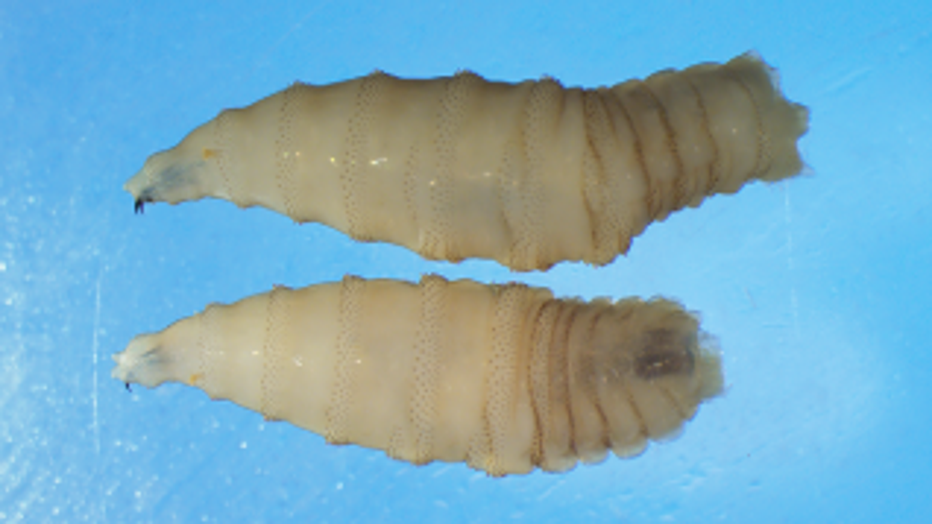
What is screwworm?
Dig deeper:
The New World screwworm (NWS) is a species of parasitic flies that can cause myiasis, which is a parasitic infestation that feeds on live tissue.
It primarily affects livestock, but people can also become infested.
Officials say you are at a higher risk of NWS if you travel to South America and the Caribbean, where it is typically found.
Symptoms and prevention
What you can do:
The CDC says that NWS infestations are very painful and could result in maggots around or in an open wound, nose, eyes or mouth.
Symptoms can also include:
- Unexplained skin lesions (wounds or sores) that do not heal.
- Skin wounds or sores that worsen over time.
- Painful skin wounds or sores.
- Bleeding from open sores.
- Feeling larvae movement within a skin wound or sore, nose, mouth, or eyes.
- Seeing maggots around or in open sores.
- A foul-smelling odor from the site of the infestation.
"Prevention is key to protecting yourself from myiasis," according to the CDC, which offers these tips:
- Prevent insect bites, especially when visiting tropical areas and spending time outdoors
- Keep open wounds clean and covered.
- Wear loose-fitting, long-sleeved shirts and pants, and socks to limit areas where you could get bitten.
- Use an EPA-registered insect repellent.
- Treat clothing and gear with products containing 0.5% permethrin.
- Sleep indoors or in rooms with screens.
The Source: Information from this article was provided by the CDC.