

Record-breaking storms pound Chicagoland: Is severe weather becoming the new normal?
Record-breaking storms pound Chicagoland: Is severe weather becoming the new normal?
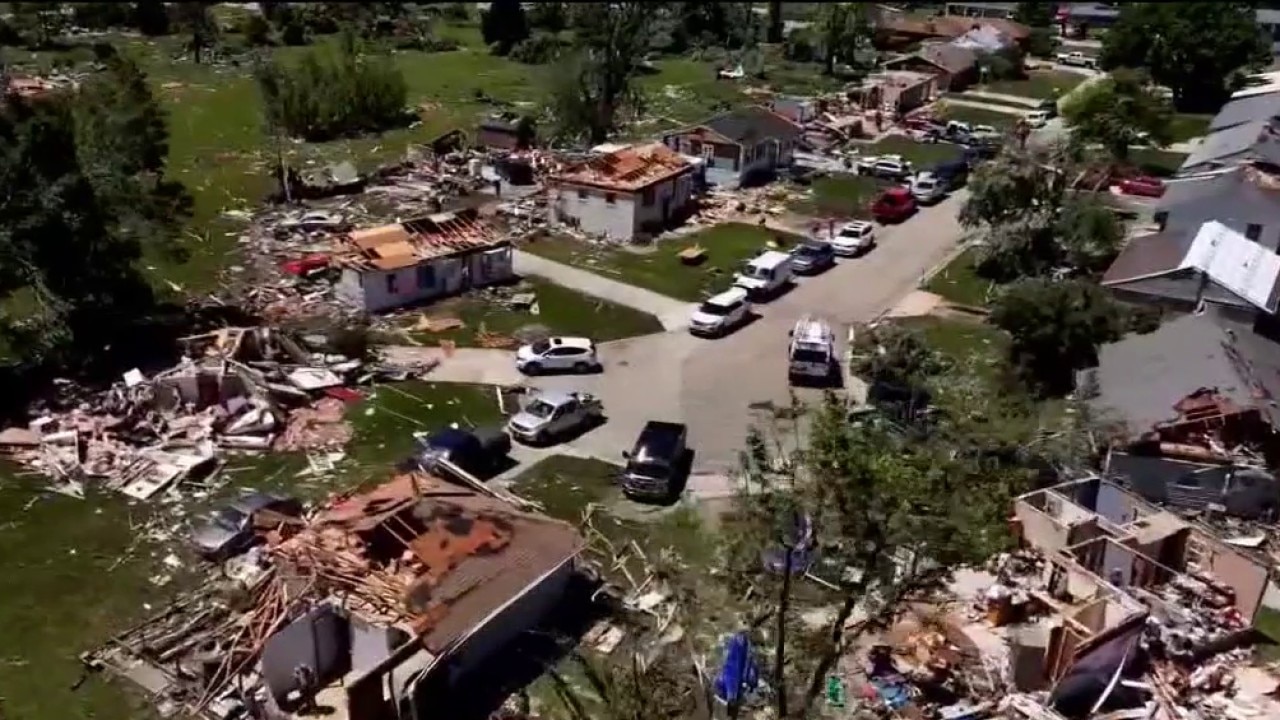
Another round of powerful storms swept across Chicagoland and northwest Indiana Tuesday, adding to what has already become a record-breaking year for severe weather in Illinois.
CHICAGO - Tornado warnings sounding in downtown Chicago. Trees crashing onto cars. Streets flooding from heavy rain.
Another round of powerful storms swept across Chicagoland and northwest Indiana Tuesday, adding to what has already become a record-breaking year for severe weather in Illinois.
From Homewood to Gary, Indiana and communities in between, strong winds toppled trees and caused damage as residents once again found themselves cleaning up after severe storms.
And if it feels like this has been happening more often this year, Illinois State Climatologist Trent Ford says the numbers back that up.
Illinois shatters tornado record
By the numbers:
As of last week, Illinois had recorded 191 tornadoes this year, Ford said. The previous record was 142 tornadoes for all of 2024.
And it's only August.
The Chicago National Weather Service office, which covers the city and much of the surrounding region, has also issued more than 300 tornado or severe thunderstorm warnings this year — more than any full year in records dating back to the 1980s.
The extraordinary numbers raise an obvious question: Is this becoming Chicagoland's new normal?
Is climate change causing more tornadoes?
Dig deeper:
Ford said Illinois has always been susceptible to severe thunderstorms and tornadoes. Historically, severe weather in the state typically peaks between April and June, although dangerous storms can occur throughout the warmer months.
Research, however, is beginning to show changes.
"What more and more studies are showing as the science progresses is a slight increasing trend in the frequency of tornadoes," Ford said.
Ford said climate change likely plays some role in that trend, particularly as atmospheric conditions capable of producing severe storms become more common.
But he cautioned against blaming climate change alone for the dramatic increase Illinois has experienced over the past several years.
The science does not suggest Illinois' tornado numbers will simply continue climbing at the extraordinary rate seen recently. Instead, Ford said researchers are likely seeing a combination of a changing climate and the natural year-to-year variability of weather.
Yes, tornadoes can hit Chicago
Ford also wants to dispel another persistent misconception: that tornadoes don't happen within Chicago itself.
"Locals who say, ‘Ah, Chicago doesn't get tornadoes’ first of all, that's completely false," Ford said. "Just last year, there were three tornadoes on the West Side. And again, not the western suburb. The West Side."
Ford said tornadoes have occurred throughout Illinois, including within Chicago's city limits.
That makes taking warnings seriously especially important.
When tornado sirens sound or emergency alerts appear on phones, residents should seek shelter inside, away from windows and preferably in a basement or below-ground location. If that's not possible, Ford recommends moving to an interior room away from potential flying debris.
Can people create storms?
As severe weather has increased, so have conspiracy theories online, including claims that people or governments are somehow creating or controlling major storms.
Ford's answer is straightforward: No.
Some of the confusion may stem from cloud seeding, a real technique intended to encourage precipitation under specific atmospheric conditions.
Ford said researchers studied cloud seeding in Illinois decades ago but determined it was not viable here.
"There had been studies about cloud seeding in Illinois going back to the 1940s and 1950s, and all of those studies proved that this isn't something that's viable in Illinois," Ford said. "It doesn't work here."
And cloud seeding is not capable of creating the massive storm systems that have repeatedly swept through the Chicago area.
"It certainly doesn't create the kinds of systems like what we saw today," Ford said. "So no, there's no person, no people at the helm creating this type of weather."
Humans can influence the broader climate through activities such as burning fossil fuels, Ford said, but that is fundamentally different from someone deliberately creating an individual thunderstorm or tornado.
Scientists are still studying exactly what is driving Illinois' extraordinary stretch of severe weather and what a changing climate could mean for future storms.
But when it comes to the idea that someone is secretly creating Chicagoland's storms, Ford says the science is clear: No one is pulling the strings.
The Source: The information in this report came from an interview with Illinois State Climatologist Trent Ford.