

Homebuyers have been hit hardest in these states, data shows

2025 U.S. real estate predictions
Zillow predicted a more active market with additional inventory for 2025, giving buyers more room to negotiate. However, homebuyers should expect some turbulence with fluctuating mortgage rates, even as more homes become available. Alana Mann, President of The Statesman Group of Companies, joined LiveNOW from FOX to discuss.
In a market largely defined by higher interest rates and affordability challenges, a new report reveals how far buyers’ budgets are being stretched.
Researchers at Realtor.com analyzed 2019 income data, the latest census income estimates, and housing payments based on a 4% interest rate for 2019 and a 6.74% mortgage rate for 2025.
Only 28% of homes now affordable for American buyer
By the numbers:
The data, published in the company’s 2025 Buyer Power Report, found that only 28% of homes on the market were priced within reach of the typical household.
They found that the maximum affordable home price for a median-income household in the U.S. has fallen to $298,000 – down nearly $30,000 from $325,000 in 2019.
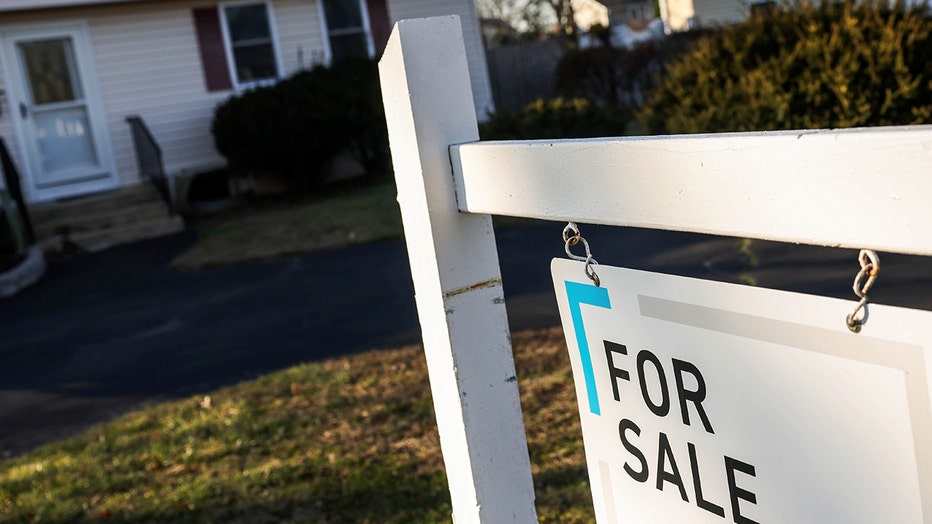
A for sale sign in front of a home in West Islip, New York on December 13, 2023. (Credit: Steve Pfost/Newsday RM via Getty Images)
While wages have risen 15.7% in the same time frame, the data found that wages haven't kept pace with borrowing costs. With mortgage rates hovering near 6.75% through July, the monthly mortgage payment on a $320,000 fixed-rate loan is $600 higher than it would have been at 2019's average rate. That's an additional $7,200 a year out of the average buyer's pocket, and that payment won't buy what it used to. In 2019 a $320,000 loan would have covered the entire median home price, while today it would need to be accompanied by a nearly 28% down payment to buy the typical-listing.
What they're saying:
"Even as incomes grow, higher interest rates have eroded the real-world purchasing power of the typical American household," Danielle Hale, chief economist at Realtor.com, said. "This dynamic is forcing many buyers to adjust their expectations, whether that means looking for smaller homes, moving farther out, or delaying the dream of homeownership altogether."
Where buyers have been hit hardest
Dig deeper:
The data found that buying power dropped most dramatically in metros like Milwaukee and Houston, which have seen declines of 9–10.5% in what the median earner can afford.
In Milwaukee, which experienced the highest buying power percentage decrease of 10.5%, the maximum affordable home price fell from $314,000 to $281,000 – a $33,000 drop.
RELATED: Home purchases are getting canceled at a record rate, data shows
While affordability declined, these metros still had a relatively high share of affordable homes, with the exception of New York, where only 13.1% of listings in July were within reach of a median-income household.
States where buyers have been hit hardest
- Milwaukee, Wisconsin
- Houston, Texas
- Baltimore, Maryland
- New York, New York
- Kansas City, Missouri
Where has buying power grown the most?
The other side:
Meanwhile, only six of the 50 largest U.S. metros saw buying power increase since 2019. Leading the way was Cleveland, Ohio, where strong wage gains helped boost the affordable home price from $249,000 to $260,000 (+4.4%). Also, an impressive 50% of inventory on the market in Cleveland in July was affordable to median-earning households.
Pandemic boomtowns like Phoenix, Tampa and Austin have also seen a slight boost in buying power thanks to rising wages. But even with that progress, rapid home price growth has outpaced income gains, leaving few truly affordable options. In fact, in all six markets where buying power has improved, the share of homes affordable to median-income buyers is still lower than it was in 2019, according to the findings.
Richmond, Virginia and Indianapolis, Indiana also made it into the top six states where buying power has improved.
The Source: The information for this story was provided by a report by Realtor.com. This story was reported from Los Angeles.