

NIPSCO CEO gets questioned about USW lockout, Blackstone's investment
Questions grow about NIPSCO & Blackstone
Tonight-- it's been one week since NIPSCO locked out 1600 United Steelworkers. Earlier this week--- the company's president and CEO answered questions about not only utility rates but a private equity firm that has a minority stake in the company. Bret Buganski shows you why this has the attention of some consumer watchdog groups.
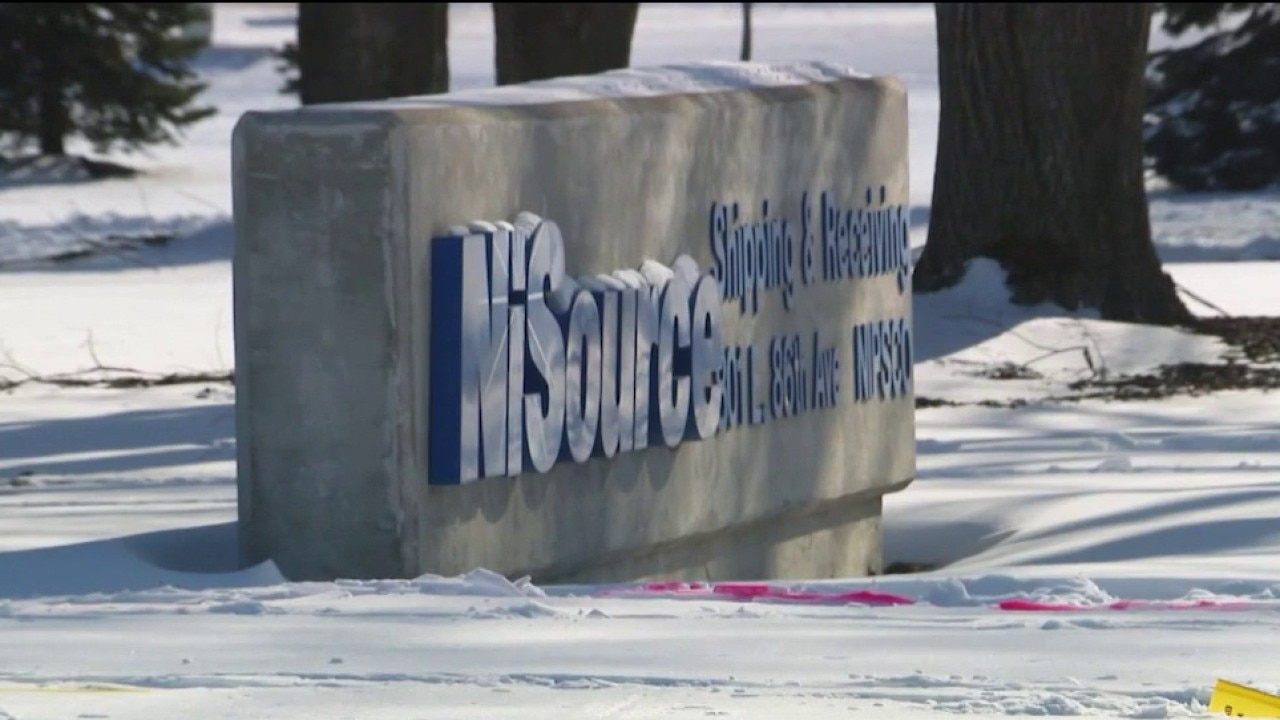
INDIANA - It's been one week since NIPSCO locked out 1600 United Steelworkers after their contract expired last Thursday at 4 p.m.
What we know:
Earlier this week, Indiana Governor Mike Braun called on NIPSCO to end the lockout and get back to the negotiating table. At the same time, NIPSCO President CEO Vince Parisi testified before the Indiana Utility Regulatory Commission on Tuesday and was cross-examined by the lawyer representing the Citizens Action Coalition. The group is challenging the billing practices and rates from NIPSCO.
Jennifer Washburn is the lawyer representing CAC, introduced an IURC document called the "2025 Residential Bill Survey."
It's a survey that represents a snapshot in time, which includes four municipal utilities, and five investor-owned utilities, which include NIPSCO. It compares what the eight utilities charge by consumption, the averages, the percentage changes year-to-date, and over the past ten years. This survey found NIPSCO charged the highest amounts, which became a point of contention between Washburn and Parisi.
"NIPSCO has now (sic) the highest electric bills in the state for residential customers right," asked Washburn.
"I don't think that's correct," said Parisi.
Washburn mentioned the survey and went over the amounts in each of the bills and showed Parisi that NIPSCO charged the highest amount out of all the utility companies listed in the survey.
"It has a ranking of eight of eight. Do you see that on the first column?" asked Washburn.
Parisi acknowledged that is correct, but disagreed on Washburn's assessment that NIPSCO has the highest electric bills in Indiana.
"If you're making comparisons column by column, that is correct, but customers don't experience bills based upon columns and when you look at the bill, NIPSCO's average residential usage is 672 kwh a month, and that compared to the other utilities' average residential bill, is about on par," said Parisi.
Washburn once again showed other numbers where NIPSCO had higher amounts, but Parisi once again said it doesn't line up to the average resident is paying every month.
"Are you disputing that NIPSCO has the highest electric residential rates in the state?" said Washburn.
"You asked about residential bill and from a residential bill, NIPSCO's average residential bill is about $162 a month, which puts it on par with the average residential bills from the other electric utilities," said Parisi.
The backstory:
Over the past few months, Fox Chicago has reported that customers' utility bills have doubled or even tripled this past winter compared to the year before. It's resulted in several Facebook groups forming, where customers have compared their utility bills with others. It's also resulted in the IURC launching an investigation into the billing practices of NIPSCO. Commissioners are also holding several town halls across the state, where they want to hear from residents about their NIPSCO bills.
Private Equity Investment in NIPSCO
During Tuesday's IURC hearing, Washburn also asked Parisi about the private equity firm Blackstone, which has a nearly 20% minority ownership into NIPSCO.
Washburn asked, "Are you aware of the research about private equity purchases often resulting in significant job losses in publicly traded companies?"
Parisi said he wasn't aware.
Wasburn replied, "You do have a locked-out union situation right now, is that right?"
Parisi acknowledged the USW lockout is ongoing.
Washburn asked Parisi, "Can you understand that ratepayers are concerned that the utility's focus is elsewhere, given the Blackstone involvement and the issues arising, a lot of revenue we're talking about here with affordability?"
Parisi said he wasn't sure about the question Washburn was asking.
"Can you understand that ratepayers think that the utility's focus is on revenues and not on ratepayers? Can you understand that sentiment?" said Washburn.
"We have around 1.4 million customers and I think our customers experience our service in a variety of ways," said Parisi.
Matthew Parr from the non-profit watchdog group "Private Equity Stakeholder Project" spoke with Fox Chicago. His group has been tracking the growing trend of private equity investment in essential services like utilities. His group studies the potential long-term impacts on consumers.
"I think it's troubling because a lot of us don't realize, and I'm a NIPSCO ratepayer myself, and I didn't even realize that my rates are going to, who is actually profiting from the rates," said Parr.
He pointed out that what you pay for gas and electricity is not all going to NIPSCO.
"You have an out-of-state, trillion dollar Wall Street firm that is profiting off of rate increases," said Parr.
Concerns from watchdog groups:
We also asked Parr about the USW lockout and if there's fear the ultimate goal of a private equity firm is to union bust.
"We have seen many instances of union busting from private equity firms across multiple industries," said Parr.
The Energy and Policy Institute, which is a non-profit watchdog organization, found that 19.7% of NIPSCO utility bills go to profit, which ranks it 12 out of 110 nationally, for the highest percentage when it comes to profit.
PESP also gave Blackstone an "F" grade, over reported wage and hour violations, OSHA violations, massive layoffs, and fines from the U.S. Department of Labor.
Potential government intervention:
Fox Chicago has reported on the current IURC investigation into utility affordability.
During a meeting last month, where the largest utilities presented their rates and answered questions to commissioners, IURC commissioner Andy Zay said more than half of the complaints they received this year were from NIPSCO customers. They said the number of those complaints is already at the level of the total number of complaints they received in the entire calendar year of 2025.
"The outrage is real, and I'm not even sure we've gotten close to the heart of it today," said Andy Zay, IURC commissioner. "We've received thousands of complaints, we know there's been rallies, hundreds of people, very active complaining in this space which is really what drove us to this moment. We've lost a lot of trust in ratepayers and consumers."
"There's been some movement in the Indiana legislature to fix affordability problems, and that's great, but we want make sure that we're not just fixing some of the symptomatic problems we're seeing, but we want it fixed systemic problems," said Parr.
Blackstone Response:
Fox Chicago reached out to Blackstone for comment about the IURC hearings, the USW lockout, and the potential influence it has on NIPSCO. A firm spokesperson said:
- "Blackstone Infrastructure is a non‑control, minority investor in NIPSCO. We do not manage the company’s day‑to‑day operations and have no control over management decisions.
- Blackstone does not participate in or influence the rate‑setting process. Rates are determined through regulatory proceedings between the utility and the IURC. As a minority investor, we have no role in setting customer rates at NIPSCO.
- With respect to the 2024 rate case, preparations were already underway before Blackstone Infrastructure completed its minority investment in NIPSCO. In any event, Blackstone is not involved in the company’s rate‑making process.
- We have no control or influence over labor matters.
- Regarding union negotiations, we respect the collective bargaining process and hope the parties reach a fair and mutually beneficial agreement.
- Across our portfolio, Blackstone’s companies have added hundreds of thousands of net jobs over the past 15+ years.
- We have a long track record of working constructively with organized labor. Today, Blackstone Infrastructure portfolio companies employ more than 79,000 union workers globally and spend approximately $4.2 billion annually on union labor."
NIPSCO responded to our request Thursday night saying,
"Blackstone Infrastructure Partners' 19.9% non-controlling equity interest is not a driver of NIPSCO's rate structure, nor is it a driver of current contract negotiations with union-represented employees. It was structured to strengthen NIPSCO’s financial foundation and support our long-term strategy. This financing transaction does not impact NIPSCO's current strategic direction or on our commitment to our gas and electric customers in Indiana.
This equity financing helps us manage costs more effectively by reducing reliance on high-interest debt, which in turn protects customers from unnecessary rate pressure. It also enables us to invest in system resiliency and modernization, ensuring we can meet future energy needs sustainably and responsibly.
NIPSCO is a regulated utility focused on delivering safe, reliable and affordable energy to the approximately 1.4 million customers we serve across 32 counties in northern Indiana. We remain focused on transparency, fiscal discipline and delivering value to our customers and communities across Indiana."
RELATED STORIES:
- NIPSCO customers with message to CEO on high utility bills: 'How are they surviving?'
- High Indiana NIPSCO utility bills a yearslong affordability crisis, advocates say
- Indiana residents sound off on rising NIPSCO utility bills at emergency town hall
The Source: This story contains reporting from Fox Chicago's Bret Buganski.