

Senate fails to pass war powers resolution

WASHINGTON - In a vote Wednesday, the Senate failed to pass a war powers resolution which gives lawmakers an opportunity to demand congressional approval before any further attacks are carried out in Iran.
The vote was 47-53.
A similar bill being voted on in the House later this week faced an unlikely path through the Republican-controlled House.
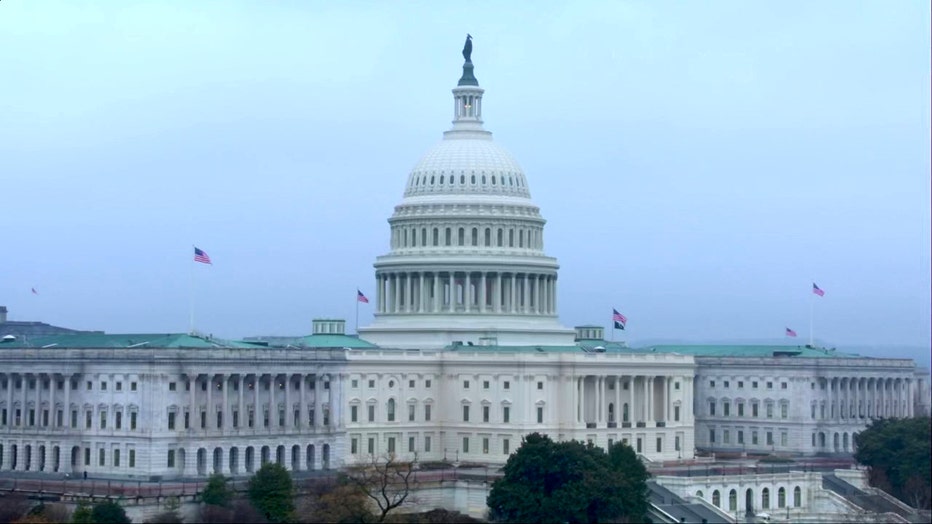
Congress and the President’s war powers
Article I, Section 8 of the Constitution gives Congress the power "To declare War," (right between the parts where Congress may "punish Piracies" and "grant Letters of Marque and Reprisal). But Article II, Section 2 says the president is "Commander in Chief."
The founding fathers wanted to make power diffuse. That’s why certain constitutional authorities are spread out in the Constitution.
Congress has only declared war 11 times, the last being against Romania in the 1940s. But Congress has regularly approved resolutions authorizing the use of the military in overseas hostilities. That ranges from the Gulf of Tonkin Resolution, which got the U.S. into Vietnam. Contemporary resolutions are called "Authorizations for Use of Military Force" or AUMFs. Congress has approved those for the first Gulf War, after 9/11 and for the second Gulf War.
Congress wanted to reclaim some of its constitutional authority during Vietnam. So it adopted the War Powers Act in 1973. Multiple administrations from both parties have never formally recognized the War Powers Act as constitutional. But various presidents have sent notifications to Congress to comport with the War Powers Act. That includes notifying Congress within two days of sending troops abroad and having a 60- to 90-day window to draw down forces.
House to vote Thursday on war powers resolution
On the other side of the Capitol, the House continues intense debate over the war before their planned vote Thursday. The House first debated a resolution presented by GOP leadership affirming that Iran is the world’s largest state sponsor of terrorism.
Rep. Brian Mast, the GOP chairman of the House Foreign Affairs Committee, publicly thanked Trump for taking action against Iran, saying the president is using his own constitutional authority to defend the U.S. against the "imminent threat" of Iran.
Mast, an Army veteran who worked as a bomb disposal expert in Afghanistan, said the Democratic resolution was effectively asking "that the president do nothing."
Rep. Gregory Meeks, the top Democrat on the Foreign Affairs panel, said before the debate that the hardest votes he has taken in Congress have been to decide whether to send U.S. troops to war. "Our young men and women’s lives are on the line," he said, his voice showing emotion as he emerged from a closed-door briefing late Tuesday with Trump officials.
At a news conference Wednesday, several Democratic members who are also veterans of the Iraq and Afghanistan wars spoke about the heavy costs of those conflicts.
One of them was Rep. Jason Crow, D-Colo. "I learned when I was fighting in Iraq and Afghanistan, that when elites in Washington bang the war drums, pound their chest, talk about the costs of war and act tough, they're not talking about them doing it, they're not talking about their kids," Crow said. "They're talking about working class kids like us."
The backstory:
After launching a surprise attack against Iran on Saturday, Trump has scrambled to win support for a conflict that Americans of all political persuasions were already wary of entering. Trump administration officials have been a frequent presence on Capitol Hill this week as they try to reassure lawmakers that they have the situation under control.
Defense Secretary Pete Hegseth said Wednesday that the war could extend eight weeks, a longer time frame than has previously been floated by the Trump administration. He also acknowledged that Iran is still able to carry out missile attacks even as the U.S. tries to control the country’s airspace.
Hegseth also announced Wednesday that a U.S. Navy submarine sank an Iranian warship in international waters, the first such sinking of an enemy ship since World War II.
Six U.S. military service members were killed over the weekend in a drone strike in Kuwait.
On Tuesday, the Pentagon released the names of four of the six service members who were killed.
The Source: Information in this article was taken from FOX News, the Associated Press, and previous FOX Local reporting.