

Psychologist warns of lasting trauma from Chicago immigration raids
Psychologist warns of lasting trauma from Chicago immigration raids
Immigration enforcement across Chicago hasn’t just changed neighborhoods. A new medical study says it’s changed childhoods.
CHICAGO - Immigration enforcement across Chicago hasn’t just changed neighborhoods. A new medical study says it’s changed childhoods.
We explain what that means for kids’ mental health—and why psychologists say it deserves attention now.
What we know:
Fear has a long memory in Chicago. It lives in kids who’ve learned to run at the sound of sirens and wait for calm that never really comes.
Now, a new kind of fear is taking hold.
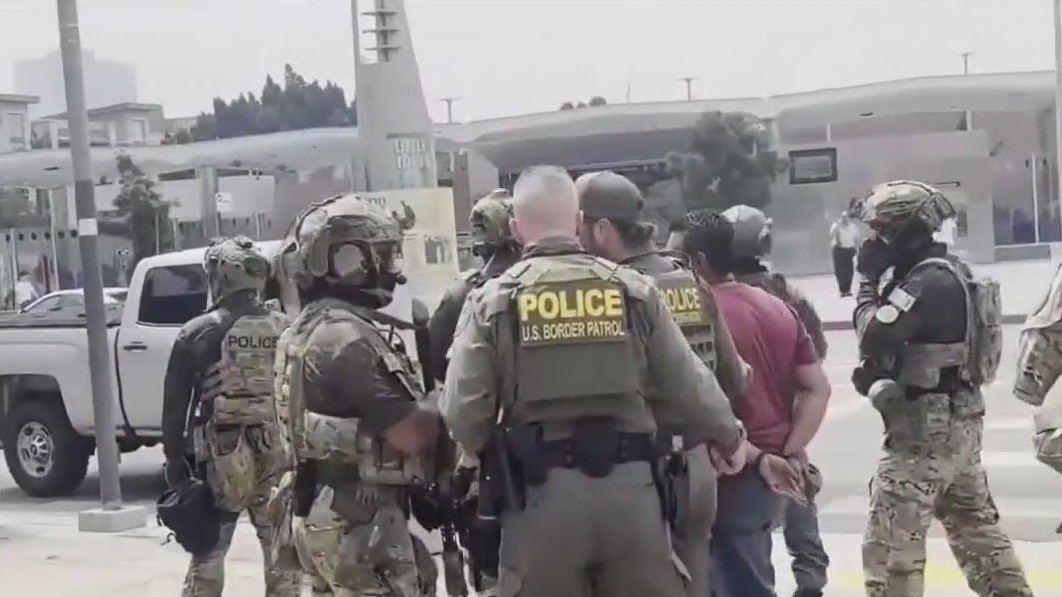
Federal immigration raids are reaching into neighborhoods and near schools.
Dr. Cynthia Langtiw has spent 25 years listening to that kind of fear. She works with children—and the adults who care for them.
"I work with organizations who work with undocumented youth, unaccompanied minors who are in shelters. I work with families. I work with refugees and asylum seekers," Langtiw said.
She said this moment feels different.
Not because the laws changed, but because enforcement did.
"There's a name for what's happening, ‘Operation Midway Blitz.' The fact that there's a name for it, the fact that these issues are happening all over the country, but that we are specifically being targeted as a city and as a Chicagoland area feels very different than it has in my entire time in working in immigrant mental health," said Langtiw.
The operation began in September. The Department of Homeland Security said its focus is on people with outstanding orders of removal and those who pose a threat to public safety.
Community members said the toll reaches far beyond that.
Logan Square saw tear gas on a school block. The West Loop saw a school pickup line turn into a detainment.
Children stood just feet away. Even kids who’ve never seen anything like that are afraid.
Langtiw said they fill in the blanks where adults leave silence. She urged families to start conversations because rumors can spark panic.
Like in Lake View East, when a postal investigation was mistaken for an ICE raid. Photos spread, schools went on alert—and Angelina picked up the phone.
"I get a call from my mom and a text message saying that ICE was here, you know. And I get scared because my mom, she's Mexican," said Angelina.
There were no ICE agents that day.
U.S. Postal Service inspectors were executing a warrant in a meth trafficking investigation. But the panic still changed her life.
"My mom doesn't feel safe to go outside, right? So I have to go and pick up my sister. And if my mom wants me to go to the groceries, I'll do it. I have to go morning and if I have to go night too. I'll go as long as my mom is safe," she said.
For children and teenagers like her, researchers said constant fear can turn deadly.
A University of Southern California and Children’s Hospital Los Angeles study found kids in migrant families face four times the risk of suicidal thoughts and attempts when enforcement ramps up.
Langtiw said everything depends on who listens.
"Keep communication open and avoid creating fear. Focus on empowerment and trust and the things that you as a family have done and can't do? And that the things that they can participate in doing that help keep your family safe and their community," she said.
She said the biggest risk isn’t just today’s panic—it’s the trust that shakes and the learning that slips.
Langtiw worries most about separation, but she also watches what communities choose to be.
In Little Village, students put that into practice. They left class, marched for hours and spoke for friends and family who are too afraid to speak.
"I feel very proud of my community because I know there's many people out there that came here for a better living, such as my parents who came from Mexico and I'm doing this for them," one student said.
What's next:
USC researchers called this a public health emergency—a generation absorbing adult fears too heavy for them to carry.
Langtiw said if you need support, the National Alliance on Mental Illness helpline is 1-800-950-6264. You can also text "HELLO" to 741741 for 24-hour crisis help.
Heartland Alliance and the Illinois warm line at 866-359-7953 also offer free, confidential support.
The Source: The information in this article was reported by FOX 32's Terrence Lee.