

Cook County property tax bills are due: Why do we pay property taxes anyway?
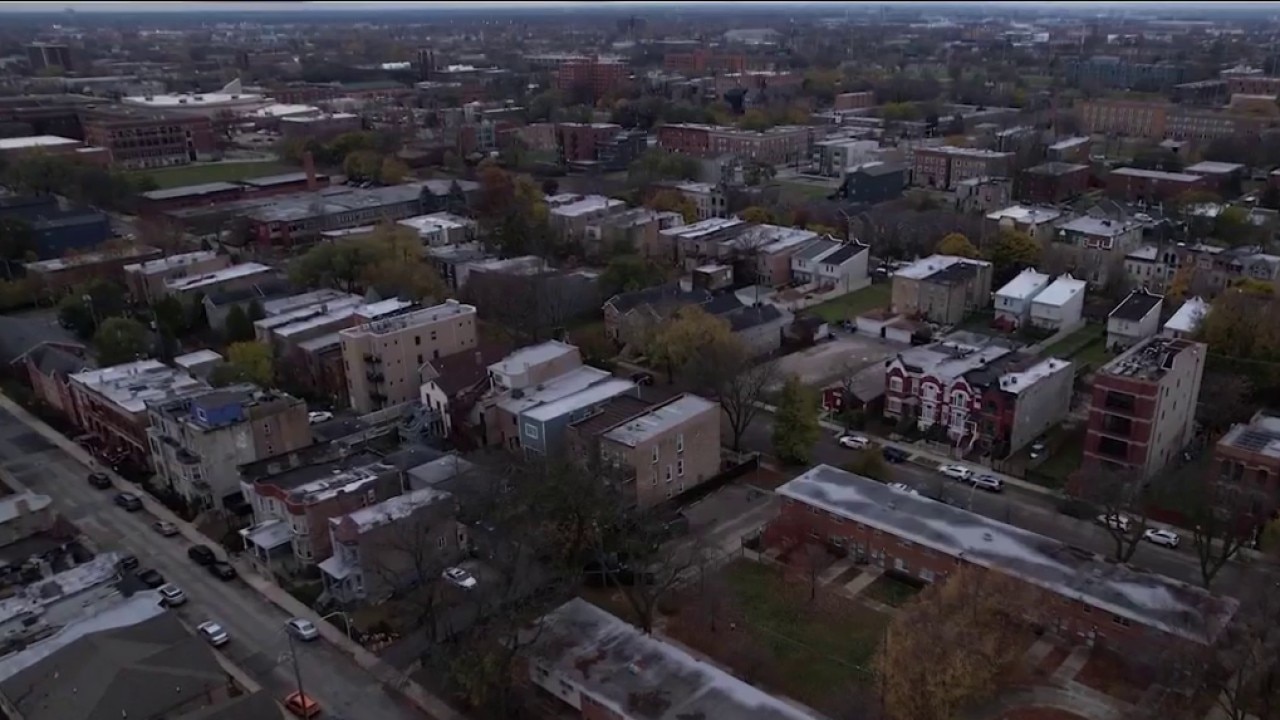
Cook County property taxes rising faster than inflation, study finds
Cook County Treasurer Maria Pappas breaks down why homeowners are seeing sharp increases, how shifting property values impact tax bills, and what residents can do to fight back.
CHICAGO - From the city to the suburbs, property owners in Cook County have been frustrated with rising real estate taxes, especially as the next round of payments are due on Wednesday, April 1.
Some homeowners in Chicago have burned their property tax bills. Candidates for key local offices have traded barbs over how to deliver relief to homeowners. The president of the Civic Federation, a nonpartisan government research organization, recently called the state’s property tax system one that "no one would design if we were starting from scratch today," in an op-ed.
The Cook County Treasurer's Office just this week released a study that found over the past three decades, property taxes have risen at twice the rate of inflation.
That system is multifaceted and complex, even for those who study it professionally. While real reforms don’t seem to be materializing anytime soon, Fox Chicago wanted to break down the basics of our property tax system in a way that at least makes the process more accessible to our viewers and readers.
First, we’ll try to explain what property taxes even are and the vital role they play in local government. In future stories, we plan to examine why Cook County and Illinois' property tax system has led to skyrocketing bills.
What are property taxes, and why do we pay them?
Big picture view:
Property taxes are imposed mostly by local units of government (think cities, counties, school districts, etc.) on the owners of real estate in a given jurisdiction.
Taxes on real estate are one of the oldest forms of taxation, according to Deborah A. Carroll, a professor of public administration at the University of Illinois Chicago. Carroll said such a revenue source is necessary for government bodies to provide essential services that the private sector traditionally does not.
"Local governments provide a lot of services that the private sector won’t provide because it’s not profitable to do so," Carroll said. "That’s why we have intervention of government into the market to provide things that we think are necessary for people to have access to or to consume, like public education."
And of course, she added, such services cost money.
Local governments are also more restricted in how they pay for their operations and services than, say, the federal government, because local governments cannot run budget deficits. Property taxes, Carroll said, provide a relatively steady form of income for local governments, unlike other types of taxes like sales and income taxes, which can fluctuate significantly depending on economic conditions.
While local governments collect other forms of revenue, property taxes tend to make up a significant chunk of their budgets.
To list a few local examples, property taxes made up about:
- 8.5% of Cook County’s $10 billion budget for 2026
- 24.6% of the Town of Cicero’s revenues in 2025
- 18% of the City of Evanston’s revenues in 2026
- 40% of the City of Markham’s revenues in 2025
- 47% of Elgin School District U-46’s revenues in 2025-26
- 76% of Orland Park's Consolidated High School District 230’s revenues in 2026
Still, while local governments do collect revenue from a variety of other sources, Carroll noted that property taxes are relatively progressive compared to other forms of taxation, meaning people with more income and wealth tend to pay higher taxes. In contrast, another form of tax like a sales tax on groceries would disproportionately affect lower-income residents with less money to pay.
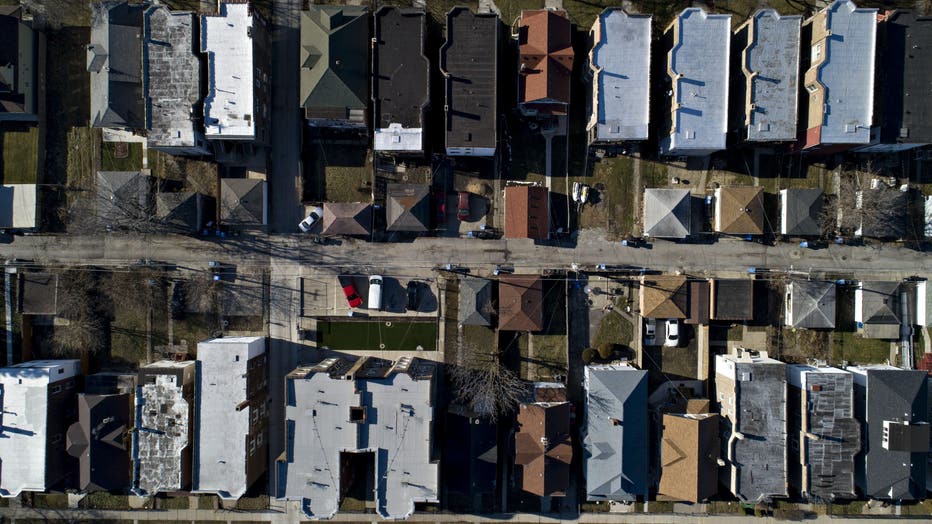
Homes stand in a neighborhood in this aerial photograph taken over Chicago, Illinois, U.S., on Wednesday, Jan. 8, 2020. The area is part of an opportunity zone. Once heralded as a novel way to help distressed parts of the U.S., opportunity zones are
How are property taxes calculated?
Dig deeper:
Each year, local governments go through a cycle where officials determine and approve how much money they need to raise and spend to pay for their operations and services. Typically, elected officials, like members of a city council, have to vote to approve their budget before the start of a new fiscal year.
Officials will often first look at all of their other types of revenue they collect from other sources like the federal government, state government, or user fees (think sales taxes, garbage fees, or transit fares).
Whatever portion of the budget that isn’t covered by those other sources will have to be paid for with property taxes. The total amount of property tax revenue a local government has to raise in a year is called the property tax levy.
The local governments will also have to know what the total tax base is, which is essentially the total value of all taxable property within their jurisdiction.
A local government agency is tasked with determining the value, what’s called the "assessed value," of each property within its jurisdiction. It’s the Cook County Assessor’s Office that is responsible for that task locally, although in other counties, that responsibility lies with local township assessors. An assessor is responsible for determining what essentially is the fair market value of a given property.
In order to calculate the tax rate applied to each property, a local government would divide its tax levy (the amount of property taxes it must collect) by the total assessed value of the property in its jurisdiction.
There are some complications to this equation because most properties in Illinois are assessed at one-third of their fair market value. In Cook County, commercial properties are assessed at 25% of market value and residential properties at 10%.
Then, local governments can essentially provide discounts for property owners in the form of exemptions to reduce the amount of assessed value they can be taxed on.
This process is done for each local unit of government in which a property happens to reside. This can include their city, county, school districts, park district, library district, township, water district, mosquito abatement district, and potentially more.
A property owner’s bill encompasses the taxes from each of their local taxing districts, which are normally listed out on the bill, so they can see how much money goes to their local school district, city, county, etc.
The Cook County Assessor's Office has another explanation of how this calculation works on its website.
Quick glossary
Assessed value: Put simply, this is the value a local tax assessor assigns your property, which is, in theory, supposed to be in line with the property's fair market value. Properties are usually taxed on only a portion of their full value.
Local governments: When discussing property taxes, we're normally talking about taxes imposed by local units of government. Think cities, villages, counties, townships, school districts, library districts, park districts, fire protection districts, water reclamation districts, mosquito abatement districts, etc.
Property taxes: Taxes imposed on real estate like homes and commercial property.
Tax base: The total value of taxable property in a given jurisdiction (like in a city, county or school district).
Tax levy: The amount of property taxes a unit of government has to collect in a given year.