

U.S. Supreme Court sides with Illinois toy company in tariff case
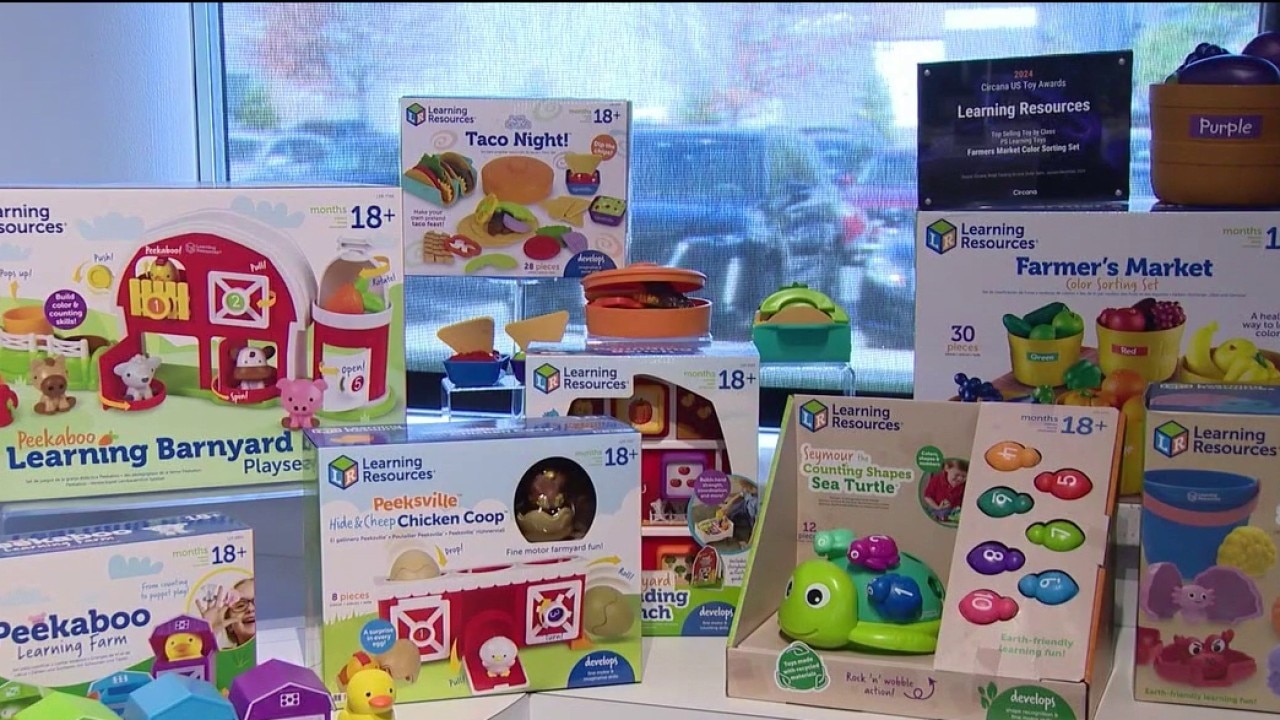
Local toy company celebrates Supreme Court's tariff ruling
One suburban toy company that took its fight all the way to the top is celebrating the Supreme Court's ruling on Friday on Trump's tariffs.
VERNON HILLS, Ill. - The U.S. Supreme Court struck down President Donald Trump's sweeping global tariffs on Friday, ruling those imposed under the International Emergency Economic Powers Act (IEEPA) unlawful.
At the heart of the case is a suburban toy company, Learning Resources, Inc., which took its legal fight all the way to the top.
What we know:
Learning Resources, Inc. is now celebrating a monumental victory after its case reached the nation's highest court, securing a landmark ruling.
"It's all very surreal," said Stephen Woldenberg, SVP of Sales for Learning Resources. "The ruling is vindicating."
The fourth-generation family-owned business specializes in educational toys and supplies them to schools across the nation. It owns several brands, including Learning Resources and hand2mind.
Last April, the company sued the Trump administration, arguing that the president did not have constitutional authority to impose tariffs under IEEPA.
Like other businesses, under those sweeping tariffs, Learning Resources, Inc. was forced to drastically alter where and how they manufactured products.
Last year, Woldenberg says the company spent roughly $14 million in tariffs — a sharp increase from the $2 million spent in 2024.
RELATED: Supreme Court rejects fast-track for Chicago-area toy company’s tariff lawsuit
"It's been a suffocating tax, so it diverted away money that would have been spent on investing in our business, on growing our brands," Woldenberg said.
The U.S. Supreme Court heard oral arguments for the case in November. Other companies that filed similar lawsuits last year were also included as petitioners.
After more than three months, the justices ruled 6–3 in favor of Learning Resources, Inc., issuing their decision Friday morning. Their opinion was 170 pages.
Justices Samuel Alito, Brett Kavanaugh, and Clarence Thomas dissented.
RELATED: Supreme Court agrees to review Chicago-area toy company's tariff lawsuit
"I found out about it the same way everybody else did. I was online at about 9 o'clock, one-on-one with a colleague, and there popped up the news, and we found out altogether, it was an amazing experience," Woldenberg shared.
Now to the million — or should we say multi-billion — dollar question: What happens next? UIC Professor of Law Steven D. Schwinn explained.
"One is what happens with tariffs, and so, these particular tariffs that President Trump issued under IEEPA, these tariffs will go away because of today's court ruling. But the White House has already said that it's going to look to other tariff authorities to try to fill the gap," Schwinn explained. "The other thing that we ought to be thinking about is the potential for reimbursement. Companies across the country have already started to retain attorneys to file claims against the federal government to recoup the tariff expenses that they paid over the past year."
RELATED: Supreme Court will soon hear Illinois toy company’s case against Trump-era tariffs
What's next:
It remains uncertain whether the federal government will agree to reimburse companies or force them back to court.
Either way, Schwinn says it's a process that could take several years to play out.
In the meantime, Trump announced on Friday, following SCOTUS's decision, that he will impose a global 10% tariff as an alternative, which is limited by a 150-day cap.
The Source: This story contains reporting from Fox Chicago's Kasey Chronis.